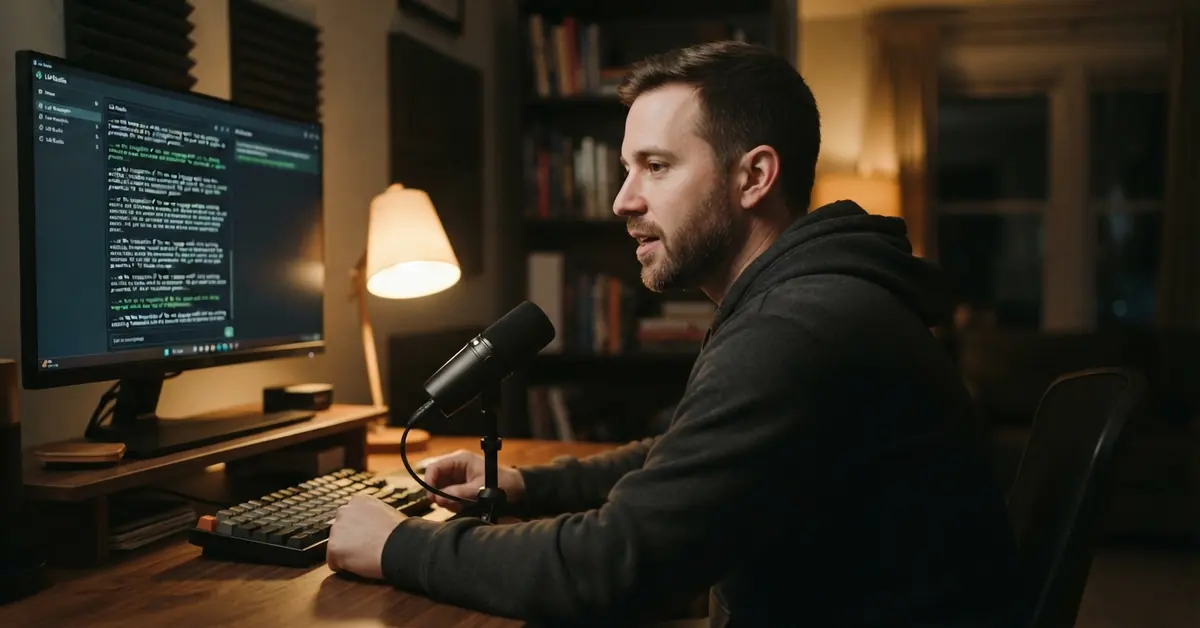
LM Studio has released local voice transcription across Mac, Windows, and Linux operating systems. The new capability allows developers and users to transcribe speech directly on their personal hardware without sending data to external cloud servers.
By shifting speech processing tasks directly to user devices, the software reduces latency and removes ongoing internet bandwidth demands. Consequently, developers working in the artificial intelligence sector can build audio-driven applications with faster turnaround times.
Offline Processing and Data Privacy
The integration of offline speech processing offers privacy advantages for sensitive workflows. Because data remains on the device, corporate and individual users avoid third-party exposure risks often associated with remote speech pipelines.
Furthermore, organizations focused on cybersecurity protocols can deploy speech models locally without violating strict compliance standards. This architecture prevents unapproved external data transmissions during continuous audio recording sessions.
Platform Compatibility Across Operating Systems
The updated release delivers parity across major desktop platforms, ensuring developers experience identical tooling regardless of their underlying setup. Specifically, the system runs on macOS, Microsoft Windows, and Linux distributions.
As a result, software creators using modern computers can test and deploy local transcription models using their preferred desktop configurations without platform-specific limitations.
Workflow Integration and Developer Tooling
In developer environments, local voice transcription simplifies the integration between speech interfaces and local large language models. Users can dictate prompts, voice commands, and conversational inputs directly into their existing offline workflows without managing multiple remote endpoint connections.
This streamlined setup reduces software architecture complexity. Engineers can prototype voice-enabled assistant tools, real-time meeting note utilities, and hands-free coding aids within a self-contained local environment.
Performance Impact and Cost Efficiency
Running local voice transcription on native hardware eliminates round-trip server communication delays. This real-time execution speeds up transcription responsiveness for voice commands, dictated notes, and developer toolkits.
In addition, running models locally lowers operational costs by removing recurrent per-minute cloud API transcription fees. Developers building standalone apps can therefore iterate rapidly while controlling production expenses.
Future Outlook for On-Device Speech Models
The shift toward on-device speech processing reflects a broader software industry trend toward decentralized computing. Local speech recognition reduces external dependencies and ensures operational continuity during network outages.
Moreover, as hardware acceleration continues to improve, local voice transcription is expected to support increasingly complex speech workflows directly on developer workstations.