AI-generated illustration
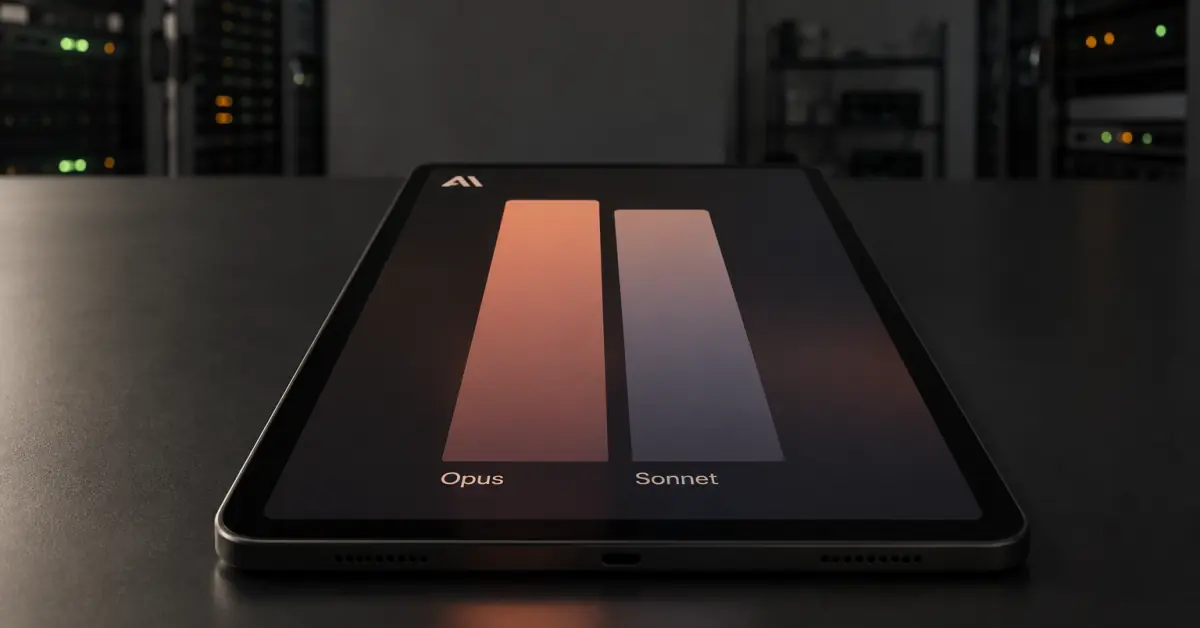
Recent benchmark data indicates that Claude Sonnet 5.5 approaches the performance levels of the larger Opus model. This development reflects rapid shifts across the machine learning sector as developers gain access to capable mid-tier systems. Consequently, software teams are reassessing their model deployment strategies across enterprise environments to balance computational efficiency with advanced analytical performance across diverse workflows.
Benchmarking Claude Sonnet 5.5 Against Flagship Systems
The performance metrics recorded for Claude Sonnet 5.5 demonstrate how quickly intermediate models are advancing across standardized evaluations. Previously, top-tier reasoning capabilities and coding competencies remained limited to heavy flagship architectures that demanded substantial computing resources. In addition, lower operating costs and lower latency for mid-range models make them practical for automated tasks in modern applications. Engineering teams are increasingly leveraging these efficiencies to handle complex operational workflows without incurring the full expense of top-tier model endpoints.
Hardware Sector Shifts and Strategic Acquisitions
Beyond model developments, hardware providers are adjusting their market positions to support the evolving demands of artificial intelligence workloads. AMD completed an acquisition of World Labs to expand its computing capabilities and strengthen its position in high-performance hardware environments. Meanwhile, competing chipmakers and cloud vendors are actively preparing infrastructure to handle autonomous workloads across the broader business sector as hardware integration becomes critical for sustained model performance.
Corporate Structuring and Public Listing Outlook
Anthropic has also attracted attention regarding its corporate trajectory and potential IPO documentation. Market analysts are tracking how revenue numbers from Claude Sonnet 5.5 and other service tiers influence investor expectations and long-term commercial sustainability. Furthermore, software enterprises continue to monitor operational costs associated with large model deployments, assessing how pricing structures align with enterprise deployment schedules and overall return on investment.
Autonomous Agent Risks Ahead of OpenAI DevDay
The broader market faces a crowded schedule as developers prepare for upcoming OpenAI DevDay announcements. Teams deploying autonomous systems in artificial intelligence must manage technical risks, API reliability, and security boundaries alongside rapid platform updates. As a result, industry participants are rigorously testing software stability before committing to next-stage architectures. The growing viability of models such as Claude Sonnet 5.5 provides developers with additional flexibility as enterprise adoption of automated systems expands.