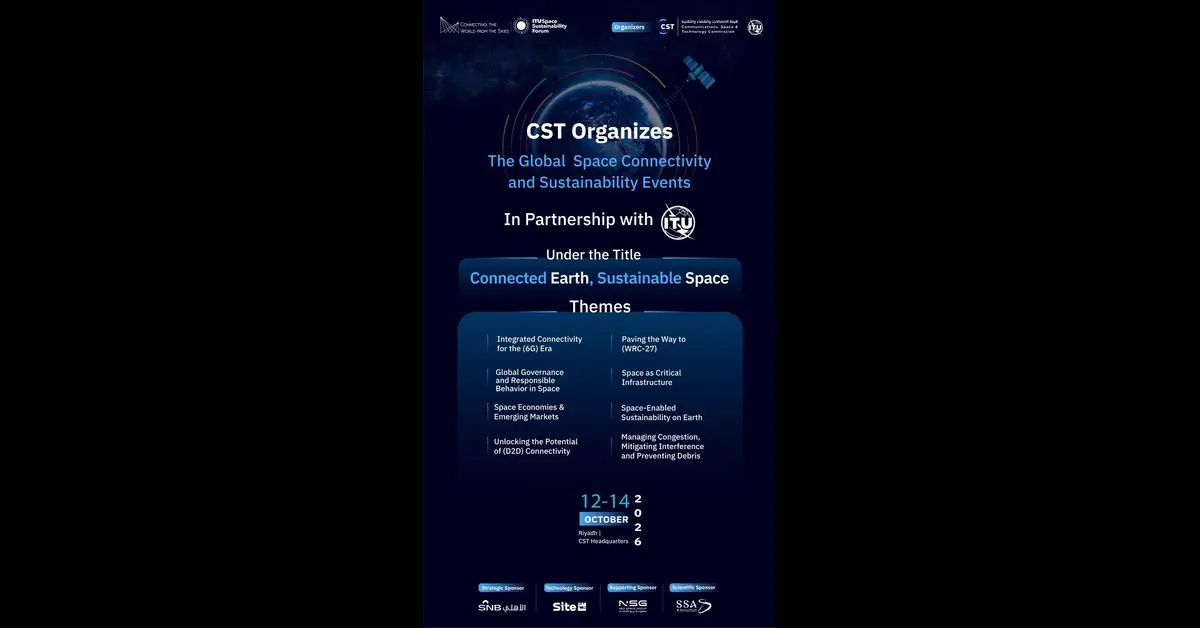
The Communications, Space and Technology Commission (CST) announced the Global Space Communications and Sustainability event in Riyadh. Organized in strategic partnership with the International Telecommunication Union (ITU), the international gathering takes place under the patronage of Abdullah Alswaha, Minister of Communications and Information Technology and Chairman of the Board of Directors at CST.
The event convenes international specialists, decision-makers, and industry researchers to address the operational development of satellite networks. Discussions focus on establishing clear frameworks for sustainable space activities while expanding global network resilience.
Key Objectives of Global Space Communications
Participants will evaluate direct regulatory mechanisms, frequency spectrum allocation, and orbital resource management during specialized sessions. In addition, the sessions examine modern connectivity systems to support uninterrupted data exchange across global networks.
The initiative addresses sustainability practices that prevent orbital debris and ensure long-term space safety. Through targeted dialogue, international stakeholders will review environmental monitoring mechanisms alongside orbital traffic coordination models.
International Partnership and Technical Standards
The partnership between CST and the ITU establishes a platform for joint technical coordination. Consequently, global entities aim to standardize spectrum allocation protocols to prevent cross-border frequency interference across commercial space assets.
Furthermore, technical delegations will address modern telecommunications standards vital for next-generation satellite constellations. These standards ensure interoperability across international ground stations and space infrastructure.
Integration with Modern Digital Infrastructure
The gathering examines how space connectivity integrates with terrestrial data centers and advanced computing systems. Specialists plan to analyze the deployment of artificial intelligence in tracking orbital assets and processing telemetry data.
Moreover, technical experts will discuss data transmission integrity across space links. Protecting these links from external disruption remains a key priority for modern cybersecurity architectures worldwide.
Regulatory Coordination and Global Frameworks
Cross-border collaboration remains critical as the volume of commercial and institutional satellites in low Earth orbit increases. The sessions will examine harmonized licensing processes and shared monitoring tools designed to streamline international compliance.
Delegates will also evaluate mechanisms for equitable spectrum access, ensuring emerging telecommunications markets can leverage satellite infrastructure alongside established spacefaring nations.
Future Outlook for Satellite Services
The event provides open registration for specialized professionals seeking to participate in upcoming working tracks. Delegates will formulate joint recommendations to guide sustainable satellite operations through 2026 and beyond.
As space commercialization accelerates, CST and international partners continue refining regulatory governance. This approach supports technical innovation while safeguarding orbital corridors for future communications missions.