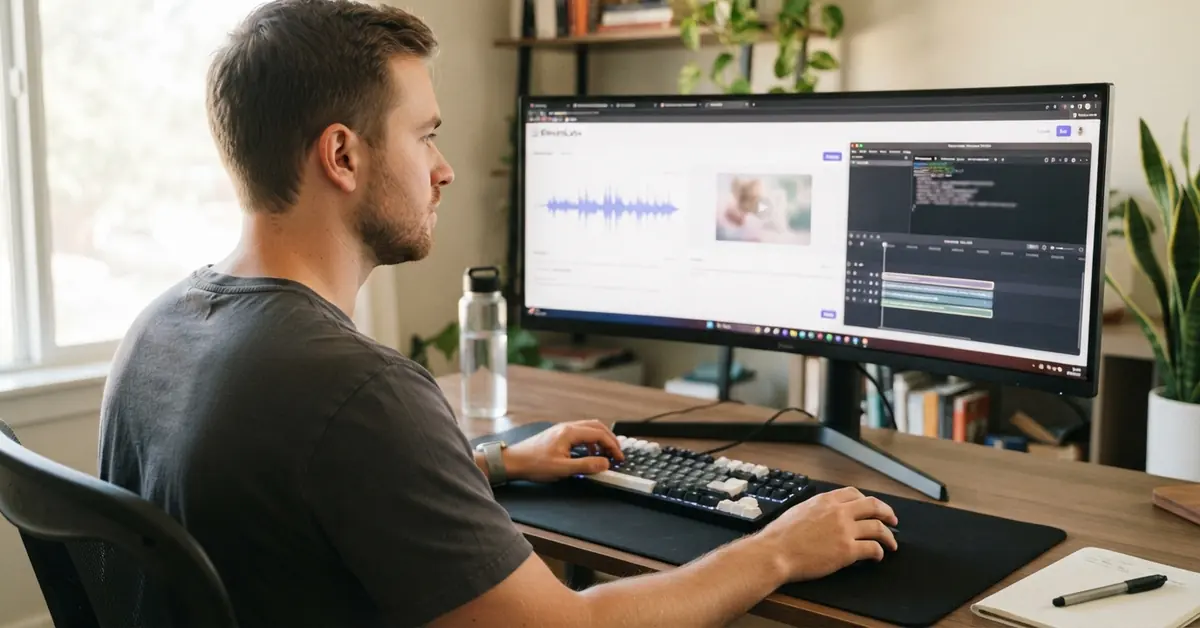
The ElevenLabs MCP server has expanded its capabilities to support native voice, music, image, and video generation for artificial intelligence assistants. This update allows software systems to handle diverse creative assets directly without routing tasks through separate third-party services. By bringing these distinct generative modalities under one unified interface, the implementation streamlines how autonomous agents and interactive bots produce rich multimedia content in real time.
Multimodal Additions for AI Assistants
Developers building with conversational models can now generate complete multimedia packages within a single environment. By updating the artificial intelligence framework, the company centralizes several production pipelines into unified technical endpoints. Consequently, the ElevenLabs MCP server directly handles prompt interpretation for audio synthesis, image creation, and visual sequences. This consolidation minimizes the need for multiple API keys, distinct software libraries, and fragmented external infrastructure.
Supported Formats and Capabilities
The platform update encompasses four primary media types designed to operate within interactive agent sessions:
- Spoken voice generation for dialogue and narration
- Original music composition based on text inputs
- Static image rendering for visual responses
- Short-form video production inside conversational flows
In addition, these tools interface directly with modern apps and software designed for automation. Teams can program assistants to return finished video or audio assets alongside text responses during ongoing user conversations. Because each media asset is produced directly within the same protocol workflow, applications avoid the complexity of managing disparate file delivery systems.
Integration of the ElevenLabs MCP Server
Engineers integrating the ElevenLabs MCP server into standard Model Context Protocol setups can access these features immediately. The centralized architecture reduces technical latency across complex multi-step generation workflows. Rather than querying separate provider endpoints for sound design, voice cloning, illustration, and video clips, developers can issue structured tool calls through the standardized protocol layer.
Furthermore, managing these distinct media types within a single protocol layer reduces codebase maintenance requirements. Software teams maintain fewer independent connectors while gaining access to broad creative outputs. This standardized connection model also allows developer teams to configure consistent security parameters, access controls, and rate limits across all generative features.
Operational Impact on Media Production
Consolidating diverse generation capabilities into an open protocol reflects broader technical shifts in agent tooling. As automated systems handle increasingly complex user requests, unified media generation simplifies the underlying architecture for enterprise deployment. The inclusion of native multimedia creation within the Model Context Protocol ecosystem offers developers a cohesive framework for building next-generation digital assistants capable of multimodal communication.