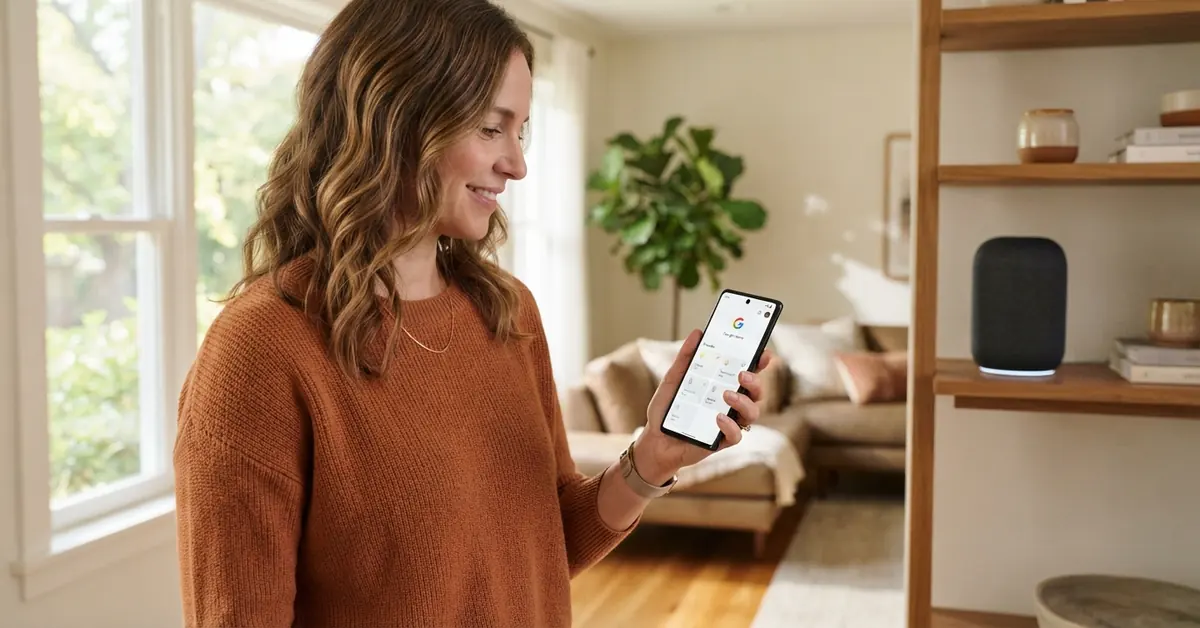
Google Home MCP integration now allows external artificial intelligence agents to manage connected smart home hardware directly. The software update establishes a bridge between autonomous models and home infrastructure. Users can now direct tools such as Claude and ChatGPT to perform actions, review camera activity, and organize automated schedules across their connected networks.
The system relies on the open standard developed for model communication. Consequently, third-party software agents can process activity history and execute complex multi-step instructions without manual interface interaction, according to The Verge.
Capabilities Enabled by Google Home MCP
The integration introduces cross-camera analysis alongside hardware history tracking. For example, users can ask an agent to review recent camera logs to identify when family members arrived. Furthermore, connected voice assistants can relay spoken status messages through smart speakers after completing assigned operational tasks.
In addition, users can instruct agents to generate custom control dashboards. The architecture allows models to process device states over time, which supports detailed home analytics within modern smart devices setups.
Technical Setup and Platform Support
Setting up the interface requires technical configuration through developer tools. Users must create a dedicated cloud project and link their credentials to their preferred model. The system connects seamlessly with Google Nest hardware as well as third-party products built on the Matter standard.
Moreover, developers can link autonomous tools such as Hermes or Google Antigravity into the environment. This flexibility allows advanced apps to access live device telemetry while maintaining standardized communication across platforms.
Safety Restrictions and Security Policies
Google implemented strict operational limits to maintain safety across connected spaces. Specifically, software agents cannot unlock smart door locks or override critical physical security barriers. The company also enforces automated rate limits to prevent erratic commands from reaching physical appliances.
Nevertheless, product managers note that external models might still generate unintended device actions under certain prompts. Therefore, users must review active permissions to ensure proper cybersecurity protocols remain active across their internal networks.
Subscription Availability and Future Access
The early access release targets Google Home Premium Advanced subscribers in the United States, priced at $20 monthly or $200 annually. Meanwhile, Google continues to process feedback through its official developer community to refine performance.
The development of Google Home MCP represents a broader shift toward infrastructure-level software services. As consumer interest in artificial intelligence expands, standard protocol connections will likely dictate how smart spaces operate globally.