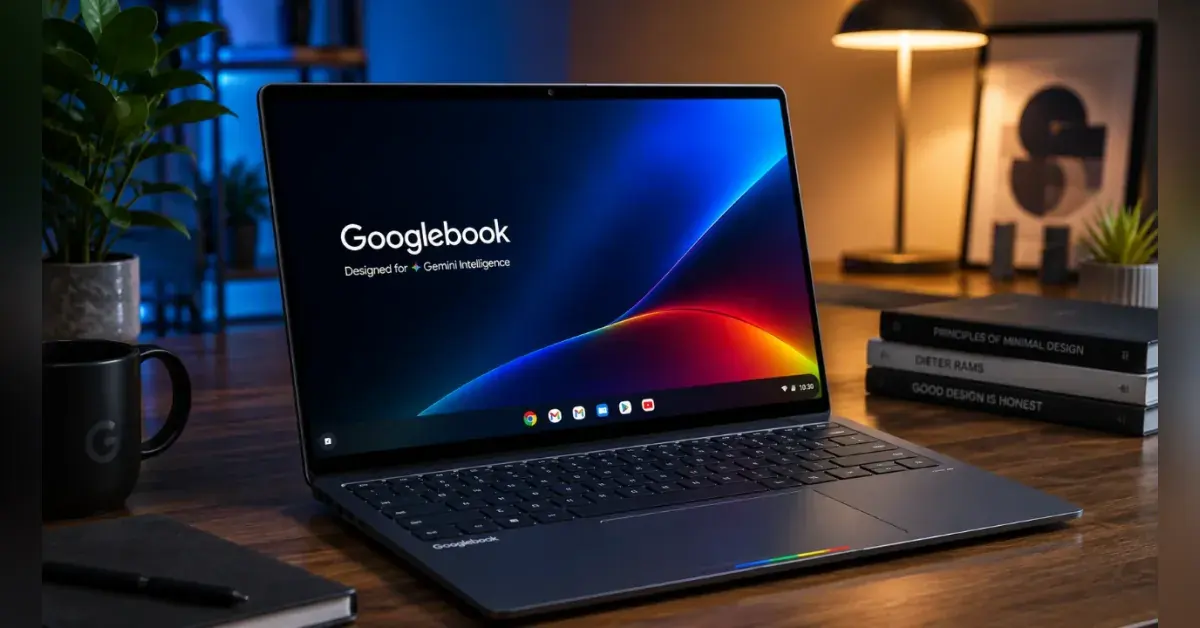
Googlebooks laptops represent a new category of personal computing hardware designed to link directly with Android mobile devices. Google detailed the new platform during an event in New York City, according to Wired. Hardware manufacturers can build Googlebooks laptops under specific technical standards established by Google, establishing an interconnected experience across phones and personal computers.
Hardware Specifications and Build Standards
Manufacturers must adhere to strict hardware requirements to release certified Googlebook devices. Every laptop requires lightweight materials such as aluminum, magnesium, or carbon fiber. The specifications mandate at least 16 GB of RAM, a minimum processing capability of 45 tera operations per second (TOPS), and at least 14 hours of battery life. In addition, devices must include touchscreen displays, backlit keyboards, haptic trackpads, Dolby Atmos speakers, and noise-canceling microphones.
A notable exterior element is the Glowbar, an LED light strip built into the laptop shell. The light illuminates during interactions with the artificial intelligence assistant Gemini. The keyboard also integrates a dedicated G key for Gemini and assigns Quick Insert functionality to the Caps key. Google committed to providing 10 years of software updates for all certified machines.
Pricing and Hardware Availability for Googlebooks Laptops
Five computer manufacturers introduced certified Googlebooks laptops at launch. Hardware options include machines powered by Qualcomm Snapdragon X Elite chips or Intel Core Ultra 3 processors. MediaTek also supports the platform with its Dimensity CX C10 Max processor, though initial units do not feature this chip.
Pre-orders opened immediately, with general retail availability starting on October 4. The initial lineup includes the Acer Googlebook 14 at $899, the Dell XPS Googlebook at $999, and models from HP, Lenovo, and Asus priced at $1,299 each. Acer provides a 2-in-1 convertible form factor, while the other four brands offer standard clamshell designs. Each purchase includes one year of Google AI Pro service with 5 terabytes of cloud storage.
Operating System and Application Structure
The operating system merges elements from Android and ChromeOS into a platform optimized for both x86 and ARM processor architectures. During setup, users can transfer Wi-Fi credentials, passwords, system settings, messages, contacts, and photos from their mobile devices.
Applications in the Google Play Store follow three classifications: Made for Desktop, Optimized for Desktop, and Better on the Website. Early desktop-adapted titles include Adobe Photoshop, CapCut, Fantastical, and Notability. For gaming, users can access more than 20,000 Play Store titles, with 50 top games configured for keyboard and trackpad inputs. Buyers also receive one year of NVIDIA GeForce Now to support streaming in gaming.
AI Tools and Future Outlook
The operating system integrates artificial intelligence across several user interface controls. The Magic Pointer feature lets users hover over text, calendar invites, or images to trigger context actions via Gemini. Users can also create custom desktop widgets through written prompts. Google stated that standard Chromebooks will remain active as low-cost options for education and general consumers, while Googlebook hardware targets mainstream computing users.