AI-generated illustration
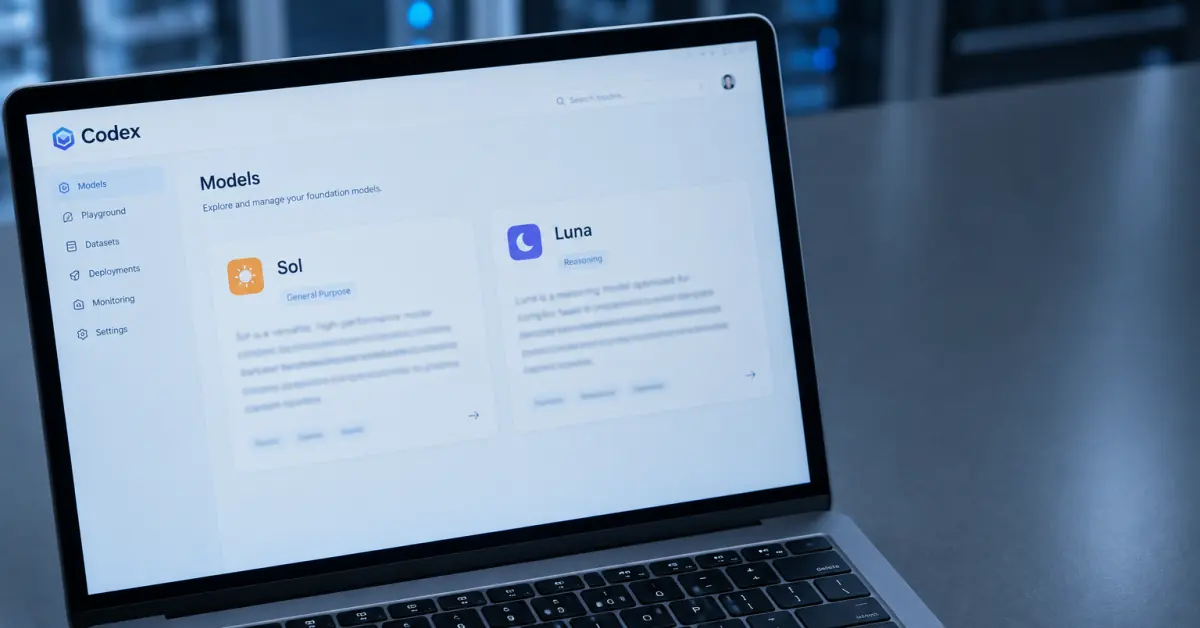
The Codex platform has officially released GPT 6 Sol alongside the GPT 6 Luna model to expand computational capabilities for technical workflows. These new releases represent practical additions to large language models, focusing directly on execution speed and operational efficiency.
Modern software environments increasingly depend on artificial intelligence systems that process complex instructions without high resource overhead. Consequently, the release of both models addresses key demands across production environments that require consistent computational output.
Core Capabilities of GPT 6 Sol
In technical deployments, GPT 6 Sol serves as a dedicated system configured for high-demand processing tasks. The architecture focuses on reducing latency while maintaining accuracy across structured data inputs and technical queries.
Furthermore, developers utilizing these systems can integrate them directly into existing software applications. This integration allows organizations to automate repetitive tasks and manage data flows with predictable computational costs.
Dual-Model Architecture with Luna
Alongside the primary release, the introduction of Luna provides a balanced alternative designed for specific operational constraints. While GPT 6 Sol manages heavy workloads, Luna operates with a focus on resource optimization and rapid responses.
Moreover, offering two distinct variants allows engineering teams to allocate computing resources effectively. As a result, technical projects can balance high-throughput requirements against strict computational budgets, choosing the appropriate configuration for their infrastructure.
Integration Across Practical Workflows
Practical usability remains the central objective behind the updated model releases. The underlying architecture connects with standard programming frameworks and modern computing platforms.
Specifically, the new models assist with automated code generation, documentation maintenance, and data analysis. These structured capabilities help engineering teams build stable software tools without requiring custom machine learning pipelines.
Deployment and Operational Considerations
For organizations implementing language models at scale, managing server response times and infrastructure overhead is critical. The distinct focus areas of GPT 6 Sol and Luna allow development teams to separate mission-critical computing from lightweight background tasks. This structural separation supports higher system reliability and streamlines debugging across automated pipelines.
Availability and Platform Access
Both new models are currently available directly through the Codex interface. Developers and enterprise users can access the systems immediately through standard integration channels.
In addition, the platform continues to provide technical documentation covering deployment parameters. As large language models evolve, structured releases like these offer developers practical tools for ongoing digital projects.