
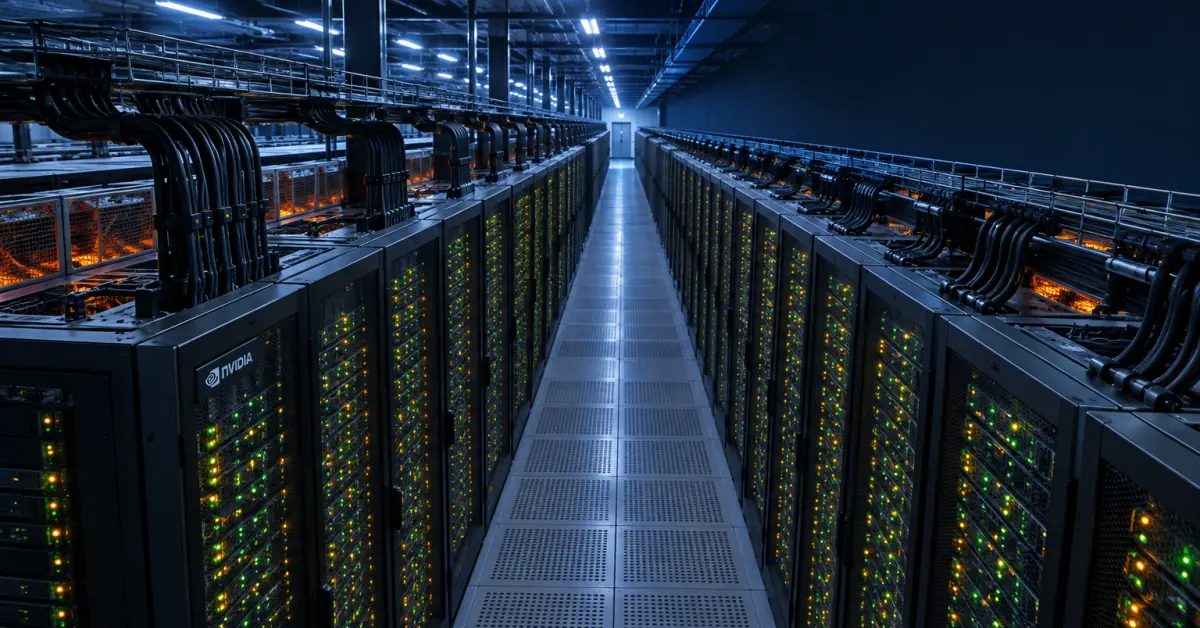
AI-generated illustration
The global compute boom is accelerating as new artificial intelligence models demonstrate practical value across enterprise operations. Recent industry analysis indicates that infrastructure expansion is moving rapidly to support processing requirements across multiple sectors. Consequently, technology organizations are increasing capital expenditure to secure computing power for complex workloads, foundational model tuning, and distributed inference tasks. As enterprise adoption transitions from experimental trials to mission-critical implementations, access to scalable compute capacity has emerged as a central pillar of technology strategy.
Drivers Behind the Compute Boom
The current compute boom reflects strong demand for advanced hardware capable of training and serving complex architectures. Organizations in telecommunications, financial services, and software development are deploying dedicated clusters to handle massive data throughput. In addition, software efficiency gains, specialized compilers, and optimized runtime environments have enabled systems to execute operational tasks with higher reliability. As workload complexity expands, modernizing data pipeline architectures has become essential for maintaining operational momentum.
Hardware Architecture and High-Density Clusters
To keep pace with computing demands, modern data centers are transitioning to specialized hardware acceleration clusters. These high-density configurations combine advanced processing units with high-bandwidth memory and ultra-fast interconnects to minimize communication bottlenecks during distributed training cycles. As a result, network topologies within server halls are being re-engineered to facilitate parallel processing across thousands of interconnected nodes, ensuring efficient resource utilization and lower latency.
Enterprise AI Deployment
Enterprises are actively integrating AI systems directly into daily operational processes and business software suites. Rather than remaining experimental tools or standalone research projects, these systems now automate administrative tasks, optimize supply chains, and support strategic planning. Furthermore, integration with existing cybersecurity platforms provides secure baseline monitoring, anomaly detection, and automated incident responses for enterprise networks.
Infrastructure Investments in Regional Tech
Technology investments across the Middle East align closely with these global compute requirements. Regional initiatives focus on expanding hyperscale data center capacity to support modern high-performance hardware, cloud sovereign capabilities, and localized compute zones. Meanwhile, enterprise leaders and facility operators are evaluating long-term power supply, grid stability, and advanced liquid cooling infrastructure to sustain uninterrupted operations under demanding environmental conditions.
Future Outlook for Computing Capacity
Market analysts project sustained growth in hardware procurement and facility expansion over the coming quarters. As machine learning models expand in parameter size and real-time inference requirements, the ongoing compute boom will require continuous infrastructure optimization and architectural innovation. Therefore, technology providers and enterprise teams are building scalable architectures to maintain competitive operational delivery across the broader digital economy.