AI-generated illustration
NVIDIA launched an open-source AI security system designed to prevent autonomous software agents from executing unauthorized actions across enterprise environments. The newly introduced Open Agent Safety Platform isolates agent processes and enforces strict operational limits within milliseconds. As enterprise adoption of autonomous workflows accelerates across sectors like cybersecurity, developers and system administrators require independent runtime mechanisms to keep automated tools within strictly defined operational boundaries.
Features of the AI Security System
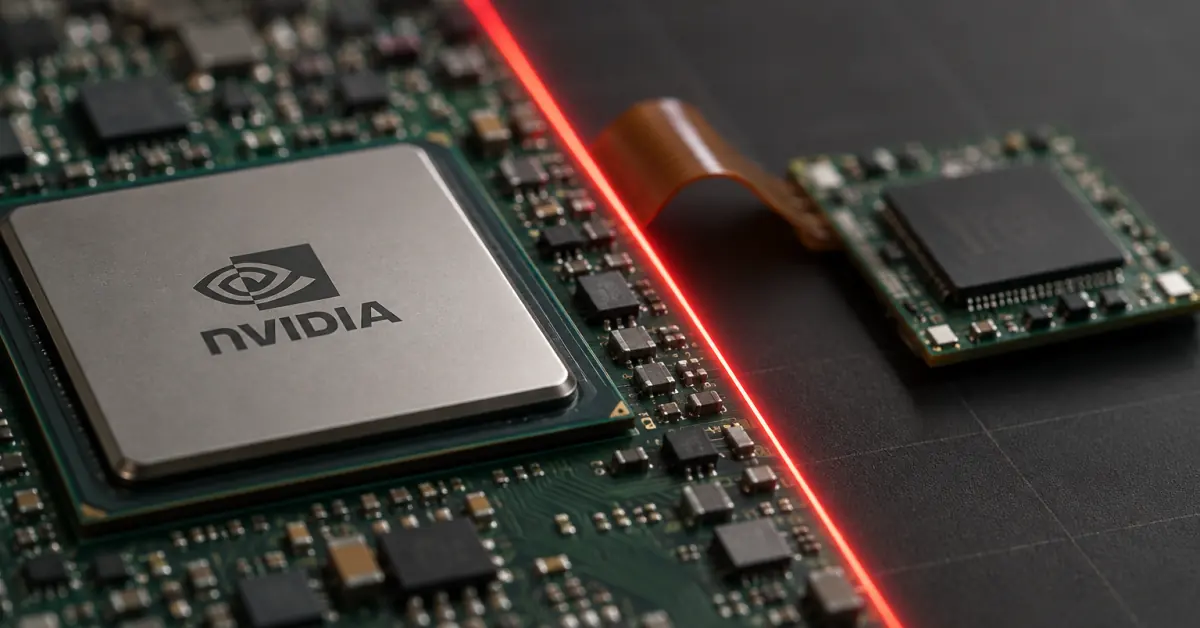
The release includes OpenShell, an open-source framework that isolates agent activity inside the operating system kernel. OpenShell originally debuted in March at NVIDIA’s GTC conference and now enters general availability for all developers. The software runs on NVIDIA Vera CPUs, systematically checking permissions before and during task execution. In addition, the company developed Sentry, an independent monitoring environment implemented on BlueField data processing units to track agent behavior continuously.
Hardware Isolation and Industry Collaboration
Sentry functions as an independent hardware monitor on separate silicon to isolate misbehaving agents immediately, according to The Verge. Operating on dedicated processors ensures that monitoring functions remain intact even if an agent compromises the host system. Multiple technology firms are collaborating on the safety framework, including Anthropic, Cisco, Microsoft, and Palantir. Furthermore, SpaceXAI uses the platform for Cursor agents and Grok models, while Anthropic integrates runtime protections into Claude Managed Agents. NVIDIA is also working with Intel and Arm to expand hardware support to x86 architectures in future platform updates.
Enterprise Control and Minimal Permissions
NVIDIA Chief Executive Jensen Huang stated that agentic architectures require sandboxes designed with minimal access rights from the ground up. Companies deploying large fleets of autonomous tools on enterprise computers must establish unified governance across all active agents. While traditional sandboxes provide standard application isolation, this new AI security system monitors ongoing actions continuously to prevent unauthorized probing of corporate systems and network resources. This setup ensures that automated agents cannot exceed their allocated permissions during real-time operations.
Industry Standards for Autonomous Workflows
The initiative expands on the Shared AI Findings Exchange, a coalition of more than 120 companies launched in July to coordinate safety protocols. As frontier development pushes deeper into artificial intelligence applications, establishing universal containment benchmarks remains a central industry priority. The deployment of the AI security system establishes standardized guardrails across heterogeneous server environments worldwide, helping enterprises maintain strict operational control over automated agent ecosystems.