

A sharp decline in AI purchase trust highlights that European shoppers prefer digital assistance over automated spending decisions. A new study by digital identity platform Signicat shows that while 65% of European consumers welcome artificial intelligence assistance for routine tasks, 69% feel uncomfortable allowing automated tools to make purchases on their behalf.
Consumers broadly accept algorithms for informational guidance, such as finding product details, completing forms, or exploring banking options. However, willingness to hand over actual buying authority remains low across Europe. Specifically, 42% of consumers trust automated tools to create cooking recipes and 38% trust them to draft personal emails.
The Current Limits of AI Purchase Trust
The data reveals that AI purchase trust drops steeply as transaction values increase. Only 19% of respondents stated they would trust an autonomous agent to execute a small or low-value purchase. That figure falls to just 8% when consumers consider high-value financial commitments.
When asked what conditions would make them comfortable with algorithmic tools opening financial products for them, 39% demanded final approval on any action. In addition, 32% of participants required the continuous ability to override the system at any point during the process.
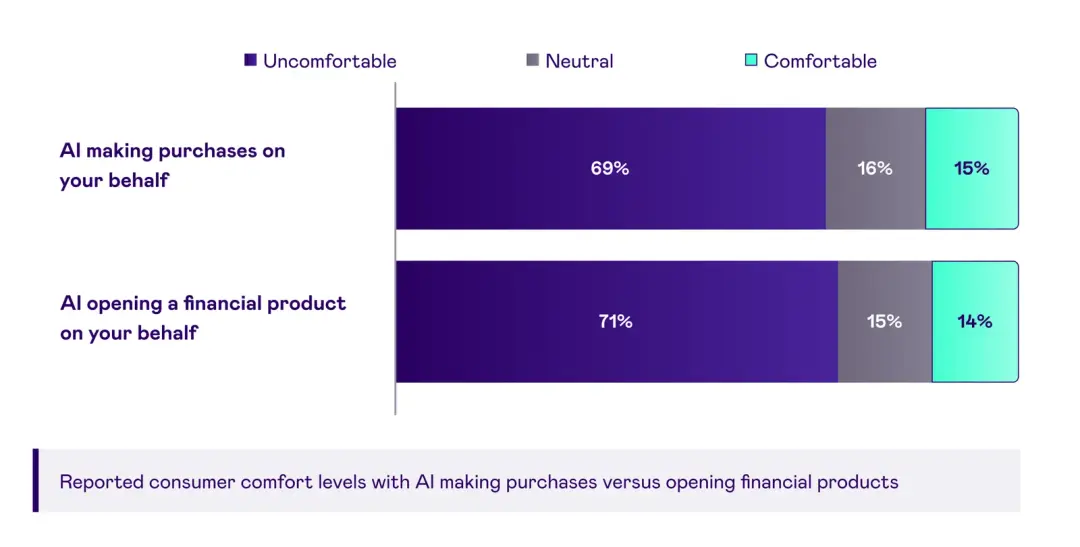
Consumer Preference for Digital Oversight
“Customers want a copilot, not an autopilot. Consumers are clearly open to AI making their lives easier. But there’s a big difference between asking AI for help and giving it the authority to act on your behalf. Our research shows that 69% of European consumers are uncomfortable letting AI make purchases for them today. And when it comes to spending money, using someone’s identity or signing agreements, control really matters. The challenge for retailers and payment providers is to build that trust – making it clear what AI is allowed to do, and ensuring customers stay in control of the decisions that matter.”
Emma Bauer, Chief Product Officer at Signicat
As retailers prepare for high-volume shopping periods, digital tools will assist buyers with comparisons rather than complete execution. Retailers and financial providers must clarify what automated agents can do while maintaining clear confirmation steps for buyers.
Rising Fraud Threats in Digital Payments
This hesitation among shoppers coincides with mounting security concerns across the commercial sector. In a prior study examining the payments and fintech industry, Signicat reported that 67% of firms experienced a surge in identity fraud attempts. Furthermore, 54% of surveyed organisations registered an increase in successful attacks.
Account takeover remains the primary fraud tactic within digital commerce channels. According to company findings, 71% of payment companies confirm that malicious actors already use algorithmic tools to conduct fraudulent operations against their systems, complicating modern cybersecurity defenses.
Research Scope and Methodology
Maintaining consumer oversight remains vital to building sustained AI purchase trust among commercial platforms. Sapio Research conducted the survey in August 2026 across Denmark, Finland, France, Germany, the Netherlands, Norway, Spain, Sweden, and the UK. The sample included 4,050 adult bank account holders who applied for financial products in the preceding year.
The study also gathered input from 450 corporate decision-makers managing compliance and identity verification across European financial services providers. The results confirm that digital commerce platforms must guarantee human verification to build confidence during seasonal retail campaigns.