ARABSAT Logo
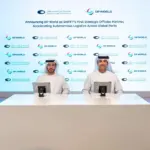
Regional satellite services are expanding as ARABSAT and etisalat secure a direct-to-home broadcast bouquet on the BADR-8 satellite across the Middle East and North Africa. The strategic agreement enables the transmission of television services from the etisalat TAS Earth Station situated in Sharjah. Consequently, the high-capacity facility will serve as the primary ground communication hub connecting networks to orbital infrastructure.
Ground Infrastructure for the BADR-8 Satellite
The agreement relies on the etisalat TAS Earth Station to manage signal handling and transmission. Positioned at 26.0° East, the BADR-8 satellite provides coverage targeted directly at audiences in the Middle East and North Africa. Meanwhile, this location allows media organizations to reach diverse demographic groups through shared transmission capacity. In addition, the initiative expands the space operations portfolio managed by etisalat across the wider telecommunications sector.
Under the contractual terms, etisalat provides end-to-end ground services for commercial broadcast customers. These operational capabilities include content reception, signal aggregation, encoding, multiplexing, and satellite uplink. Furthermore, the facility delivers active transmission monitoring and fully managed delivery solutions to maintain stable broadcasts.
Strategic Commercial Objectives
The joint platform allows both entities to optimize physical assets while addressing customer demand. Saud M. Almadhi, Chief Commercial Officer at ARABSAT, explained the commercial basis of the project:
“This partnership will enable us to serve multiple customers through a shared platform, optimise infrastructure utilisation, and generate recurring revenues, supporting sustainable growth while delivering greater value to our customers. Looking ahead, the partnership lays the foundation for future service innovation, including advanced contribution, distribution, and hybrid satellite-terrestrial solutions tailored to the evolving needs of media and broadcast customers.”
Saud M. Almadhi, Chief Commercial Officer, ARABSAT
Similarly, the venture strengthens commercial positioning for etisalat by enlarging its presence in satellite operations. Nabil Baccouche, Group Chief Carrier & Wholesale Officer at etisalat, stated:
“Partnering with ARABSAT on the BADR-8 bouquet is a strategic step in our ambition to grow etisalat’s space business and deliver advanced satellite solutions to our customers. By combining our earth station infrastructure and operational capabilities with ARABSAT’s regional coverage, we are creating a powerful platform for service providers and satellite partners to serve their requirements seamlessly across MENA and enhance our resilience capabilities over the sky. This initiative reinforces our commitment to providing reliable, scalable, and high-quality services that support the evolving needs of the industry.”
Nabil Baccouche, Group Chief Carrier & Wholesale Officer, etisalat
Broadcast Solutions and Signal Transmission
Broadcasters operating in regional markets require scalable distribution methods to deliver high-definition programming. Operating the BADR-8 satellite in coordination with Sharjah ground assets provides a unified link for content aggregators. Specifically, media providers can distribute linear channels without constructing dedicated uplink facilities.
Moreover, the integration of managed broadcast services reflects broader changes in the regional business environment, where media distribution costs are consolidated through shared platforms. As a result, commercial clients gain access to uplink resilience without incurring redundant hardware investments.
Content Distribution Across Regional Markets
Looking ahead, the two organizations plan to evaluate combined delivery frameworks for television networks. These proposed developments involve hybrid models linking orbital links with ground-based networks. Notably, such architectures address growing demands for data capacity and multi-platform media delivery across emerging digital platforms, including online streaming services and terrestrial relays.
By unifying transmission footprints and uplink facilities, the partnership establishes an integrated operational route for broadcasters targeting audiences throughout the Middle East and North Africa. Consequently, technical teams will continue configuring transponder capacity to accommodate newly contracted channels over coming quarters.