
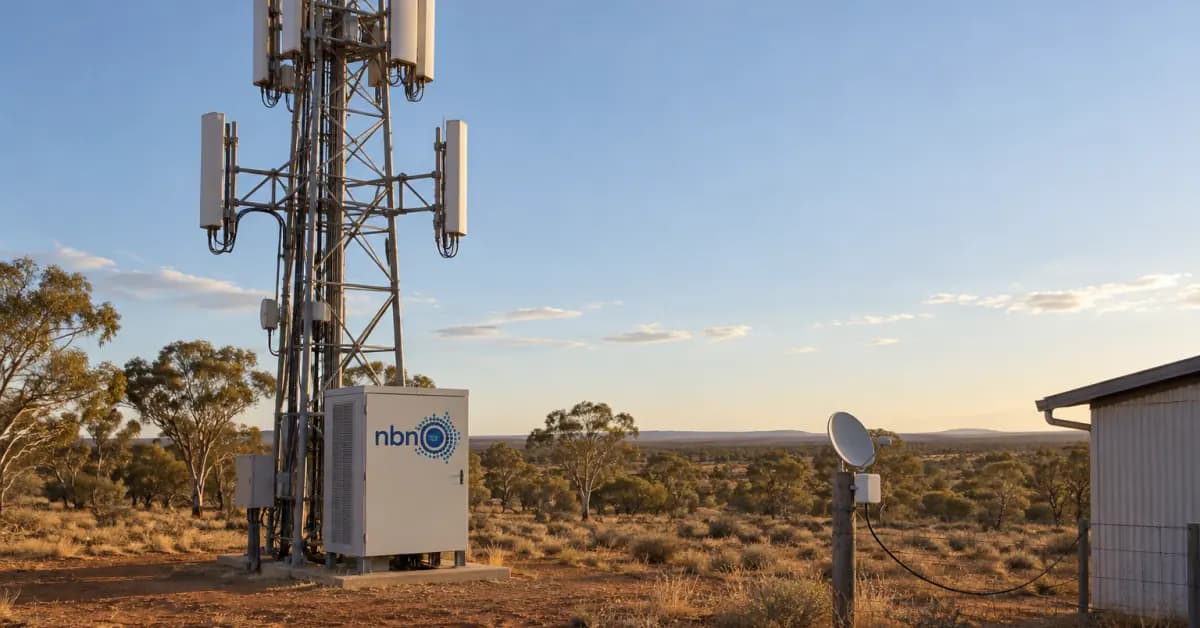
Australia FWA connections are forecast to expand at a compound annual growth rate of 3.6% between 2026 and 2031, according to research published by GlobalData. The expansion reflects rising demand for high-speed internet across regional and remote regions where traditional fiber network coverage remains limited.
Data from the Australia Fixed Communication Forecast reveals that fixed wireless access will claim an increasing share of national broadband subscriptions. Specifically, the technology will increase its presence from 10.4% of total fixed broadband links in 2026 to approximately 11.5% by the end of 2031. This trend highlights steady adoption among premises outside major urban centers.
Drivers Behind Australia FWA Connections
Fixed wireless infrastructure uses 4G and 5G cellular technologies to deliver high-speed data through wireless signals instead of copper or optical cables. Consequently, national network operators use the technology in locations where physical cable deployments present financial or geographical obstacles within the telecommunications sector.
“FWA uses advanced 4G and 5G mobile technologies to provide high-speed internet via wireless signals instead of traditional fixed-line infrastructure, such as copper or fiber. In Australia, this is emerging as a critical component to the National Broadband Network (NBN) and private carrier deployments, especially in areas where fiber rollouts are slower or cost prohibitive.”
Srikanth Vaidya, Telecom Analyst at GlobalData
Upgrades to National Broadband Infrastructure
Infrastructure development across regional territories has gained measurable speed. NBN Co confirmed that its modernized network currently covers 800,000 premises, providing higher download speeds to suburban homes and rural commercial operations. Network performance metrics also indicate steady service, with 100% of NBN Fixed Wireless cells satisfying the 6Mbps busy-hour threshold in August 2026.
Retail service providers have introduced higher tiers to utilize the network capacity. In June 2026, Telstra rolled out two consumer plans: the Premium Homefast tier delivering average busy-period download speeds of 183Mbps, and the Ultimate Superfast plan providing 298Mbps. These products support regional digital growth in the broader business economy.
Regional Tower Deployments and Community Impact
Targeted funding programs continue to deliver local network access across regional communities. For example, the Narrabri East tower, funded jointly by NBN Co and the New South Wales Government, has connected more than 700 homes and businesses since March 2026. Furthermore, five additional transmission towers are under active construction across the Narrabri local government area.
The growth of Australia FWA connections supports several expanding digital use cases. These include smart homes, enterprise connectivity for small businesses, and remote digital services in education and health technology.
Market Outlook for Fixed Wireless Providers
Commercial operators face growing incentives to expand alternative wireless data services alongside traditional fixed infrastructure. Analysts note that providing tiered plans for homes and small enterprises enables service providers to capture emerging subscription revenue while serving remote populations.
“Growing demand for reliable and high-speed connectivity across the country is creating strong business case for FWA to serve as an effective complement to established fiber broadband services. Operators that offer flexible data plans targeting both residential and SME segments and deliver value-added services through FWA will be well-positioned to capture new revenue opportunities and strengthen their competitive edge in the evolving broadband market.”
Srikanth Vaidya, Telecom Analyst at GlobalData