Corporate Travel Supply Chains and Climate Action
The final panel analysed supply chain accountability with managers from Expedia, Booking.com, DERTOUR Group, and easyJet. They evaluated corporate policies to reduce emissions across transport and accommodation networks.
Alongside the Green Zone events, the Blue Zone hosted policy panels on zero waste and resilience with representatives from Brazil and Azerbaijan. In addition, the United Nations Development Programme participated in side sessions examining public-private cooperation to accelerate the sustainable tourism transformation across Mediterranean destinations.
Preserving Cultural Heritage and Regional Gastronomy
Discussions in the third session addressed the role of historical sites and local food traditions. Panelists reviewed ways to protect historical assets from environmental deterioration while supporting regional economies.
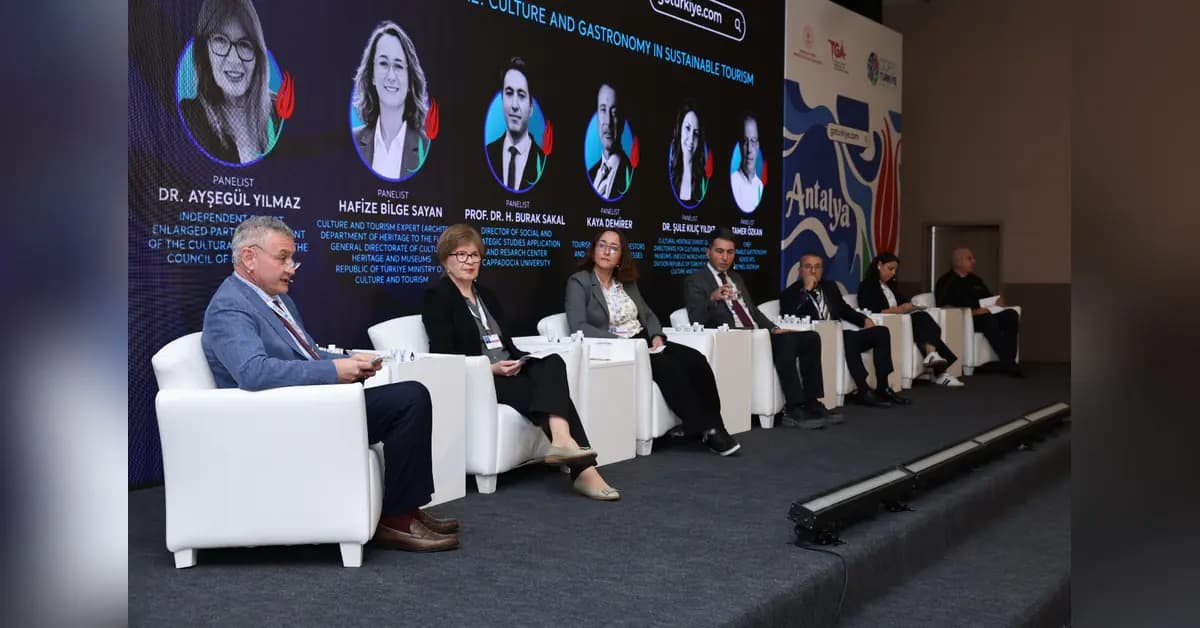
Participants included Dr. Ayşegül Yılmaz from the Council of Europe, Dr. Şule Kılıç Yıldız from the UNESCO World Heritage Sites Unit, and chef Tamer Özkan. The speakers agreed that incorporating authentic culinary practices into destination marketing shields heritage assets from overdevelopment.
Corporate Travel Supply Chains and Climate Action
The final panel analysed supply chain accountability with managers from Expedia, Booking.com, DERTOUR Group, and easyJet. They evaluated corporate policies to reduce emissions across transport and accommodation networks.
Alongside the Green Zone events, the Blue Zone hosted policy panels on zero waste and resilience with representatives from Brazil and Azerbaijan. In addition, the United Nations Development Programme participated in side sessions examining public-private cooperation to accelerate the sustainable tourism transformation across Mediterranean destinations.
Capital Allocation and Hospitality Infrastructure
A second panel examined financial mechanisms supporting physical asset upgrades. Chaired by Christopher Imbsen of the World Travel & Tourism Council, speakers addressed modernising hotel facilities and reducing resource consumption.
European Bank for Reconstruction and Development representative Martin McKee and Turkish Tourism Investors Association President Oya Narin discussed private sector financing. They noted that green building certifications and energy-efficient retrofits remain vital to attracting commercial capital into tourism markets.
Preserving Cultural Heritage and Regional Gastronomy
Discussions in the third session addressed the role of historical sites and local food traditions. Panelists reviewed ways to protect historical assets from environmental deterioration while supporting regional economies.
Participants included Dr. Ayşegül Yılmaz from the Council of Europe, Dr. Şule Kılıç Yıldız from the UNESCO World Heritage Sites Unit, and chef Tamer Özkan. The speakers agreed that incorporating authentic culinary practices into destination marketing shields heritage assets from overdevelopment.
Corporate Travel Supply Chains and Climate Action
The final panel analysed supply chain accountability with managers from Expedia, Booking.com, DERTOUR Group, and easyJet. They evaluated corporate policies to reduce emissions across transport and accommodation networks.
Alongside the Green Zone events, the Blue Zone hosted policy panels on zero waste and resilience with representatives from Brazil and Azerbaijan. In addition, the United Nations Development Programme participated in side sessions examining public-private cooperation to accelerate the sustainable tourism transformation across Mediterranean destinations.
National Models for Sustainable Tourism Transformation
The opening panel focused directly on how governments can design structured frameworks to address regional climate risks. Speakers examined policy frameworks that align international standards with local hospitality requirements.
The session brought together Australian Ambassador to Türkiye Sally-Anne Vincent, Mediterranean Touristic Hoteliers and Operators Association President Kaan Kaşif Kavaloğlu, and Global Sustainable Tourism Council Europe Director Dr. Ioannis Pappas. Participants noted that a national sustainable tourism transformation demands close coordination between regulatory bodies and commercial travel operators.
Capital Allocation and Hospitality Infrastructure
A second panel examined financial mechanisms supporting physical asset upgrades. Chaired by Christopher Imbsen of the World Travel & Tourism Council, speakers addressed modernising hotel facilities and reducing resource consumption.
European Bank for Reconstruction and Development representative Martin McKee and Turkish Tourism Investors Association President Oya Narin discussed private sector financing. They noted that green building certifications and energy-efficient retrofits remain vital to attracting commercial capital into tourism markets.
Preserving Cultural Heritage and Regional Gastronomy
Discussions in the third session addressed the role of historical sites and local food traditions. Panelists reviewed ways to protect historical assets from environmental deterioration while supporting regional economies.
Participants included Dr. Ayşegül Yılmaz from the Council of Europe, Dr. Şule Kılıç Yıldız from the UNESCO World Heritage Sites Unit, and chef Tamer Özkan. The speakers agreed that incorporating authentic culinary practices into destination marketing shields heritage assets from overdevelopment.
Corporate Travel Supply Chains and Climate Action
The final panel analysed supply chain accountability with managers from Expedia, Booking.com, DERTOUR Group, and easyJet. They evaluated corporate policies to reduce emissions across transport and accommodation networks.
Alongside the Green Zone events, the Blue Zone hosted policy panels on zero waste and resilience with representatives from Brazil and Azerbaijan. In addition, the United Nations Development Programme participated in side sessions examining public-private cooperation to accelerate the sustainable tourism transformation across Mediterranean destinations.
Discussions on sustainable tourism transformation took centre stage during the COP31 climate conference in Antalya on 18 November 2026. The Türkiye Tourism Promotion and Development Agency organised a specialized Tourism and Cultural Heritage Day in the Green Zone to examine international climate targets.
The programme gathered 20 panellists, four moderators, and three keynote speakers across five distinct sessions. Officials evaluated national models, green hospitality infrastructure, and cultural conservation methods to advance environmental responsibility across global destinations.
National Models for Sustainable Tourism Transformation
The opening panel focused directly on how governments can design structured frameworks to address regional climate risks. Speakers examined policy frameworks that align international standards with local hospitality requirements.
The session brought together Australian Ambassador to Türkiye Sally-Anne Vincent, Mediterranean Touristic Hoteliers and Operators Association President Kaan Kaşif Kavaloğlu, and Global Sustainable Tourism Council Europe Director Dr. Ioannis Pappas. Participants noted that a national sustainable tourism transformation demands close coordination between regulatory bodies and commercial travel operators.
Capital Allocation and Hospitality Infrastructure
A second panel examined financial mechanisms supporting physical asset upgrades. Chaired by Christopher Imbsen of the World Travel & Tourism Council, speakers addressed modernising hotel facilities and reducing resource consumption.
European Bank for Reconstruction and Development representative Martin McKee and Turkish Tourism Investors Association President Oya Narin discussed private sector financing. They noted that green building certifications and energy-efficient retrofits remain vital to attracting commercial capital into tourism markets.
Preserving Cultural Heritage and Regional Gastronomy
Discussions in the third session addressed the role of historical sites and local food traditions. Panelists reviewed ways to protect historical assets from environmental deterioration while supporting regional economies.
Participants included Dr. Ayşegül Yılmaz from the Council of Europe, Dr. Şule Kılıç Yıldız from the UNESCO World Heritage Sites Unit, and chef Tamer Özkan. The speakers agreed that incorporating authentic culinary practices into destination marketing shields heritage assets from overdevelopment.
Corporate Travel Supply Chains and Climate Action
The final panel analysed supply chain accountability with managers from Expedia, Booking.com, DERTOUR Group, and easyJet. They evaluated corporate policies to reduce emissions across transport and accommodation networks.
Alongside the Green Zone events, the Blue Zone hosted policy panels on zero waste and resilience with representatives from Brazil and Azerbaijan. In addition, the United Nations Development Programme participated in side sessions examining public-private cooperation to accelerate the sustainable tourism transformation across Mediterranean destinations.