Image, Cleaning Robot Adoption
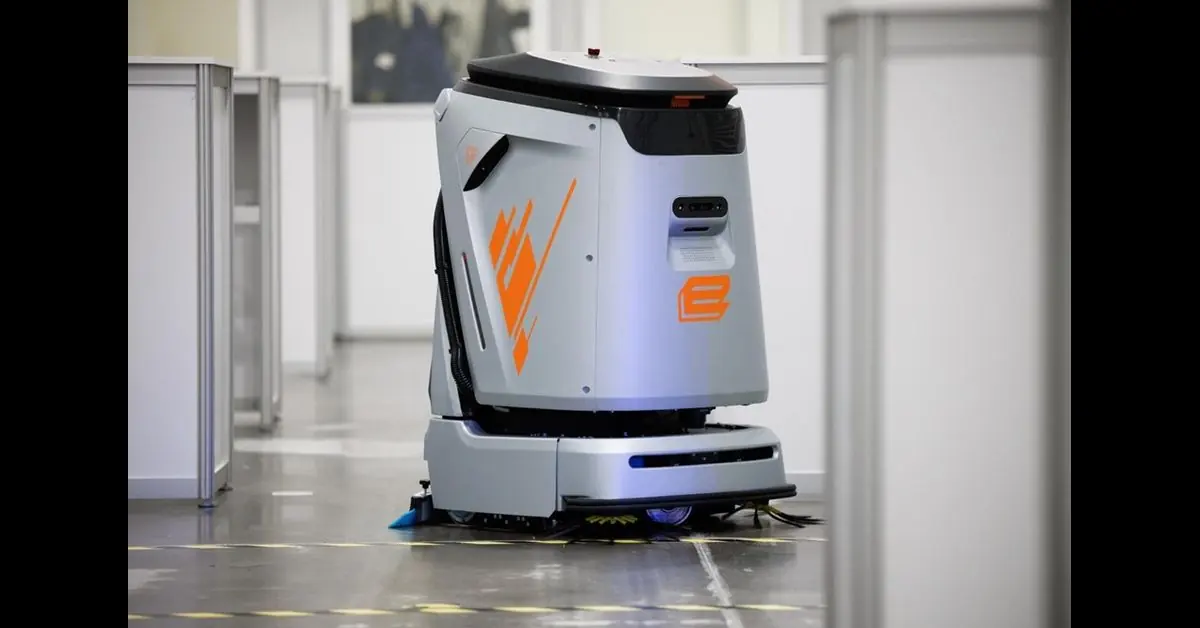
The deployment of commercial cleaning robots is accelerating globally as transport hubs and retail facilities integrate automated systems into daily operations. According to a research study jointly prepared by the Moscow Innovation Cluster, Sber, and Skoltech, the worldwide market for indoor cleaning automation will expand from USD 1.8 billion in 2024 to USD 6.4 billion by 2030, marking a 3.6-fold increase over the six-year period.
Adoption of cleaning robots across transportation hubs
International transport hubs are integrating autonomous cleaning equipment into large-scale passenger facilities. In the United Arab Emirates, Dubai Airports deployed over 30 units in partnership with facilities management firm Farnek. These autonomous machines operate across Terminal 1, Terminal 2, Concourse D, Dubai Cargo Village, and Al Maktoum International Airport to maintain operational consistency.
Similar projects are active across aviation infrastructure in Russia. Domodedovo Airport in Moscow conducted operational testing with the NOBLELIFT ANB510 unit. Meanwhile, Pulkovo Airport in St. Petersburg prepared to deploy 16 autonomous units operating continuously in high-traffic passenger areas, and Novosibirsk’s Tolmachevo Airport has operated the RUBI-S unit developed by ROBO since 2025.
Retail integration and implementation models
Commercial retail centres are also adopting automated equipment to handle high floor traffic. KazanMall shopping centre initiated testing for the MARK 2 machine developed by R2B. In addition, Russian retail chain Lenta acquired 42 units for deployment across hypermarket locations in four cities.
The study showed that implementation strategies differ significantly by region. In Russia, 60% of deployments begin with structured pilot programmes, compared with a global rate of 27%. These test trials permit commercial operators to evaluate operational metrics under field conditions before committing capital to full installations.
Commercial subscription structures
Subscription models represent 47% of deployments in Russia, compared with 35% across the global market. Under this financial structure, commercial operators pay periodic service fees while the equipment provider retains asset ownership and provides ongoing maintenance alongside software updates. This model reduces initial capital expenditure for facility managers.
Testing infrastructure and public procurement
Dedicated public infrastructure has expanded to support hardware validation. The Moscow Innovation Cluster established a specialized Robotics Testing Centre in March 2026, which evaluated 33 robotic units. Participating companies retain access to 300 testing locations where 729 technical trials took place, while municipal customers adopted RUB 12.5 billion worth of automated solutions during 2025 and 2026.