AI-generated illustration
This edition of the daily AI roundup highlights significant engineering steps across space hardware, neural interfaces, and localized speech models. Technical teams are currently testing new methods to run machine learning workloads on specialized hardware and smaller consumer devices, expanding practical applications across multiple sectors.
Major Systems in Orbit and Medicine
Medical neurotechnology reached a new operational milestone. Neuralink announced that its clinical trial participants recorded over 50,000 hours with brain implants. The engineering team used this intracortical dataset to pretrain self-supervised neural encoders for brain-computer interface decoding, according to @neuralink, advancing direct neural interface software for health research.
Meanwhile, Google AI deployed its first Project Suncatcher satellite into low Earth orbit in partnership with Planet. The mission serves as an initial test to determine whether machine learning infrastructure can operate reliably in space environments, as reported by @GoogleAI.
In consumer software, OpenAI started rolling out its Finances tool to Free and Go tier users in the United States. This feature connects user accounts through Plaid and Experian to ground automated answers in personal financial records, as noted by @ChatGPT within modern applications.
New Models and Evaluation Benchmarks
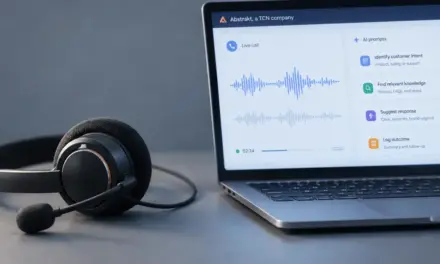
Evaluation frameworks are adapting to complex enterprise domains. Software firm micro1 introduced CortexRetrievalBench, a benchmark designed to assess retrieval and reranking systems on financial records, according to @micro1_ai. The benchmark focuses on the evidence-selection process that supplies context to enterprise models before generating responses for fintech operations.
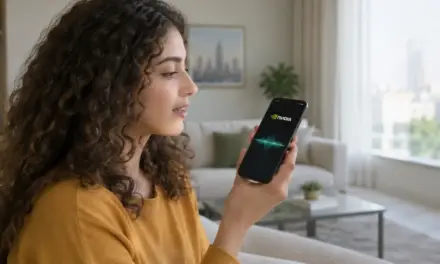
For regional language processing, NVIDIA published technical materials detailing speech recognition gains in regional Arabic dialects. Fine-tuning the Nemotron 3.5 ASR model on Najdi and Hijazi spoken Arabic reduced the word error rate from 55 percent down to 30 percent, as confirmed by @NVIDIAAI.
In formal mathematics, NEAR AI secured the top ranking on the Lean Eval v1 leaderboard. NEAR co-founder Illia Polosukhin stated that the team achieved the benchmark position four weeks after entering the formalization challenge run by Lean FRO, via @ilblackdragon.
Efficient AI Hardware and Speech Models
On-device efficiency saw progress through lightweight architectures. Cactus Compute launched Whistle, a 16.9MB speech-to-text model designed to run locally on central processing units across seven languages. According to @cactuscompute, Whistle outperforms Whisper base in accuracy while operating nine times smaller and six times faster on standard computing hardware.
Summary of the Daily AI Roundup
These releases reflect steady optimization in modern artificial intelligence development. From regional speech accuracy improvements in Saudi dialects to space-bound hardware tests, this daily AI roundup tracks direct progress in real-world deployment across consumer and enterprise environments.