EAC Fund
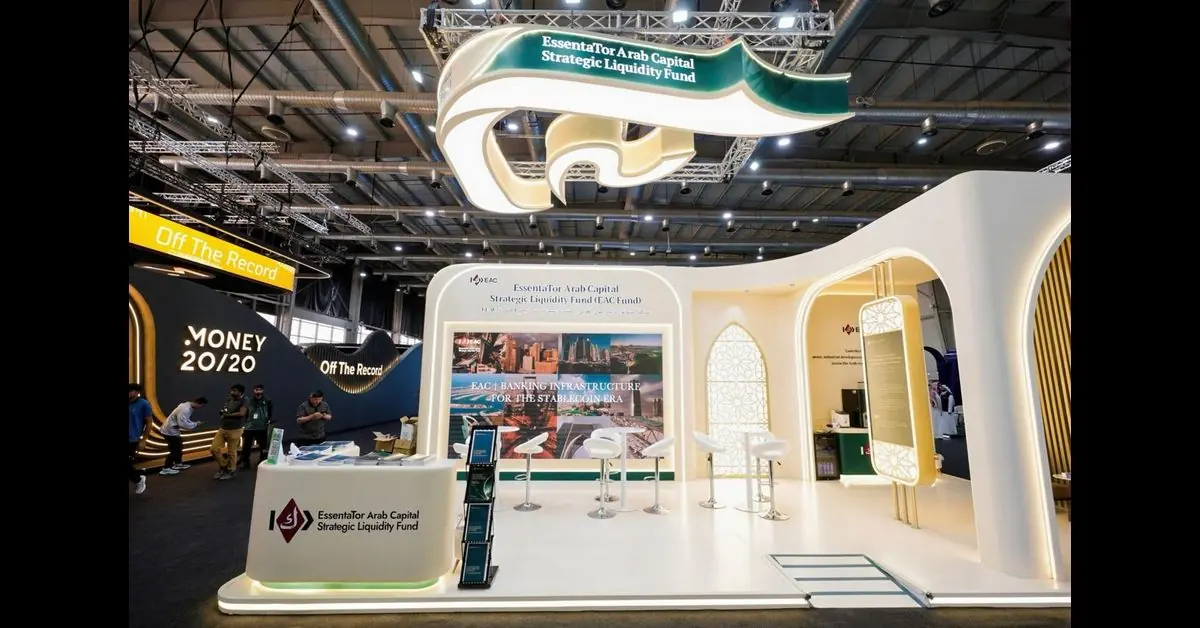
The EAC Fund was showcased by EssentaTor Inc. during the Money20/20 Middle East conference in Riyadh, presenting a financial architecture designed for Arab and international institutions.
Held from September 14 to 16, the conference served as an international platform to outline strategic plans across four core functional sectors. These primary sectors encompass institutional capital custody, liquidity management, joint stablecoin issuance, and individual accounts integrated with commercial banking and social media platforms.
Institutional Custody Under the EAC Fund
Operating across major global financial centers including Riyadh, Abu Dhabi, Dubai, Doha, and New York, the program links central banks and institutional entities with international capital markets. The architecture aims to enhance cross-border capital flow efficiency and provide liquidity support across regional boundaries.
Under the operational model, EssentaTor intends to serve as the Core Value Strategy Sponsor and General Partner. In this capacity, the organization coordinates policy requirements, strategic frameworks, and technical deployments for regional sovereign wealth funds and commercial banks operating across the Middle East.
Joint Stablecoin Reserves and Digital Assets
The liquidity framework connects traditional fiat banking systems with public blockchain networks to facilitate institutional settlement and comprehensive fund management. Furthermore, this structure prepares participating financial institutions for compliant digital payment applications across global regulatory jurisdictions.
Institutional participants can execute USDC minting and redemption operations directly through their established custody accounts. Consequently, institutional clients will not need to open separate accounts directly with Circle to manage these digital asset transactions within the evolving fintech environment.
Individual Accounts and Identity Infrastructure
The initiative integrates end-user mobile and commercial applications with institutional back-end systems for commercial banks and payment firms. Supported by advanced artificial intelligence, the infrastructure manages essential identity verification, anti-money laundering controls, counter-terrorist financing checks, and broader financial inclusion programs in close coordination with regulatory bodies.
Industrial Growth and Regional Initiatives
Drawing on established economic development models from East Asia and Southeast Asia—specifically China, Japan, South Korea, Taiwan, and Vietnam—the strategy actively supports regional industrial supply chains. Specifically, the framework backs specialized manufacturing and development initiatives such as Made in Arabia to advance regional brand growth, competitiveness, and technical development across Arab markets.