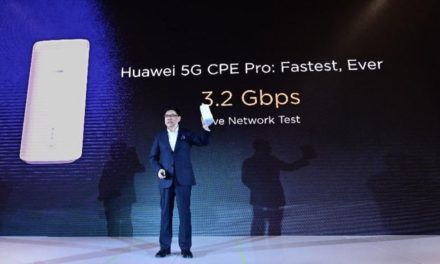

Huawei presented a strategy at MWC25 Doha aimed at helping Gulf operators leverage 5G-Advanced technology and artificial intelligence to generate 4-7% telecom growth across the GCC region. Allen Tang, President of Huawei Middle East & Central Asia ICT Marketing & Solution Sales, outlined what the company calls a “3A” approach during his keynote on Wednesday.
The strategy focuses on three pillars: 5G-A network experiences, Always-Online Standalone (SA) architecture, and AI-driven network operations. According to Huawei, more than 25 commercial 5G-A networks are now operational worldwide, with the GCC region reporting over one million 5G-A subscribers.
Key Takeaways
- Huawei’s 3A strategy targets 4-7% telecom growth in GCC through 5G-A, Standalone networks, and AI operations
- Company reports 25+ commercial 5G-A networks globally; GCC region surpasses 1 million 5G-A users
- Three revenue models proposed: tiered speed plans (20% ARPU boost), enhanced gaming/streaming, and VIP services
- Nearly 80% of regional operators advancing to Standalone architecture, according to Huawei
5G-A Telecom Growth Through New Revenue Models
Huawei projects that operators deploying 300 MHz spectrum can deliver 5 Gbps experiences currently, with 10 Gbps expected within two years. The company outlined three commercial models to monetize 5G-A networks in the GCC.
First, tiered speed plans offering up to 3 Gbps could increase Average Revenue Per User (ARPU) by approximately 20%, according to Tang. Second, enhanced experiences for high-demand use cases like gaming and streaming create differentiated service tiers. Third, premium services for VIP and VVIP users aim to strengthen customer loyalty in high-value segments.
“Aligning 5G-A with bold commercial innovation is how operators turn breakthrough technology into durable revenue,” Tang stated during his presentation. However, these projections remain to be validated through market deployment.
Standalone Network Migration Accelerates
Nearly 80% of regional operators are advancing to Standalone 5G architecture, which Huawei says improves coverage by around 20% and boosts uplink performance by more than 50% compared to Non-Standalone implementations. Additionally, Standalone architecture reduces latency and extends device battery life.
The transition enables new services including wearables, device-to-device connectivity, and Fixed Wireless Access (FWA). Furthermore, Standalone networks support emerging low-altitude applications such as drone delivery and urban air mobility, according to the company.
Tang emphasized that Standalone architecture is critical for mobile AI applications requiring low latency and strong uplink capacity. Approximately 75% of smartphones in the GCC already support Standalone, while more than 36% are AI-capable, based on Huawei’s data.
AI-Driven Network Operations Development
Huawei described two pathways for operators implementing AI in network management. First, evolution toward Autonomous Network Level 4, where AI agents analyze data, make decisions, and execute tasks across planning, optimization, and assurance functions.
Second, the company advocates building unified, cross-domain data infrastructure. This approach aims to enable operators to convert complex operational questions into actionable insights through AI analysis.
The company’s portfolio includes what it describes as an advanced 5G-A core network and intelligent business systems designed to help operators launch services faster and scale new monetization models. Nevertheless, the practical implementation timeline for these capabilities varies by operator and market.
Regional Leadership Ambitions
Tang positioned the Middle East and GCC as potential leaders in next-generation telecommunications. “From Middle East to the world, innovation never stops,” he said, highlighting the region’s opportunity to pioneer speed-based and experience-based monetization strategies.
Huawei, which employs more than 207,000 people globally and operates in over 170 countries, continues to face scrutiny in some markets over security concerns. The company maintains that its focus remains on driving connectivity and AI adoption across the telecommunications sector.
The MWC25 Doha conference marks the first time the Mobile World Congress series has been held in Qatar, bringing together regional operators, technology vendors, and industry stakeholders to discuss telecommunications development in the Middle East and North Africa.