Huawei Cloud Launches MaaS Security Whitepaper at GISEC
The newly released Huawei Cloud MaaS security whitepaper provides enterprise guidelines for protecting Model-as-a-Service environments across regional markets.
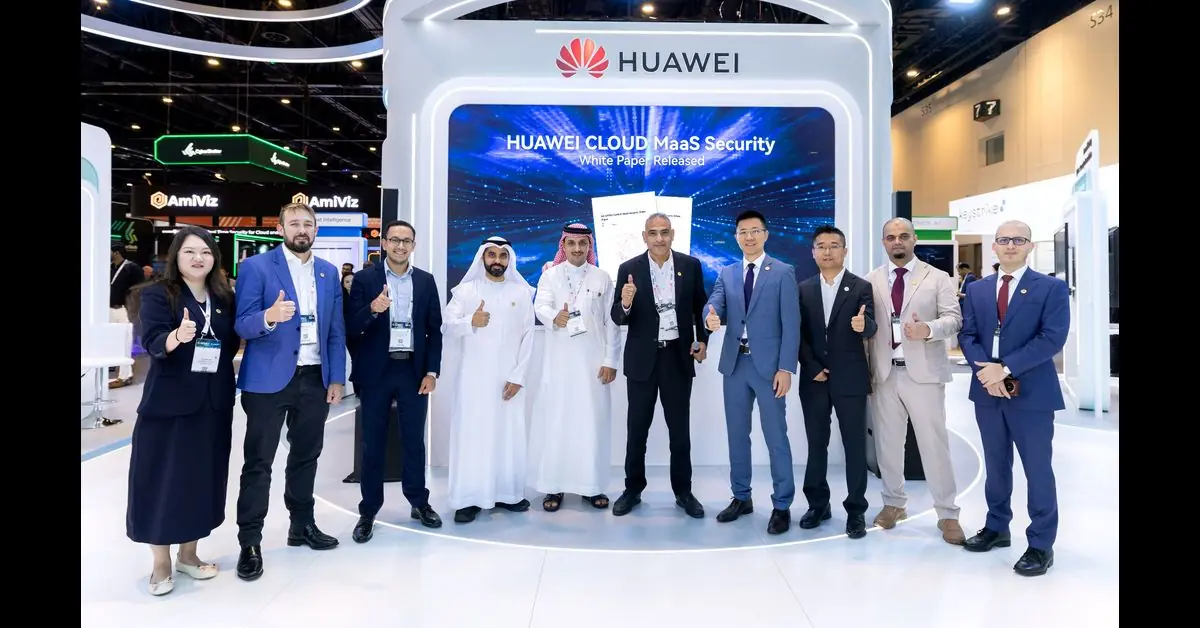
Announced during GISEC Global 2026 in Dubai on September 17, 2026, the publication addresses operational risks as public agencies and private enterprises transition artificial intelligence projects from testing phases into core operations. The document focuses on maintaining balanced governance, data protection, and continuous system oversight.
Shared-Responsibility Framework in Huawei Cloud MaaS
Security structures outlined in the report depend on a division of administrative duties between providers and clients. Under this model, Huawei Cloud manages the underlying cloud infrastructure alongside managed platform services. Meanwhile, enterprise customers retain accountability for configuring data, managing uploaded content, and monitoring applications that interact with the system.
The report specifies protection measures across five operational sectors: data, model, content, application, and operations. Furthermore, the company integrates these controls directly into a DevSecOps development pipeline, which embeds security protocols during early application design phases.
DevSecOps Pipeline and Risk Management
The publication offers operational guidance for practitioners and regulatory bodies regarding lifecycle data management and multi-tenant access control. It also details defensive measures for models and autonomous agents against threats specific to intelligent computing systems.
“The new digital order is changing the conventional norms of cybersecurity. As AI becomes embedded in critical operations across the region’s banks, government services and enterprises, security must evolve beyond protecting infrastructure to governing the models and Agents built on top of it. This whitepaper sets out Huawei Cloud’s approach to securing MaaS services and the measures customers can take to protect their applications throughout the lifecycle.”
Alan Qi, President of Huawei Cloud Middle East & Central Asia
Consequently, the framework defines continuous monitoring protocols and structured incident response mechanisms. These procedures aim to keep operational tracking active throughout the operational life of each deployed system.
Implementation in Financial Services
To illustrate practical deployment, the document includes a case study from the fintech sector. The financial institution implemented a multi-layered protection framework to secure automated claim settlement operations and internal workflows without compromising operational speed.
As a Lead Strategic Partner at GISEC Global 2026, the company showcased integrated protection architectures across network systems, cloud environments, and stored data. Organizations evaluating modern cybersecurity architectures can access the complete technical publication through official distribution channels.