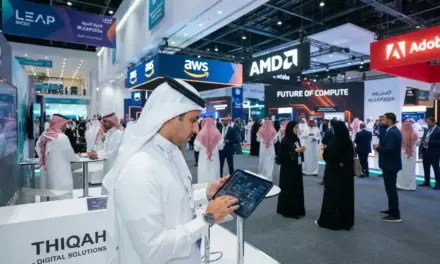

Artificial Intelligence (AI) continues to evolve at a breakneck pace, with new advancements emerging almost daily. For technology enthusiasts in the Middle East, particularly in Saudi Arabia, these innovations hold immense potential for transformation across various sectors. This article dives into some of the most significant recent developments, exploring their implications for the region and beyond.
Ideogram 2.0: Democratizing Graphic Design with AI
One of the most exciting developments in the AI landscape is the release of Ideogram 2.0, a cutting-edge text-to-image model now available to all users for free. This powerful tool allows users to generate high-quality images by describing what they envision. Ideogram 2.0 boasts exceptional prompt adherence, unlike other AI image generators, creating accurate and usable graphics that rival professionally designed visuals.
This accessibility has significant implications for businesses and individuals in the Middle East. Small businesses, entrepreneurs, and marketers can create compelling visuals for their brands and campaigns without expensive design software or professional expertise. This democratization of design empowers creativity and innovation across the region.
Google Gemini: A New Era of AI Interaction
Google’s Gemini AI assistant is another groundbreaking development poised to revolutionize AI interaction. Built on advanced natural language processing capabilities, Gemini allows users to engage in remarkably natural and intuitive conversations.
Furthermore, Google’s Project Astra promises to integrate real-world context into Gemini interactions. By leveraging the camera on Android devices, Gemini can “see” and understand the user’s environment, providing more relevant and helpful assistance. Imagine getting step-by-step help assembling furniture or brainstorming ideas for a neighborhood gathering – all through a seamless conversation with your AI assistant.
The Human Side of AI: Addressing Ethical Considerations
As AI assistants like Gemini become increasingly sophisticated and human-like, it’s crucial to consider the ethical implications of this evolving relationship. Research has highlighted the potential for users to anthropomorphize AI, attributing human emotions and motivations to these systems. This can lead to emotional dependence and even addiction, particularly among vulnerable populations.
The upcoming release of GPT-4 with voice mode is expected to exacerbate this phenomenon further. The ability to interact with AI through a natural-sounding voice could blur the lines between humans and machines, raising essential questions about the responsible development and use of AI technologies.
Robotics Advancements: From Boston Dynamics to Unitrix
Beyond the realm of AI assistants, robotics is also experiencing remarkable progress. Companies like Boston Dynamics continue to push the boundaries of humanoid robotics, showcasing increasingly agile and versatile robots capable of performing complex tasks.
Meanwhile, companies like Unitrix focus on making humanoid robots more affordable and accessible for research and development. The Unitrix G1, for example, is designed for mass production, paving the way for broader adoption of these technologies in various industries, including logistics and automation in the Middle East.
The Future of AI: Continued Growth and Innovation
Research suggests that AI capabilities will grow exponentially in the coming years. Epoch AI, for instance, predicts that by 2030, we could see AI models 10,000 times larger than GPT-4. This unprecedented scale of AI development promises even more powerful and versatile AI systems capable of tackling complex challenges across various domains.
This continued growth presents both opportunities and challenges for the Middle East. Embracing these advancements will drive innovation and economic development in the region. However, addressing the ethical considerations and societal implications of increasingly powerful AI technologies will also be crucial.
The rapid advancements in AI and robotics hold transformative potential for the Middle East, particularly for Saudi Arabia’s burgeoning tech scene. From democratizing design with tools like Ideogram 2.0 to revolutionizing human-AI interaction with Google Gemini, these innovations are poised to reshape various industries and aspects of daily life. By staying informed about these developments and engaging in thoughtful discussions about their implications, we can ensure that the future of AI in the Middle East is both innovative and responsible.