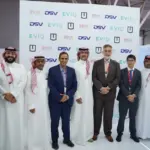
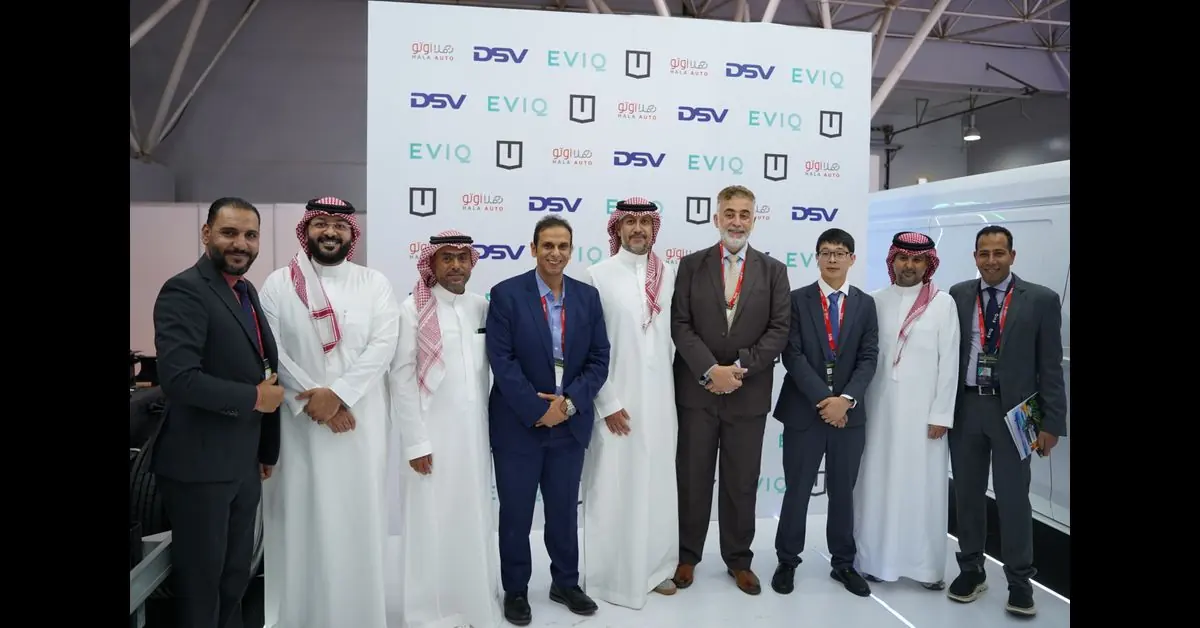
A new commercial agreement centered on logistics fleet electrification brings together EVIQ, Hala Auto, and transport operator DSV in Saudi Arabia. The tripartite initiative combines commercial vehicle supply, dedicated charging systems, and operational fleet management to support sustainable freight operations across Riyadh.
Under the framework, Hala Auto will deliver commercial cargo vans and heavy trucks suited to local freight requirements. Meanwhile, electric vehicle infrastructure firm EVIQ will install private depot charging points exclusively for DSV vehicles while granting full operational access to its public charging network. The arrangement allows DSV to deploy zero-emission commercial vehicles across its central distribution hubs in Riyadh.
Logistics fleet electrification operational framework
The agreement splits operational responsibilities among the three corporate partners to create a functional transition model. Specifically, Hala Auto serves as the primary commercial vehicle provider by sourcing commercial electric vans and trucks aligned with regional freight workloads. Furthermore, the firm handles vehicle deployment tasks to ensure technical compatibility with local road logistics in the automotive sector.
Concurrently, EVIQ manages power delivery by engineering depot charging systems built directly around vehicle schedules. Fleet vehicles will also connect to public charging plazas, which provides operational flexibility during long delivery routes.
Economic impact on commercial fleet operations
For DSV, moving away from diesel combustion vehicles serves specific financial and environmental goals. Company projections indicate that logistics fleet electrification will lower the total cost of ownership by curbing fuel spending and reducing mechanical service intervals. Consequently, the company aims to reduce freight emissions while advancing national sustainability targets.
The program supports corporate emission reductions in the transport industry, which aligns with broader targets outlined in the Kingdom’s environmental strategy. In addition, lower vehicle maintenance overhead improves capital allocation across regional economy operations.
Executive statements on commercial mobility
“The transition to electric fleets requires more the right charging infrastructure that is designed around how businesses operate. Our collaboration with Hala Auto and DSV brings together dedicated charging infrastructure, fleet solutions and logistics expertise to create a practical pathway for fleet electrification. We see this as an important step in supporting the growth of electrified logistics in Saudi Arabia.”
Mohammad Gazzaz, Chief Executive Officer at EVIQ
The Chief Executive Officer of Hala Auto stated that commercial adoption depends heavily on operational practicality:
“At Hala Auto, we believe the transition to sustainable mobility must be practical, scalable and aligned with the real needs of businesses operating in Saudi Arabia. Our partnership with EVIQ and DSV brings together the key elements required to accelerate fleet electrification, the right electric vehicles, reliable charging infrastructure and integrated logistics expertise.”
Chief Executive Officer, Hala Auto
Walid El Naameh, Director, Country Manager, Road, Saudi Arabia at DSV, highlighted the environmental scope of the partnership:
“This partnership marks an important milestone in DSV’s sustainability journey in Saudi Arabia. By combining electric vehicle technology, charging infrastructure and logistics expertise, we are building the foundation for lower-emission transport solutions that support both our customers’ sustainability goals and our own commitment to reducing emissions.”
Walid El Naameh, Director, Country Manager, Road, Saudi Arabia, DSV
Regional commercial mobility outlook
Coordinated private-sector cooperation serves as a template for large-scale logistics fleet electrification throughout the Arabian Peninsula. By connecting vehicle distributors, utility providers, and logistics firms into a single deployment stream, the alliance addresses long-standing infrastructure hurdles in Saudi Arabia. As commercial fleets expand in Riyadh, the program demonstrates how industrial transport operators can transition toward clean freight networks.