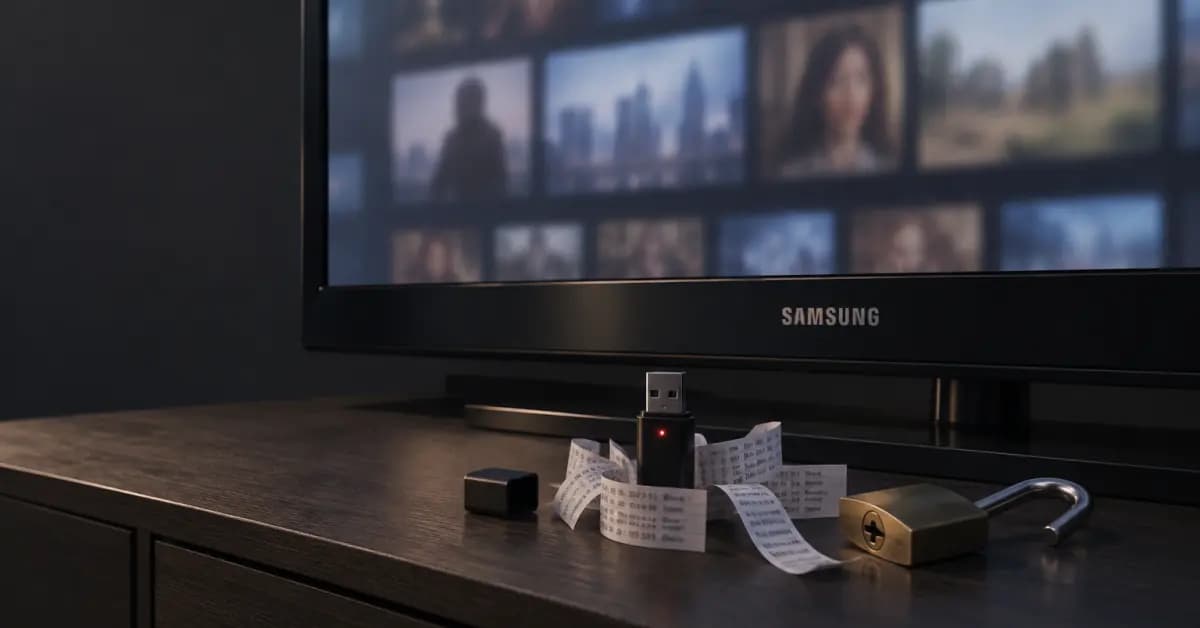
Samsung Electronics has confirmed a cyber incident at a third-party vendor after a ransomware gang published 220MB of files it says belong to the company, including records of smart TV viewing activity.
The group, known as n0n, posted the files on its dark web leak site after a countdown it had set ran out, according to Cybernews, whose researchers examined the leaked material.
A Samsung spokesperson told Cybernews the incident involves a vendor that supported advertising data processing for its North America Service Business, known as Samsung Ads.
“The vendor’s preliminary investigation indicates that some Samsung information may have been affected in the incident. We are working with the vendor on an investigation to determine the scope of the incident,” the spokesperson said.
Samsung added that it will share more information as the investigation progresses. The statement did not name the vendor, confirm the contents of the leaked files, or say whether customers outside North America are affected.
What the researchers found
Cybernews researchers said one of the largest datasets holds around 150,000 smart TV viewing events from 2024. The records include timestamps, viewing durations, device information, cities, ZIP codes and the names of TV service providers.
The dataset does not show what individual users watched, the researchers said. It does show the kind of usage data collected from Samsung devices.
A second dataset holds about 42,600 records on political advertising aired in September and October 2026, along with one political advertisement video. The records list political affiliations, the issues raised in the ads, sponsors, estimated costs and timestamps.
The researchers also found around 99,100 records linked to the training of an AI advertising model in 2021. Most of it consists of embedding vectors, which are mathematical representations of training data.
Two internal documents were in the leak as well. One, dated September 2026, sets out rules for the proper use of collected data and carries the full name and email address of a Samsung employee. The other is an access questionnaire for what appears to be Samsung’s Content Data Warehouse, with information about an employee and details of the company’s infrastructure.
A new group
n0n is a recent arrival among ransomware groups and drew the attention of security researchers in mid-September. Cybersecurity firm SOCRadar found that a file server used by the group had been left exposed on the open internet, and that the attackers rely heavily on AI tools to build scripts for scanning and reconnaissance.
Samsung has not said how many people may be affected.