Saudi Arabia’s Ministry of Finance has issued the final statement of the state budget for fiscal year 2027, setting total spending at SAR 1,392 billion against revenue of SAR 1,202 billion. The resulting deficit of SAR 191 billion equals 3.6% of GDP, down from an expected SAR 245 billion (4.9%) in 2026.
For the technology sector, the statement sets a clear target: the telecom market is to reach SAR 88 billion and the IT market SAR 130 billion by the end of 2027. That compares with a combined communications and technology market of SAR 208 billion at the end of 2026, which grew 4.5% over 2025. The ministry says the aim is to raise the sector’s share of GDP and place the Kingdom among the top 25 digital economies worldwide.
AI compute and data centres
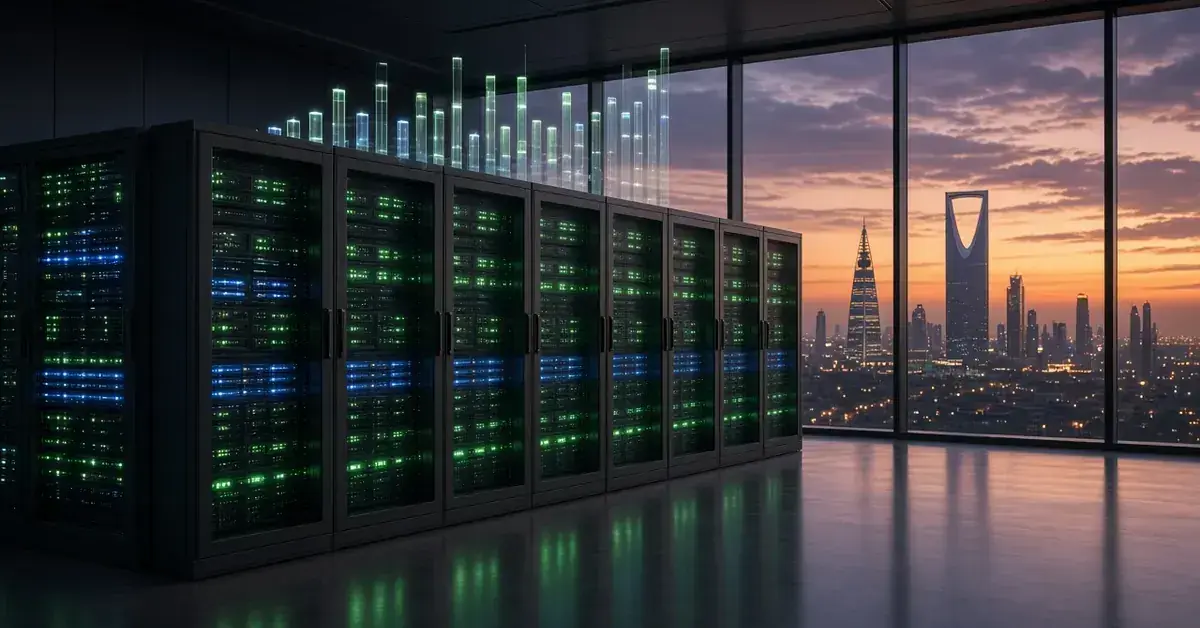
Among the planned projects, the statement lists the allocation of 5,000 AI processors (GPUs) for sovereign use in 2030, to speed up the adoption of AI in priority government entities. In 2026, total data-centre development capacity rose to 844 megawatts, with more than 1.2 million square metres of land set aside for data centres in industrial cities and technology zones.
The number of Saudi unicorns reached 10 in 2026 after two companies joined the list, and the budget targets 11 in 2027.
Digital government
Government digital initiatives saved SAR 1.255 billion up to the third quarter of 2026, bringing cumulative savings since 2020 to about SAR 10.499 billion. The Tawakkalna app now offers more than 1,500 services. The Absher platform added 59 new Ministry of Interior services in 2026, and 30 more are planned for 2027. Electronic gates were launched at four airports and served more than 17 million travellers.
Electronic payments reached 85% of all retail payment transactions by the end of 2025, above the 70% target set in the Financial Sector Development Program.
Rankings and cybersecurity
The statement records that the Kingdom ranked first globally in the ICT Development Index for the second year in a row, and held first place in the IMD cybersecurity index for the third year. Riyadh rose to 24th in the IMD Smart City Index. Riyadh also saw the first applied phase of self-driving vehicles, covering more than 3,900 trips.
Where the money sits
Communications and IT, data and AI, digital government and space fall under the infrastructure and transport sector, which receives SAR 38 billion in 2027. The allocation is shared by 18 government entities and also covers roads, ports, airports, real estate, postal services and industrial cities, so the statement gives no separate figure for technology.
The wider picture
Real GDP is estimated to contract by 2.1% in 2026, which the ministry attributes to geopolitical developments, while non-oil activities grow 2.5%. For 2027 it forecasts real GDP growth of 10.9%, supported by a recovery in oil activities. Public debt is projected to reach SAR 1,923 billion in 2027, or 35.9% of GDP, and government reserves at the Saudi Central Bank are expected to stay at about SAR 399 billion.