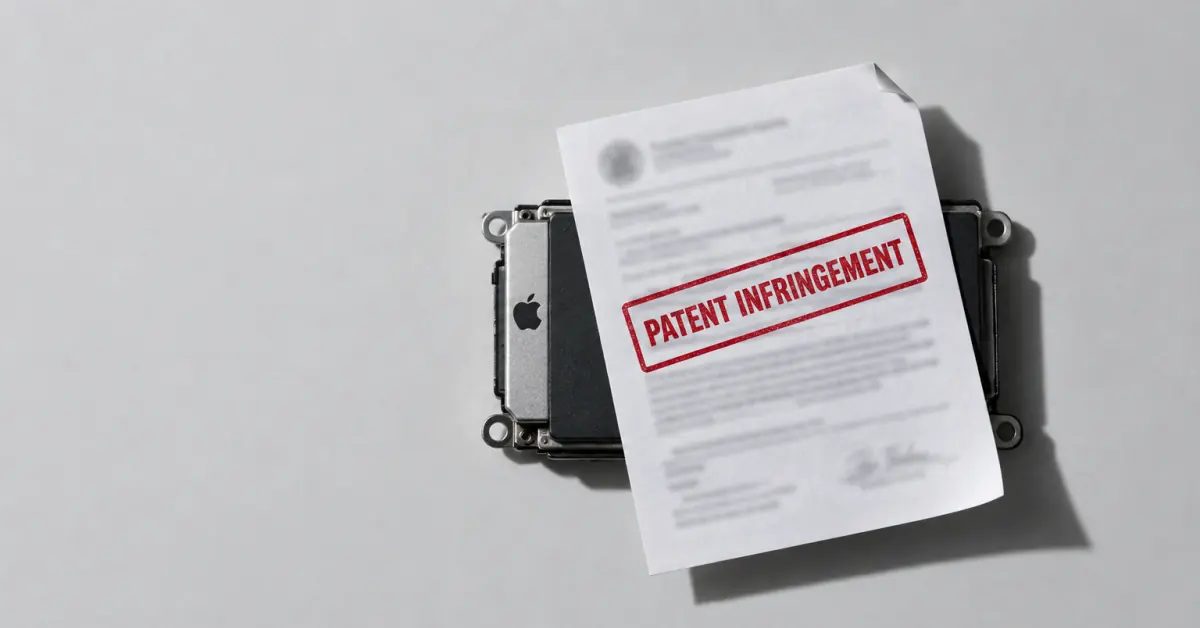
AI-generated illustration
A federal jury in San Diego delivered a massive Apple patent verdict, ordering the tech giant to pay more than $5.7 billion in damages to haptics company Taction. The legal battle concluded after jurors determined that specific hardware components infringed on proprietary tactile vibration technologies.
Details of the San Diego Trial
The dispute originated in 2021 when Taction filed a lawsuit asserting that hardware in popular mobile devices violated its intellectual property. Specifically, the case centered on U.S. Patent Numbers 10,659,885 and 10,820,117, which cover vibration-based tactile transducer systems designed to generate physical feedback upon user input.
During the proceedings, Taction argued that the proprietary Taptic Engine found inside modern iPhones and Apple Watches incorporated its patented engineering without authorization. The jury agreed with several core arguments, finding that Apple infringed two claims in the first patent and one claim in the second patent.
Understanding the Apple Patent Verdict and Technology Claims
According to The Verge, Taction previously alleged that Apple reverse-engineered the tactile systems from two Kannon gaming headsets. Despite the significant monetary penalty, the jury concluded that Apple did not act with willful intent regarding the infringement.
Consequently, the substantial damages award reflects calculated licensing value rather than punitive multipliers. The outcome of the Apple patent verdict represents one of the largest financial penalties ever issued in a dispute involving consumer electronics hardware.
Hardware Implications for Smart Wearables
Tactile feedback mechanisms remain an essential component across current smart devices, providing precise notifications and interface responses. Taction’s patented transducer designs directly address how vibration motors simulate realistic physical sensations when users tap glass screens or digital crowns.
Because the affected hardware spans multiple high-volume product lines, the financial scope escalated rapidly throughout the calculation phase of the trial.
Planned Appeals and Next Legal Steps
Following the delivery of the decision, Apple confirmed that it intends to appeal the outcome in higher federal court. Legal representatives will likely challenge both the validity of the patent claims and the methodology used to calculate the $5.7 billion sum.
Furthermore, appellate proceedings in major hardware patent disputes often take years before reaching a final resolution, potentially leading to revised damages or negotiated settlements between both parties.