
Semiconductor firm AMD acquires World Labs in an all-stock transaction valued at approximately $8.2 billion, according to reporting by Ars Technica. The deal brings the frontier AI startup under the chipmaker’s umbrella by the end of the year, subject to regulatory approval.
Details of the Transaction
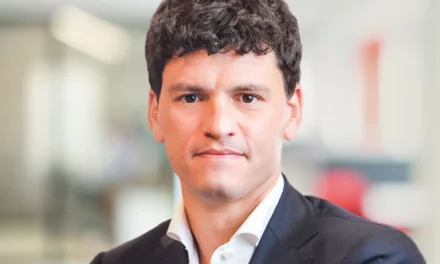
Dr. Fei-Fei Li founded World Labs in 2024 alongside researchers Justin Johnson, Christoph Lassner, and Ben Mildenhall with $230 million in initial funding. Following the acquisition, Li joins AMD as Executive Vice President and Chief Scientist, reporting directly to CEO Lisa Su.
“Building the compute platforms for the next generation of AI requires a deep understanding of how models are evolving. Fei-Fei and the World Labs team bring exceptional research leadership and model expertise.”
Lisa Su, CEO of AMD
Meanwhile, the transaction marks a significant move in the economy of advanced semiconductor development. World Labs was valued at $1 billion within months of its founding before securing this multibillion-dollar acquisition.
How AMD acquires World Labs to Expand Capabilities
Industry analysts observe that AMD acquires World Labs to accelerate its development of systems designed for physical intelligence and reasoning. The research team will operate as a dedicated frontier research organization led by Li, Johnson, and Mildenhall.
Furthermore, AMD stated that integrating advanced model research directly into hardware design will strengthen its capacity to build specialized processors. As AI workloads diversify into robotics and spatial simulation, hardware architectures require closer alignment with evolving algorithmic demands in the wider AI sector.
Technology Behind World Models
World Labs develops world models, which are computational systems designed to generate predictive, interactive simulations of the physical environment. In 2025, the startup launched Marble, a commercial tool that generates 3D spaces using Gaussian splats from text prompts.
These generated environments export directly into 3D assets for virtual production and the gaming sector. The startup also introduced Atlas, expanding tools useful for creating synthetic training data for autonomous systems and robotics.
Future Computing Roadmap
Consequently, the deal positions the chipmaker to compete more directly against NVIDIA in physical simulation workloads. NVIDIA currently leads the segment with its Cosmos platform and specialized robotics training frameworks.
Before this deal, the chipmaker developed open-source initiatives like Micro-World for researchers. When AMD acquires World Labs, it gains an established stack of proprietary software alongside researchers who will directly influence future silicon architectures for enterprise computers.