AI-generated illustration
OpenAI announced new persistent Codex cloud environments at its annual DevDay event, allowing software engineers to maintain active developer workspaces across multiple devices. The update expands the capabilities of the engineering agent beyond local computers, according to TechCrunch.
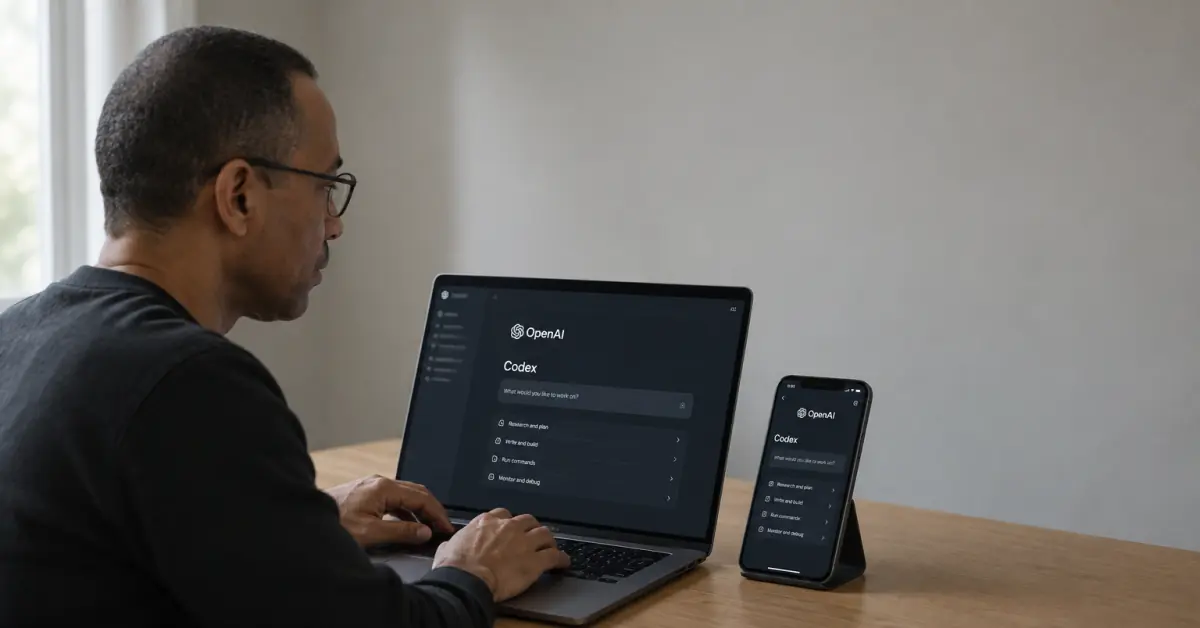
Rather than treating each cloud task as an isolated temporary sandbox, the persistent setup provides shared workspaces configured with specific permissions. Developers can access and execute tasks from desktop computers, mobile phones, or remote servers without losing setup state.
Expanding Codex Cloud Environments
The reusable nature of Codex cloud environments enables development teams to launch technical workflows quickly. Workspaces maintain pre-approved team settings, which reduces setup friction when collaborating on complex codebases.
In addition to remote persistence, OpenAI rolled out voice command functionality for the command-line interface. Developers can direct programming operations verbally and monitor ongoing assignments through a dedicated agents dashboard.
Code Review Integration in ChatGPT Desktop
OpenAI integrated automated code inspection directly into the ChatGPT desktop application. The system generates summaries, examines file modifications, and answers user queries regarding code quality before developers submit pull requests to GitHub or GitLab.
Automated reviews can run independently in the background, allowing the system to process changes while programmers step away from their workstations. This workflow links directly into modern apps for collaborative software maintenance.
Automated Scanning with Codex Security Cloud
To support repository defense, OpenAI launched Codex Security Cloud. The system scans entire source code repositories on demand or automatically whenever developers push new commits.
When vulnerabilities appear, the service analyzes findings, deduplicates issues, and prepares fixes in the background even when user laptops are closed. The tools incorporate defensive models from the Daybreak Blue initiative without requiring separate application approvals, strengthening corporate cybersecurity pipelines.
Updates to Developer APIs and Cloud Infrastructure
Alongside developer tooling, OpenAI released the Decisions API for real-time evaluation tasks using Luna. An updated Agents API now supports automated computer use alongside compatibility with Amazon Bedrock Managed Agents to run agentic workloads directly on AWS infrastructure.
These infrastructure updates broaden how enterprise teams deploy artificial intelligence agents across internal systems. The persistent architecture ensures development tasks continue uninterrupted regardless of hardware connectivity.