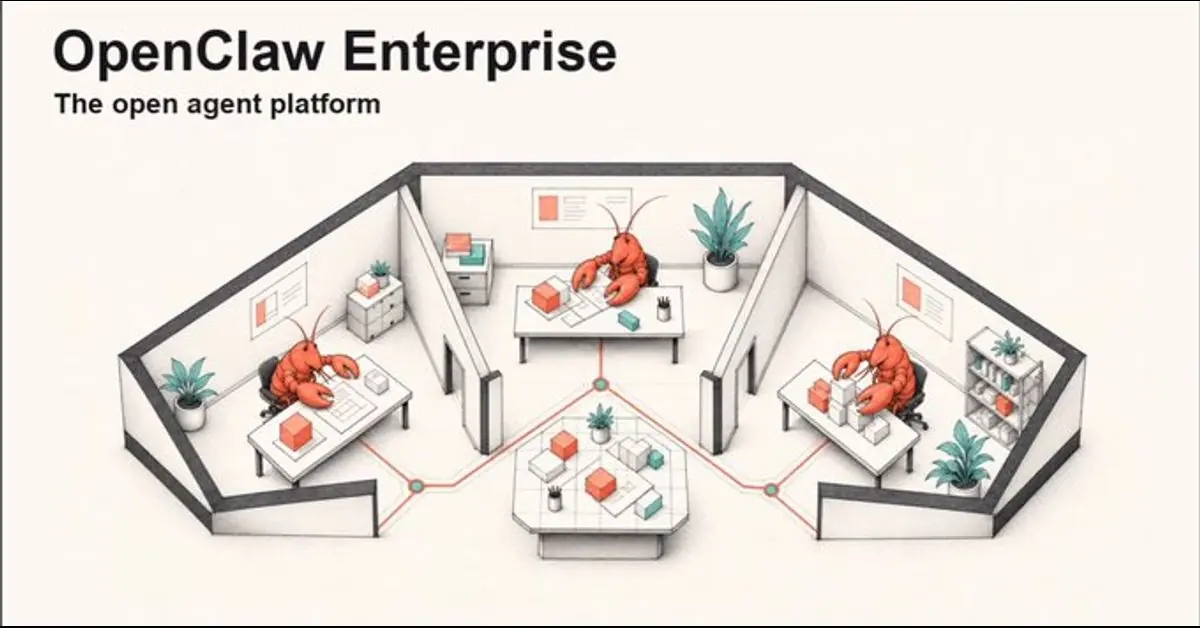
OpenClaw Enterprise has launched as an early enterprise platform designed to provide organizations with a self-hosted control plane for persistent software agents. The release comes through the OpenClaw Foundation in technical collaboration with Red Hat, NVIDIA, and OpenAI. The initiative focuses on giving organizations complete infrastructure autonomy while running autonomous systems across internal networks.
Enterprises adopting autonomous workflows often face infrastructure challenges related to deployment boundaries, data security, and model dependency. Consequently, the new system introduces dedicated tools for managing persistent agent lifecycles directly within private or on-premise environments. The platform helps engineering teams test autonomous operations without routing internal operational data through external third-party infrastructure.
Architecture of OpenClaw Enterprise
The system architecture supports replaceable model backends, allowing operators to switch foundational models based on task requirements or infrastructure availability. Organizations can integrate proprietary weights or open-weights alternatives depending on their operational needs. This modular design prevents vendor lock-in across artificial intelligence workloads and private computing clusters.
Furthermore, the control plane manages persistent states across long-running autonomous workflows. Unlike standard stateless query systems, persistent agents maintain ongoing context, handle scheduled tasks, and execute multistep procedures across internal databases. This capability helps IT departments oversee automated operational pipelines with standard access controls.
Industry Collaboration and Integration
The development of the platform brings together distinct technology leaders to support scalable infrastructure. Red Hat contributes enterprise Linux and container orchestration expertise, while NVIDIA provides acceleration pathways for compute-heavy local agent workloads. In addition, OpenAI assists with architectural alignment for agent reasoning pipelines and model interfaces.
Through this multi-vendor coordination, the OpenClaw Foundation ensures compatibility with standard enterprise hardware and virtualized enterprise stacks. Organizations investing in their own cybersecurity standards can deploy these agents inside protected corporate perimeters without exposing system logs to public networks.
Deployment Scope for Internal Pilots
The current release specifically targets internal enterprise pilot programs rather than broad commercial production. Development teams can validate performance metrics, evaluate agent persistence under variable network conditions, and establish security boundaries. These pilot evaluations provide necessary telemetry and practical feedback directly to the OpenClaw Foundation.
Additionally, corporate IT departments can use this testing phase to design policy frameworks for autonomous system actions. As companies explore modern fintech and enterprise automation tools, having strict governance over agent decision paths remains essential for institutional risk management.
Path Toward the 1.0 Release
Feedback gathered during these internal enterprise pilots will directly shape the upcoming 1.0 production milestone. The OpenClaw Foundation intends to refine model swappability interfaces, strengthen agent isolation mechanisms, and streamline installation protocols before general availability.
Organizations interested in self-hosted agent governance can begin testing the early release across their private infrastructure. As autonomous agent platforms continue to mature, self-hosted operational control planes represent a structured path for enterprises seeking to balance automation capabilities with rigorous internal infrastructure oversight.