
AI-generated illustration
Recent artificial intelligence developments highlight how new AI model releases are expanding autonomous agent capabilities and infrastructure efficiency. Today’s updates span fast decision routing, durable execution systems, orbital testing, and developer tooling.
Major Industry Updates
Cloudflare launched two internally trained decision models named Clef and Clef-flash to manage fast agent routing, as highlighted by @@steipete. The release provides developers with specialized routing mechanisms designed for low-latency operational environments.
Meanwhile, developer platform Pi shipped version 1.0 alongside Pi Durable, according to an update from @@pidotdev. The release focuses on durable execution architecture for persistent computational workflows.
In the developer tools sector, the Claude team opened Claude Code to modular extensions, reported by @@ClaudeDevs. These mods intercept system behavior, modify user interfaces, and distribute features via CLI and desktop plugins.
New AI Model Releases
Extropic announced a partnership with Prime Intellect to apply reinforcement learning post-training for thermodynamic computing research, as shared by @@extropic. The team uses these methods to accelerate algorithm discovery.
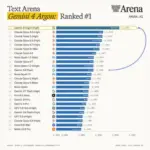
In benchmark results, Arena.ai ranked Claude Sonnet 5.5 with xHigh reasoning in third place on the Code Arena WebDev leaderboard with 1,786 points, according to @@arena. The score placed the model two points behind GPT-6 Astra on the cost-performance curve.
Additionally, Liquid AI made its d1 model available across developer environments through Vercel’s AI Gateway, as reported by @@liquidai.
Autonomous Agents in Practice
Agent workflows continue to gain direct autonomy. Michael Truell demonstrated Grok Bot executing tasks proactively without waiting for explicit prompt triggers, as documented by @@mntruell.
For competitive developer events, Colosseum launched Copilot v2 with project-aware hackathon guidance, announced by @@colosseum. The tool inspects live projects, compares them with past Frontier hackathons, and suggests relevant blockchain tooling.
Furthermore, Jerry Liu introduced Extract v2.5 agents tailored for structured document analysis, reported by @@jerryjliu0. The release features tiered cost and agentic options focused on data grounding.
Hardware and Infrastructure Developments
On the hardware frontier, Google placed its first advanced chip into orbit to evaluate space-based data centers, according to coverage by @@TechCrunch. The orbital experiment tests operational resilience in extreme environments.
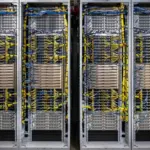
At the data center level, Signal65 reported that model-specific tuning improves output throughput on NVIDIA GB300 NVL72 rack systems, as stated by @@Signal_65. These AI model releases and infrastructure optimizations help organizations reduce per-token operational costs on existing computing hardware.