

AI-generated illustration
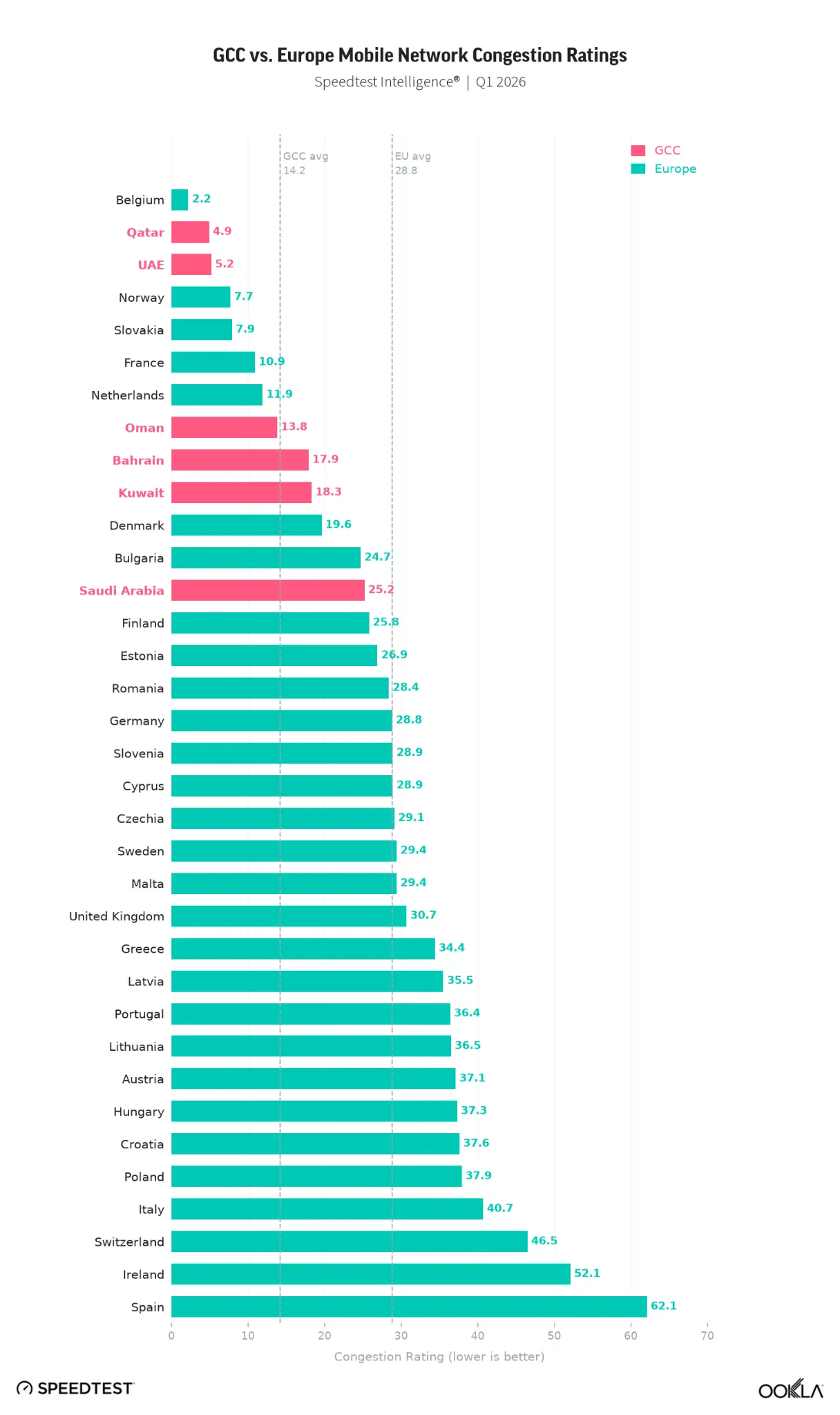
Performance data shows that Gulf mobile networks demonstrated higher resilience during peak traffic periods compared to most European markets, according to an analysis published by network intelligence firm Ookla. The study, authored by industry analyst Karim Yaici, evaluated network behavior across Bahrain, Kuwait, Oman, Qatar, Saudi Arabia, and the United Arab Emirates.
Most GCC countries recorded lower congestion levels in the first quarter of 2026 than in the same period of 2025. Specifically, five of the six regional markets registered lower congestion ratings than 80 percent of evaluated European markets, reflecting substantial operational capacity across regional mobile devices.
Regional Stability Across Gulf Mobile Networks
Qatar and the United Arab Emirates recorded the highest performance stability across the region. In the United Arab Emirates, on-peak throughput exceeded off-peak baselines, while Bahrain and Kuwait experienced minimal degradation in latency and download speeds for general users.
The comparative analysis highlights how network infrastructure across the GCC supported sustained throughput during hours of high demand. While European operators frequently face capacity bottlenecks during concentrated peak usage windows, Gulf mobile networks maintained consistent responsiveness across urban centers.
Ramadan Shifts in Daily Usage Patterns
The holy month of Ramadan introduced distinct shifts in daily data demand across each market. In Saudi Arabia and Bahrain, download speeds dropped to approximately 0.6 times baseline levels around sunset at Iftar time. Meanwhile, networks in Oman and the United Arab Emirates experienced their highest traffic constraints during morning commute hours. Kuwait maintained the most stable performance level throughout the period, retaining 0.9 times its baseline speed.
Seasonal Impact and Tourism Factors
The study identified contrasting seasonal congestion drivers between Europe and the Gulf. While European networks typically experience elevated congestion during the summer months, Gulf mobile networks face throughput degradation during cooler weather. Mild temperatures encourage outdoor gatherings, supported by an influx of visitors impacting the regional tourism sector. Conversely, extreme summer heat shifts user traffic indoors toward fixed broadband and local Wi-Fi connections, reducing the load on cellular infrastructure.
Infrastructure Outlook
These operational findings demonstrate how regional telecommunications operators manage demographic movements and cultural events. As national digital initiatives progress, regional operators continue to adjust cellular capacity to match local seasonal traffic shifts across the economy. By evaluating traffic fluctuations tied to cultural schedules, climate patterns, and population density changes, operators can better optimize resource allocation and maintain quality of service standards.