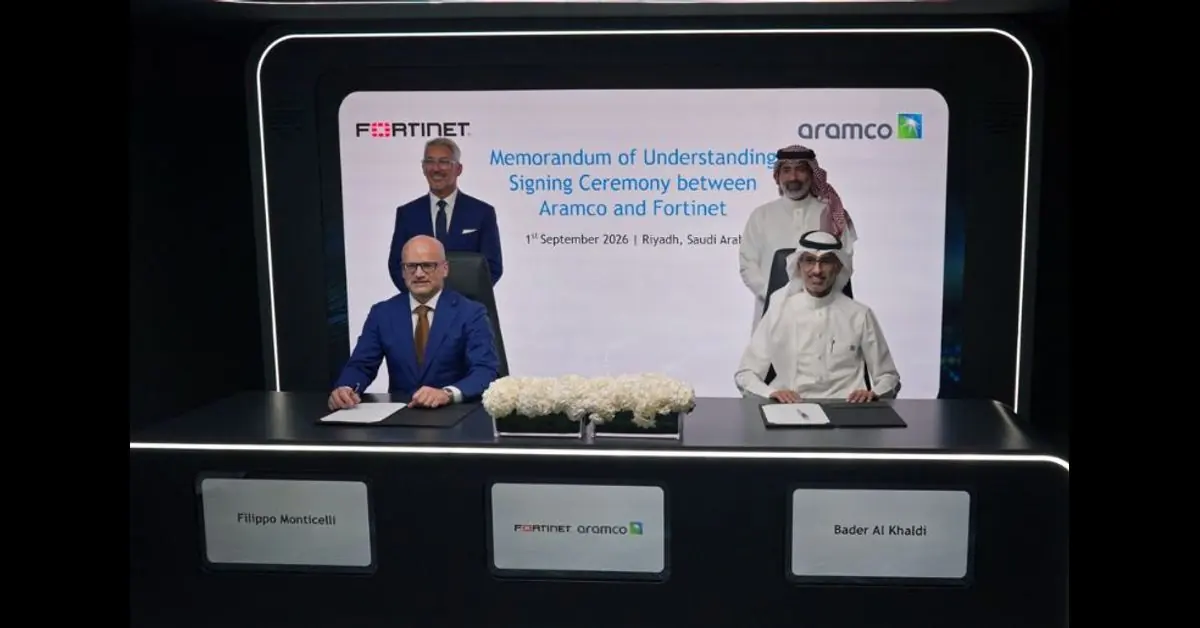
Fortinet and Aramco have signed a Memorandum of Understanding to advance industrial cybersecurity across critical operational sectors in Saudi Arabia. The strategic agreement focuses on safeguarding operational technology environments and vital industrial systems from emerging threats. Under the terms of the accord, both entities plan to explore collaborative initiatives in research, threat mitigation, and local technical development.
The partnership prioritizes operational technology resilience, according to Telecom Review. As industrial facilities integrate more networked software, securing industrial control systems against network disruptions has become critical for daily business operations. Consequently, the collaboration focuses on developing targeted safeguards for heavy industry while aligning with business operational standards across key industrial sectors.
Focus on Industrial Cybersecurity and OT Protection
Under the agreement, the organizations will evaluate the joint creation of security solutions tailored to specific regional industrial environments. Furthermore, Fortinet and Aramco intend to exchange specialized technical knowledge, operational best practices, and threat intelligence. A major component under review is the potential deployment of Fortinet Cloud infrastructure in Saudi Arabia, which could expand local availability of real-time security management tools.
Industrial environments rely heavily on operational systems that manage physical processes, pipelines, and power systems. Therefore, securing these systems against digital interference remains necessary to prevent operational disruptions. The organizations plan to combine network monitoring tools with operational safeguards to protect vital industrial assets.
Developing Local Specialized Talent
In addition to technical integration, human capital development serves as a core pillar of the signed memorandum. The two companies plan to evaluate targeted training programs such as intensive bootcamps and hands-on technical workshops. These educational initiatives aim to equip Saudi professionals with practical skills to defend operational networks against intrusion.
Moreover, the agreement explores granting local engineers direct educational access to Fortinet training platforms. Maintaining a continuous dialogue on emerging risks will also assist domestic engineering teams in evaluating defensive countermeasures. This educational initiative supports national goals to localize technical expertise within vital critical sectors.
Securing critical infrastructure requires more than technology. It also depends on strong local expertise, continuous innovation, and collaboration. Through this MoU with Aramco, we look forward to exploring how our cybersecurity expertise can support more secure and resilient industrial environments in Saudi Arabia, while contributing to the development of local cybersecurity skills and capabilities.
Joe Sarno, Executive Vice President of International Sales at Fortinet
This announcement with Fortinet reflects Aramco’s commitment to advancing industrial cybersecurity. This collaboration aims to support innovation in cybersecurity solutions while growing local expertise in this field.
Abdul Aziz S. Al Shafi, Aramco Vice President of Cybersecurity & Chief Information Security Officer
Alignment with National Security Directives
The agreement reflects directives established by the National Cybersecurity Authority in Saudi Arabia. The authority enforces essential cybersecurity controls and specific operational technology requirements for national infrastructure. By strengthening defensive postures across key facilities, organizations protect economic resilience and continuous energy supply lines.
The expansion of connectivity across industrial installations increases exposure to automated cyber incidents. Because operational technology links physical equipment directly to digital management consoles, outages can produce immediate operational impacts. As a result, domestic standards require robust defense architectures across all connected operational assets.
Future Outlook for Infrastructure Defense
Looking ahead, the memorandum provides an exploratory framework for both organizations to assess operational rollouts. While the agreement represents an initial framework rather than a binding commercial implementation, it establishes shared priorities for operational technology security. Specifically, future phases will explore testbed implementations and specialized operational assessments for complex engineering operations.
Through ongoing collaboration, both entities plan to evaluate how cloud-delivered protection and localized intelligence can isolate operational facilities from outside interference. By combining specialized knowledge and training, the initiative aims to enhance long-term defense across national infrastructure networks.