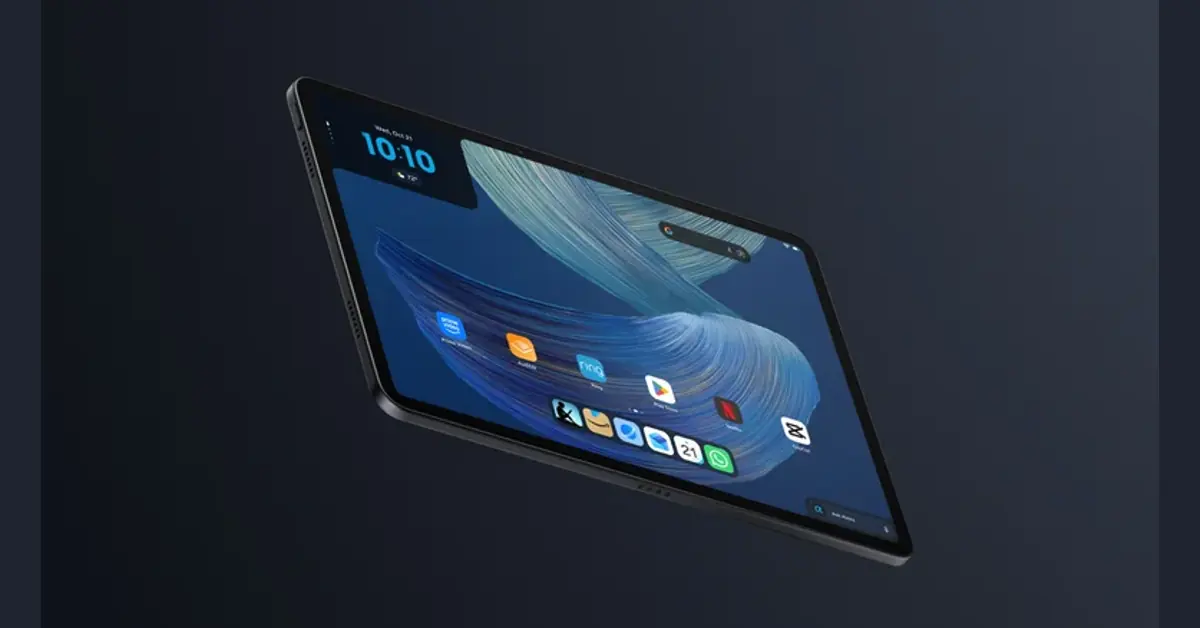
The newly unveiled Amazon Alexa tablets mark a departure from the previous Fire OS platform by adopting official Android certification and full access to Google Play, according to Ars Technica. The transition replaces the Fire branding that defined the slate hardware portfolio of Amazon for 15 years.
The lineup consists of three hardware tiers, each constructed with unibody aluminum enclosures similar to recent Kindle reading devices. Amazon will stop shipping older Fire models within two months while maintaining software support for four years following their final ship date. In addition, the new hardware will launch with Android 16 and receive an update to Android 17 in early 2027.
Hardware specifications across Amazon Alexa tablets
The flagship model in the line is the Alexa Tablet 12 Pro, which features a 12-inch screen with a 2800 by 1840 resolution and a 120 Hz refresh rate. Powered by a MediaTek Dimensity 8400 processor, it includes 8GB of RAM, 128GB of storage, and a 9,000 mAh battery that provides up to 16 hours of video playback. Amazon also developed a matte Nanomatte display option alongside glass manufacturer Corning to reduce surface reflections.
Meanwhile, the mid-tier Alexa Tablet 11 offers an 11-inch display with a 2560 by 1600 resolution and a 90 Hz refresh rate. The entry-level Alexa Tablet 8 utilizes an 8.7-inch screen with a 1340 by 800 resolution. Both smaller models operate on the MediaTek Dimensity 8189 processor and feature 16:10 aspect ratios that suit video media, contrasting with the taller 3:2 layout found on the Pro model.
Operating system features and app access
Integrating Google Play allows users to download standard apps directly rather than depending on third-party installation methods. Users can also access alternative artificial intelligence tools such as AI assistants including Google Gemini. However, the software continues to highlight Amazon services through dedicated home screen widgets, including a Dynamic Tab for syncing books, video, and photos across hardware.
The conversational Alexa Plus assistant serves as a central element of the daily user interface. Users can activate the assistant without repeating wake words before every instruction, and an optional feature allows the system to read screen context with explicit user consent.
Productivity accessories and device variants
Amazon designed the Pro slate to function as a workstation by pairing it with optional hardware add-ons. Users can purchase the Alexa Tablet Pro Pen for $90, which features 4,096 levels of pressure sensitivity and docks magnetically to the chassis. A physical keyboard attachment priced at $150 connects via pogo pins without requiring Bluetooth pairing, helping the slate adapt within the broader category of computers.
Family buyers can select kids editions for the 8-inch and 11-inch models. These variants include protective bumper cases, a two-year replacement guarantee against accidental damage, and a one-year subscription to curated educational material. In the wider market for mobile devices, these dedicated packages serve younger audiences with customized parental safety controls.
Market availability and pricing tiers
Preorders for all three devices began immediately, with retail shipments scheduled to start on October 14. The entry-level Alexa Tablet 8 starts at $230, while the Alexa Tablet 11 costs $330. The Alexa Tablet 12 Pro retails for $500, with the Nanomatte display edition priced at $550.
Through these hardware updates, the Amazon Alexa tablets establish a higher price point than earlier budget slates while offering updated processing speeds and broader app support.