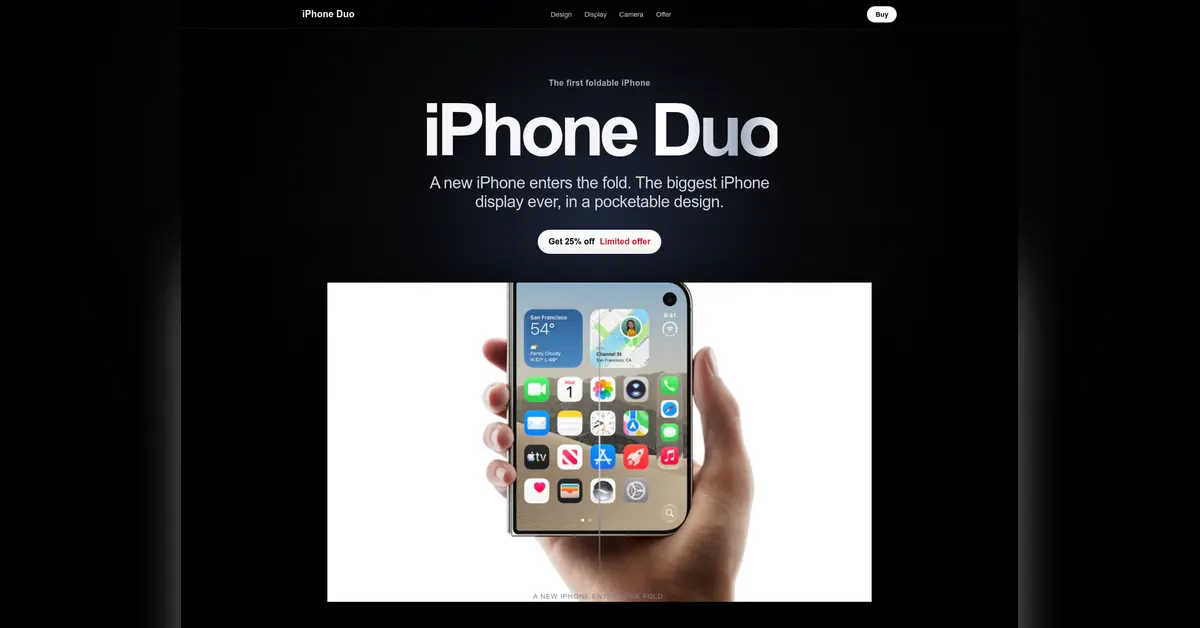
Cybersecurity researchers have detected multiple fake iPhone Duo sales schemes targeting consumers following Apple’s entry into the foldable device market. The new device officially went on sale on October 23, 2026. Fraudsters quickly launched deceptive websites to exploit consumer interest in early access to the premium hardware.
Deceptive Tactics in fake iPhone Duo Offers
Security analysts identified an English-language platform promoting a false 25% discount for early shoppers. The fraudulent portal replicated the visual design of Apple’s official storefront to deceive visitors. Furthermore, the operators implemented a 30-minute countdown timer to create artificial urgency and force rapid purchasing decisions.
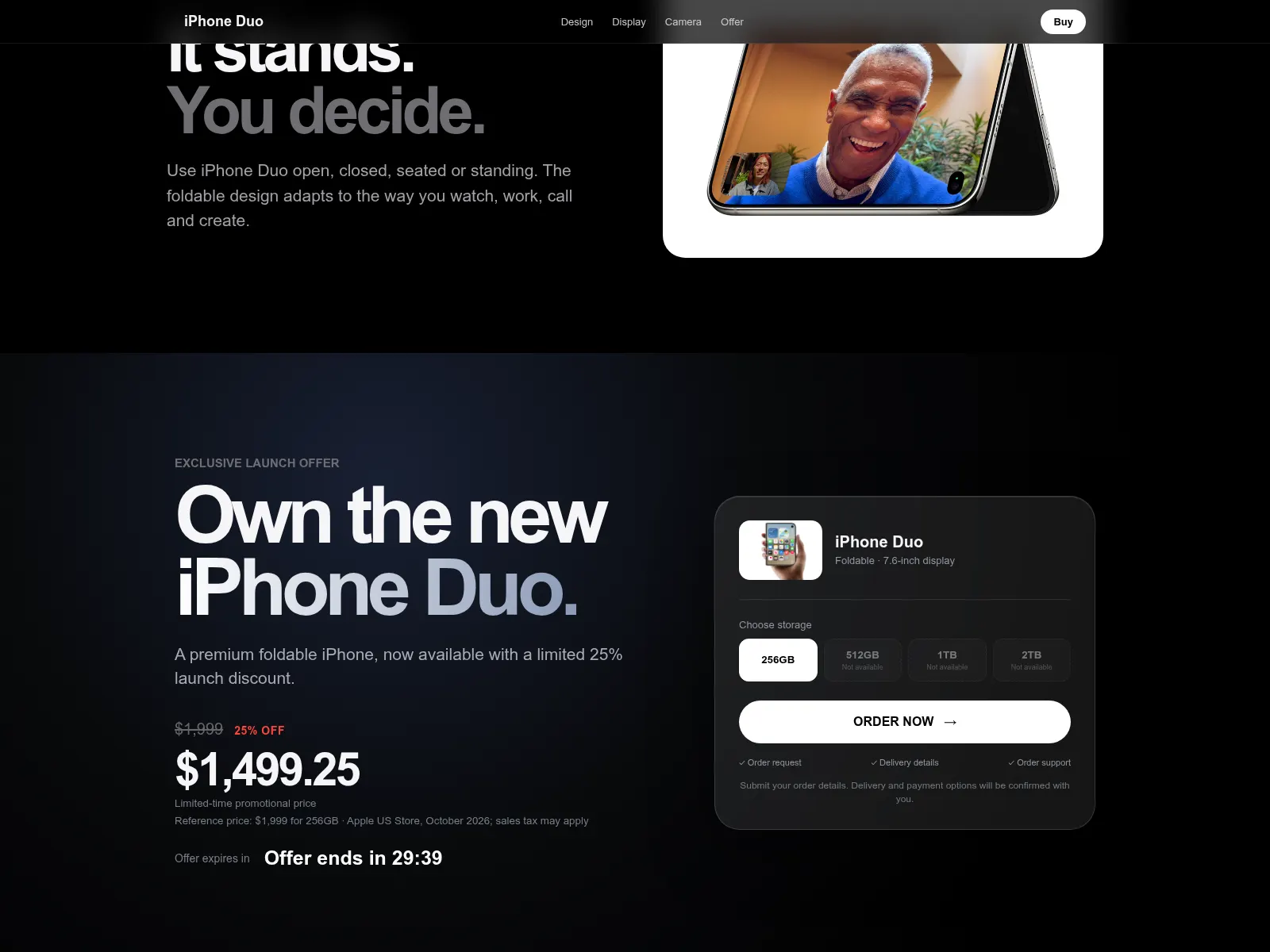
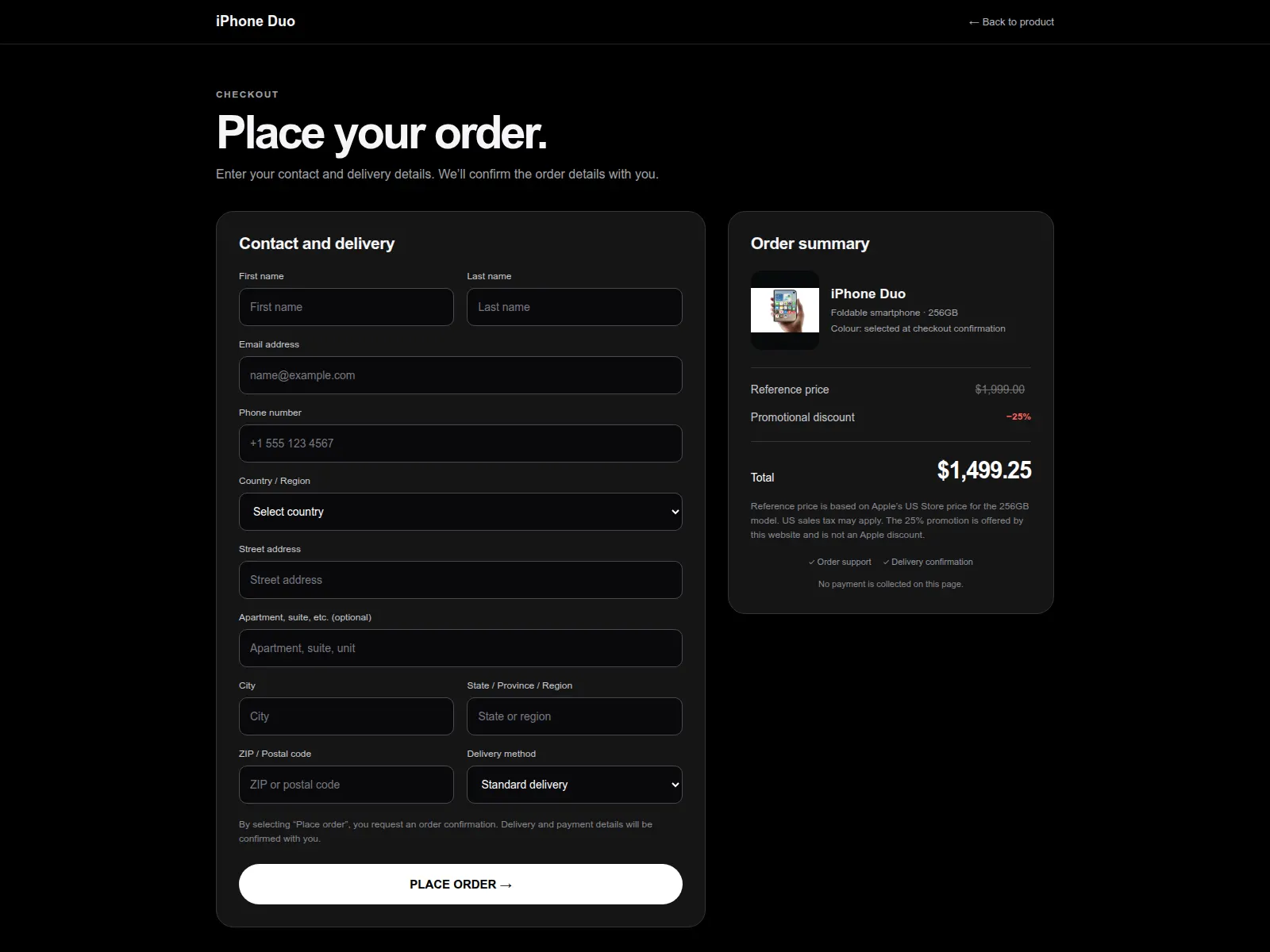
During checkout, visitors had to submit their full contact records and shipping addresses. Notably, the fraudulent portal did not demand credit card numbers immediately. Instead, the interface stated that a customer representative would call later to arrange payment details. Analysts noted that this tactic serves as the initial phase of a broader financial scam on mobile devices.
Multilingual Traps and Preorder Claims
Fraudulent campaigns also appeared across several other regions using localized interfaces. Kaspersky recorded several multilingual portals where visitors could choose their native language and select local currencies. These sites displayed technical features of the foldable phone and encouraged immediate preorders. In addition, the operators falsely claimed that users would be redirected to official Apple servers to finalize transactions.
Analyst Insights on Flagship Scams
Security specialists highlighted why high-end electronics attract cybercriminals during major commercial debuts. Threat actors understand that elevated public interest lowers typical consumer caution online.
“Scammers move fast when a flagship device hits the market, because hype creates urgency and urgency lowers caution. These campaigns are designed to look credible, then push the target into a private exchange before they have time to verify anything. For fraudsters, a flagship buyer is a high-value mark: someone already willing to spend big and therefore more likely to share personal or payment-related details. That is exactly why unofficial discounts, preorders, or ‘availability checks’ should be treated as red flags,”
Olga Altukhova, Senior Web Content Analyst at Kaspersky
Because buyers are prepared to spend significant sums, fraudsters prioritize these victims to extract sensitive banking credentials and personal data through private channels.
Recommended Security Measures for Buyers
To avoid a fake iPhone Duo scam, consumers should purchase electronics exclusively through authorized retailers. Buyers must inspect domain names for spelling discrepancies before providing any personal records. Additionally, deploying specialized security software helps block phishing links and unauthorized storefronts automatically through AI algorithms.
Consumers should also use dedicated virtual cards for online transactions to keep primary bank accounts protected. Finally, enabling multi-factor authentication across digital accounts and reviewing regular financial statements remain essential steps against persistent fraud schemes.