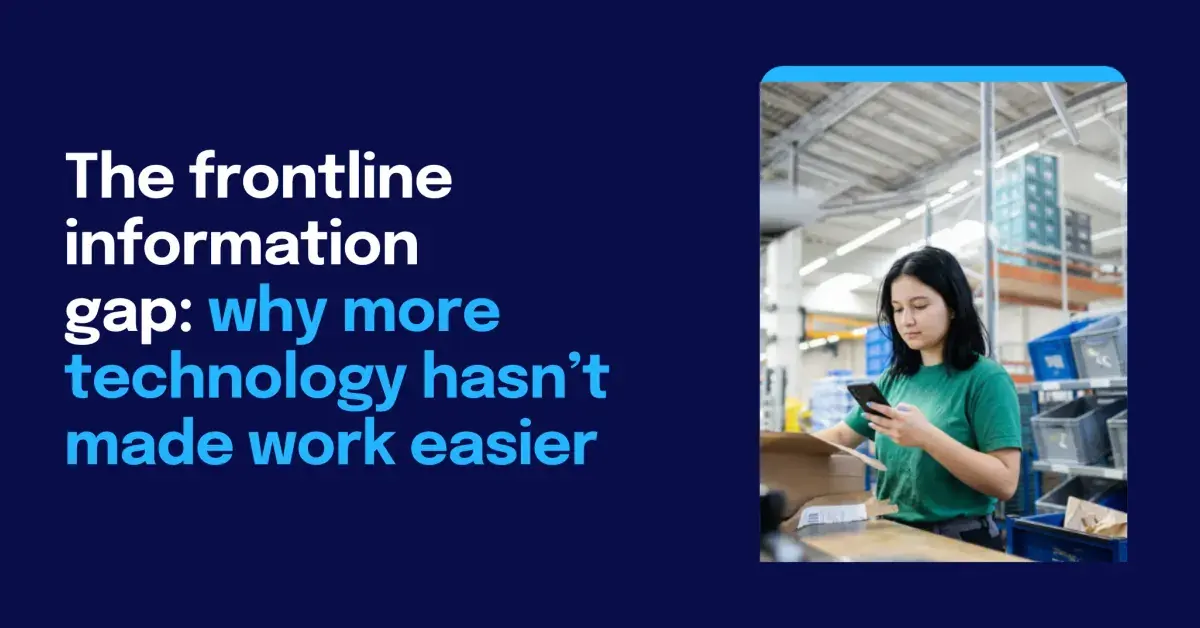
Gulf businesses investing in regional technology programs face critical operational hurdles in frontline AI transformation, according to a recent industry study commissioned by Staffbase. The research conducted by Forrester Consulting indicates that substantial investments in artificial intelligence risk underperforming if operational tools fail to support non-desk personnel during regular work shifts.
Regional programs across the Gulf place frontline sectors at the center of long-term economic development. Specifically, the UAE National Strategy for Artificial Intelligence 2031 prioritizes logistics, transportation, healthcare, and hospitality. Meanwhile, the Minister of Tourism in Saudi Arabia reported that tourism generated over one million jobs by August 2025 as part of Vision 2030 targets.
Operational Risks in Frontline AI Transformation
The study surveyed 189 frontline workers and supervisors across healthcare, retail, manufacturing, and transportation in August 2026. Findings indicate that 48% of respondents linked corporate information gaps directly to reduced productivity or operational efficiency. In addition, respondents reported that missing data increased the risk of errors or missed deadlines, while 43% noted slower operational decision-making.
“In the Gulf, transformation is often government-led, and the leaders delivering it feel personally accountable for whether it lands. That makes adoption the real test, because it is one thing to launch a platform at head office and quite another to make sure that a cabin crew member or store manager, minutes before a shift, can find what they need and trust that it is right.”
Conor Duffy, Regional Leader, Middle East at Staffbase

Communication Fragmentation and Shadow Tools
Accessing accurate operational information remains difficult across decentralized enterprise environments. More than half of surveyed workers receive critical updates across six or more separate channels. Consequently, workers encounter conflicting or outdated information multiple times per week, prompting 42% to seek manual clarifications from colleagues.
Scattered systems also drive workers toward unauthorized digital tools. When staff turn to unvetted platforms, enterprises face notable cybersecurity and data privacy threats. Furthermore, survey respondents identified guided automated answers among their top three desired software capabilities.
Consolidating Work Systems on Mobile Platforms
Connecting operational software to mobile workers has demonstrated measurable outcomes across international transport and delivery networks. For instance, DHL Group deployed a unified platform to 600,000 workers across 81 interface languages, connecting 300,000 employees who previously lacked intranet access. Similarly, a regional carrier in the Gulf uses unified software to connect over 25,000 flight crew and ground personnel.
The study found that frontline staff believe dedicated mobile apps consolidating daily tasks would substantially improve job performance. Research confirms that frontline AI transformation relies directly on access to verified operational knowledge, ensuring automated assistants deliver compliant guidance rather than outdated records.
Implementation Priorities for Enterprise Leaders
Technology planners preparing 2027 deployments are advised to structure systems around the most mobile staff members first. Organizations planning upcoming technology investments must address frontline AI transformation from initial design stages. Establishing verified internal repositories and deploying local language interfaces ensures frontline staff receive dependable answers during critical operational shifts.