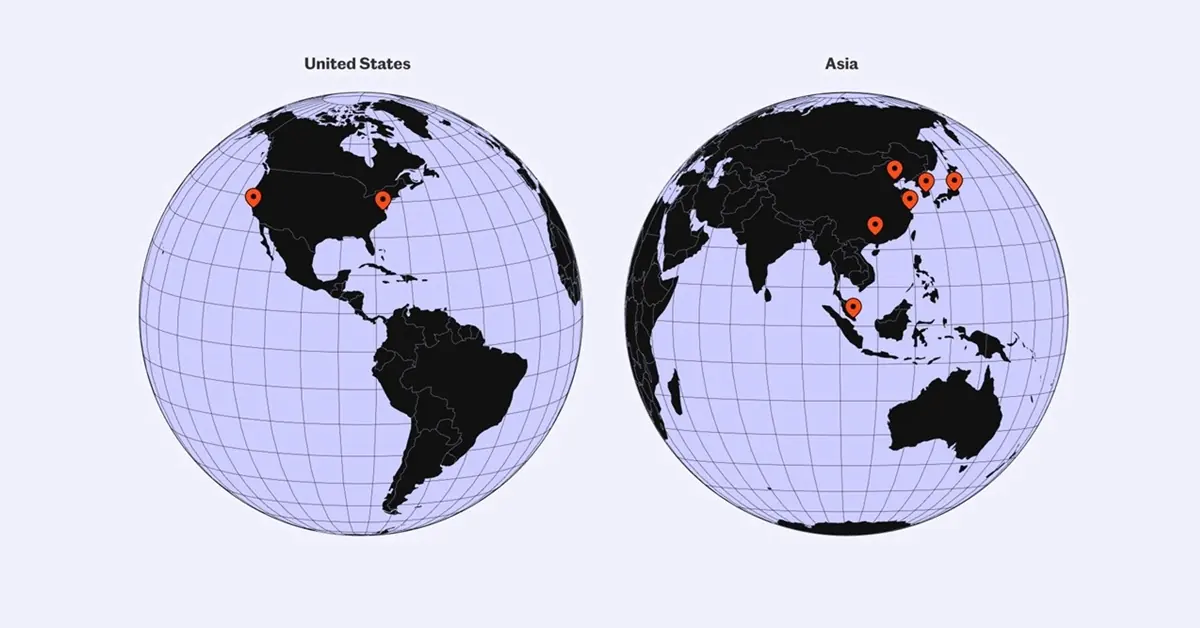
US vs Asia Top 10 – The Observer AI Cities Index Top Ten Cities 2026
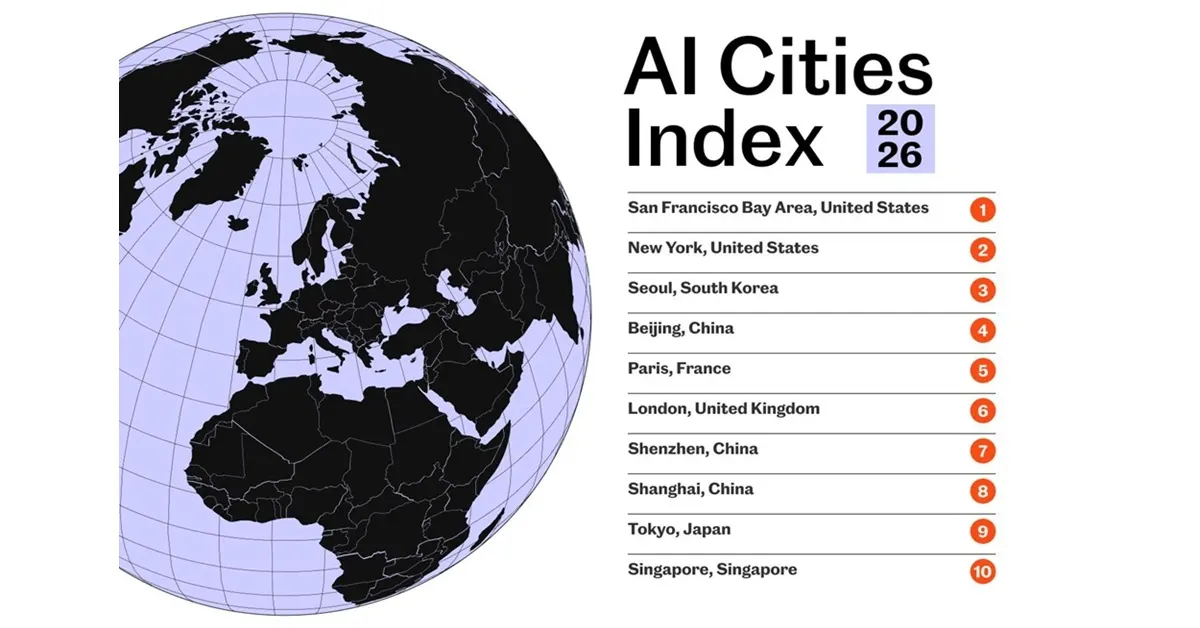
The Observer released its inaugural AI Cities Index, assessing 57 metropolitan areas across 36 countries to benchmark metropolitan leadership in artificial intelligence. While San Francisco and New York captured the top two overall rankings, cities in East and Southeast Asia secured six of the top ten positions worldwide.
Researchers examined metropolitan performance through three distinct pillars: public and private investment, technological innovation, and operational implementation. This metropolitan approach builds upon seven years of national benchmarking under the Global AI Index to analyze local drivers of the digital economy.
East Asian Capitals Lead Practical Implementation
Seoul emerged as the global leader in practical implementation, which measures the deployment of institutional systems across enterprise, government, and education. Tokyo ranked third and Singapore placed fifth in implementation, followed by Shanghai, Shenzhen, and Beijing within the global top ten.
South Korea concentrated approximately 200 semiconductor corporate headquarters in its capital, including chipmakers Samsung and SK Hynix, each exceeding $1 trillion in market capitalization. In addition, the Seoul municipal government established the Seoul AI Innovation Committee to assist small and medium enterprises lacking independent infrastructure or technical staff.
Innovation Hubs and Narrowing Model Gaps
San Francisco led the innovation category, with Beijing ranking second, New York third, and Shenzhen fourth. Broader research documented in the study indicated that the model performance gap between Chinese and American systems narrowed to 2.7 percent, down from 31.6 percent in 2023.
The United States produced 50 frontier models in 2025 compared to 30 produced by China, though China doubled its output year on year. Moreover, public initiatives including Beijing’s national AI fund, Singapore’s National AI Strategy 2.0, and Seoul’s Stargate program drove rapid regional adoption across mobile services and automated apps.
Key Metrics of the AI Cities Index
The AI Cities Index evaluated 50 distinct indicators gathered through quantitative data and field research. These indicators measured infrastructure readiness, computing systems, research capacity, and financial commitments.
Patricia Clarke, Technology Editor at The Observer, stated that the findings illustrate how authority is shifting toward metropolitan centers. She noted that public sector funding in East Asia has established functional operating environments that contrast with fragmented pilot programs in other major hubs.
Divergence in Public Policy and Infrastructure
Western hubs continue to attract private venture capital and advance fundamental software models on high-performance computers. However, Asian municipalities demonstrate greater integration of automated systems into administrative tasks, manufacturing centers, and municipal services.
Established regional centers such as Dubai and Tel Aviv did not secure places within the top ten implementation ranking. Consequently, the research indicates that future developments in AI will increasingly depend on municipal coordination alongside traditional national policy directives.