
Image, NVIDIA and Cisco Introduce New Pluggable Optics Form Factor to Scale AI Factories
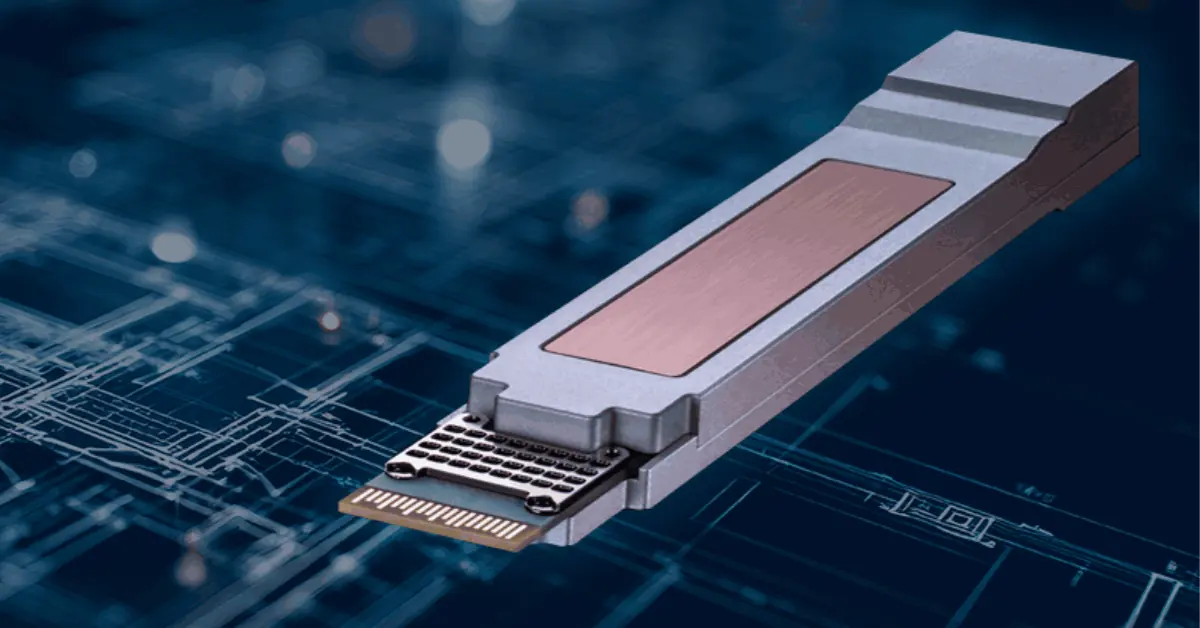
The new USFP optical module has been introduced by Cisco and NVIDIA to support optical networking for modern computing facilities. Announced in Riyadh, Saudi Arabia, the initiative establishes a high-density 400Gb/s-per-lane form factor intended to equip data centers for large-scale operations. As workloads expand, network operators require higher capacity per switch to handle continuous processing demands.
Advancing Network Density with the USFP Optical Module
USFP allows operators to transition from 200Gb/s per lane to 400Gb/s per lane within Ethernet fabrics. Comparable in size to an OSFP module, the hardware quadruples bandwidth density along front panels. Furthermore, it delivers approximately 1.3 times the power efficiency of previous hardware, reducing the share of electricity used by telecom infrastructure.
“Building the world’s largest AI factories starts with rethinking the smallest of connections. With USFP, NVIDIA and Cisco are building an ecosystem to reinvent pluggable optics, connecting more computing with greater efficiency to power the next generation of AI factories.”
Gilad Shainer, Senior Vice President, NVIDIA
Hardware Collaborations and Manufacturing Standards
Cisco and NVIDIA are working alongside TE Connectivity and Amphenol to manufacture module cages and connectors. Consequently, suppliers obtain a shared physical footprint for future computers and switching gear. The companies also plan to release an open industry specification through an upcoming multi-source agreement.
“AI builders need an interconnect architecture that can scale performance without locking them into a more complex operating model. Cisco and NVIDIA recognized that scaling pluggable optics to 400Gb/s per lane would require more than another incremental extension of today’s module designs.”
Bill Gartner, Senior Vice President and General Manager of Optical Systems and Optics, Cisco
Integration with Modern Cloud Infrastructures
Engineers designed the USFP optical module to operate directly alongside Cisco Silicon One switches and NVIDIA Spectrum-X Ethernet systems. Meanwhile, enterprises and sovereign cloud providers can deploy the technology without altering overall data center arrangements. This integration optimizes investments across enterprise artificial intelligence clusters without adding administrative complexity.
Future Deployments Across Enterprise Centers
The specification will expand as additional suppliers adopt the shared standards. In addition, preserving pluggable form factors helps operators service components in the field without extensive retooling. By deploying the USFP optical module, network managers can scale performance while managing thermal and energy requirements across large facilities.