What Happens When AI Starts Making Our Choices for Us?*
The greatest risk of artificial intelligence may not be that it takes control, but that we willingly hand it over.
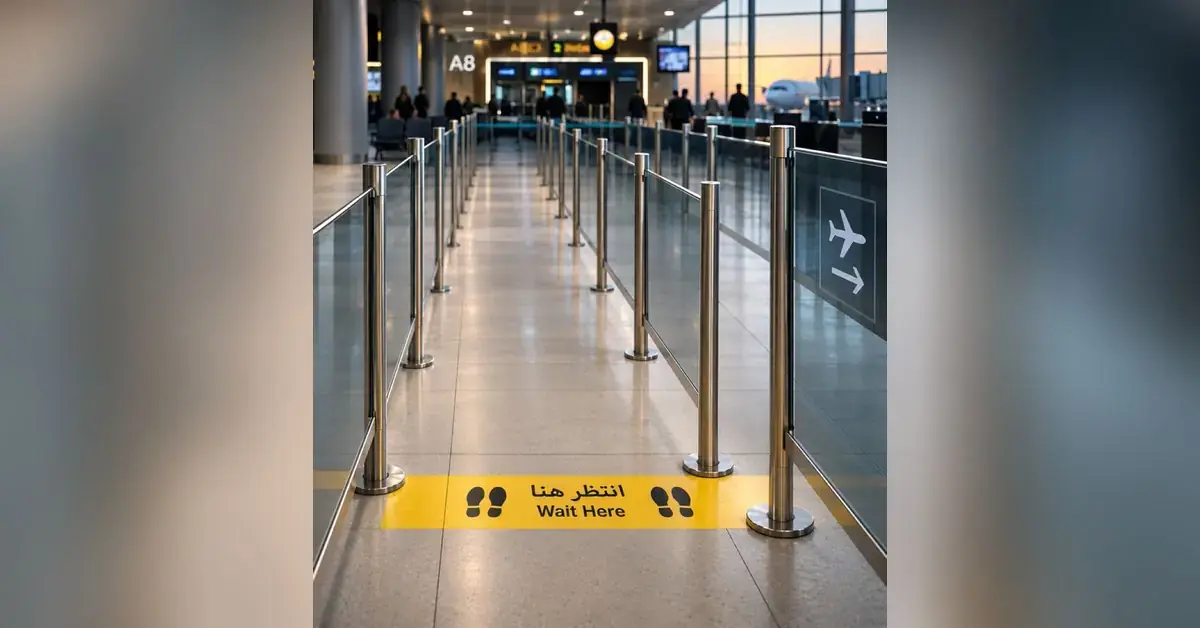
I’ve spent the past hour doing exactly what I’ve been told.
Where to stand. Where to walk. When to take off my jacket. Where to put my belongings.
Nobody asked for my opinion.
And I didn’t offer one.
I’m at an airport, after all.
Millions of us go through this routine without a second thought. We accept a temporary loss of freedom in exchange for safety, efficiency and convenience.
It’s a perfectly reasonable arrangement.
But what if the rest of our lives started working this way?
Artificial intelligence could soon become the most influential adviser in our lives.
It could tell us what to eat, when to sleep, which career to pursue and how to raise our children.
And here’s the uncomfortable part: It might be right more often than we are.
Your son wants to become an architect, but an algorithm determines he’s better suited to accounting.
Do you encourage his dream or follow the data?
Your doctor recommends one treatment. An AI system recommends another.
Whose judgment do you trust?
You’re rejected for a job by an algorithm that takes three seconds to evaluate 30 years of your professional life.
Who do you call to challenge the decision?
There may be no one to call.
Now extend that logic to governments, hospitals, banks and entire economies.
Who gets access to scarce resources?
Who determines what constitutes an acceptable risk?
Whose values are programmed into the systems making these decisions?
And who answers for their mistakes?
These are questions about power, accountability and human judgment.
History suggests that we rarely resist technologies that make our lives easier.
We stopped memorizing phone numbers. We stopped reading maps. We increasingly outsource our memory, our navigation and even our writing.
Critical thinking could be next.
Not because someone forces us to give it up, but because exercising it becomes increasingly inconvenient.
Why wrestle with a difficult decision when a machine can produce an answer in seconds?
Why question a recommendation when the system has a better track record than you do?
Why risk making the wrong choice when someone, or something, can make the right one for you?
I’m an enthusiastic believer in artificial intelligence. Its potential to improve human life is extraordinary.
But there is a fundamental difference between a technology that helps us make decisions and one that makes them on our behalf.
My flight is about to board.
I’ll follow the signs, join the line and sit where I’ve been told to sit.
I have no objection to any of it.
Because despite all the instructions, one decision remains mine.
I chose the destination.
The question is whether, in an AI-driven world, we’ll still be the ones buying the tickets.