
AI-generated illustration
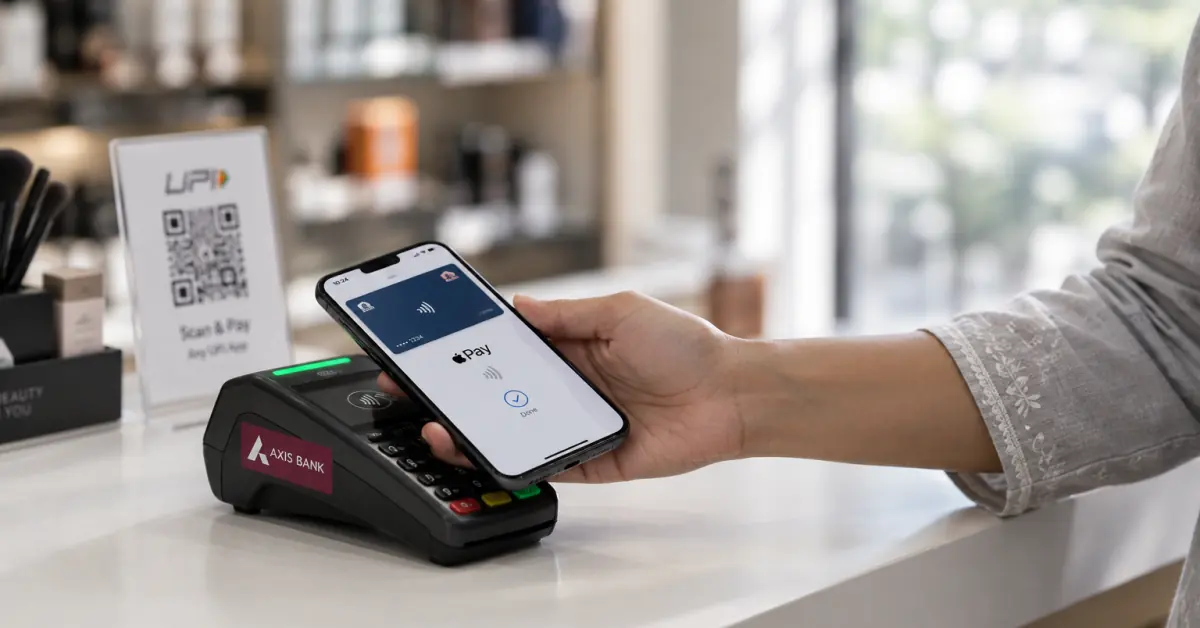
The official launch of Apple Pay in India is now underway, starting with credit card support for Axis Bank customers. This development brings the mobile payments service to the market nearly twelve years after its global debut, according to reporting by 9to5Mac. Apple enabled server-side support for Indian users on Tuesday, bringing the total number of supported countries and regions to 101.
Initial Rollout and Supported Cards
The service is currently limited to eligible Axis Bank credit cards issued on Visa and Mastercard networks. The domestic RuPay payment system is not supported at launch. Eligible cardholders can add their cards to the Wallet app on compatible iPhone models and Apple Watch devices to make contactless point-of-sale transactions and online purchases.
Axis Bank stands as India’s third-largest private-sector lender. Other major financial institutions, including HDFC Bank, ICICI Bank, and SBI Card, have not joined the platform at launch as discussions regarding commercial terms continue. Industry sources indicate that Apple seeks a transaction fee of roughly 20 basis points, representing a notable portion of typical payment processing margins.
Integration of Apple Pay in India
Merchants across the country are enabling acceptance through various payment service providers. Apple confirmed partnerships with processors including Razorpay, PayU, Paytm, Pine Labs, Cashfree, JusPay, Mswipe, and Worldline. Consumers can use the feature across platforms such as Zomato, Blinkit, Croma, Ixigo, Tata 1mg, and Reliance retail brands.
Because Apple Pay in India operates on card infrastructure rather than bank-to-bank account protocols, merchant terminals must be specifically configured by acquiring banks. As a result, point-of-sale acceptance may vary depending on the specific payment terminal used during checkout within the apps and retail sector.
Market Dynamics and UPI Competition
India’s digital payment environment is heavily dominated by the government-backed Unified Payments Interface, known as UPI. This system enables instant bank-to-bank transfers via QR codes without intermediary card fees. Consequently, Apple Pay enters a payment segment centered primarily on credit cards and premium device owners.
Despite the broader prevalence of UPI, the increasing adoption of premium smartphones offers Apple a distinct demographic. This consumer group generates higher transaction values, providing opportunities within the digital economy even if initial market share remains modest.
Manufacturing and Retail Footprint
The arrival of Apple Pay in India comes as the company expands its retail footprint and hardware manufacturing across the country. Research data indicates Apple secured 28% of the Indian smartphone market by value in 2025, up from 23% in the prior year.
Furthermore, Apple continues to scale up domestic assembly and manufacturing operations. Expanding financial services complements this ongoing growth in mobile devices and retail investments across the region.