
Apple is building an AI agent that can control apps, browse the web and write code, Bloomberg reports
Apple is hiring a senior engineering manager to lead a “proactive, agentic AI assistant” that could write code, control apps and work across a user’s devices, with a possible launch as early as late 2027, according to Bloomberg.
Apple is developing its own autonomous artificial intelligence agent to carry out work on users’ behalf, Bloomberg’s Mark Gurman reported on November 19, 2026. The system described in recent job listings would write code, browse the web, control apps and navigate devices, Bloomberg said, and development remains in the early stages.
The plans appeared in listings Apple added to its careers site this week. One posting, titled Senior Engineering Manager, Agentic AI – Proactive, invited candidates to “imagine an AI agent that can use a computer the way a capable person does.” The agent, it said, “browses the web, works across apps, runs commands, writes and debugs code, and calls services,” doing so “privately and with the polish people expect from Apple.”
A fuller description, quoted by MacRumors, The Verge and Macworld, said Apple already has a team working on “general-purpose computer-use agents” that “plan and carry out multi-step tasks across apps, browsers, command lines, code, and APIs, and they can coordinate specialized sub-agents along the way.” The hire would work with Siri, UI Frameworks and Apple Foundation Models. The listing said agents that run code, use credentials and act for a user need “strong permission models, sandboxing and transparency,” and should be “capable, reliable and safe.”
Engadget quoted Apple as saying the manager would “own the technical direction and delivery of our agent platform and the AI capabilities built on it.” TechCrunch said it asked Apple for more information and did not receive a response. Digital Trends and The Verge later reported that the listing, posted on November 17, had been removed.
The project would put Apple into a market that has moved quickly this year. In a post on X, TechCrunch said the work would compete with Meta’s Muse, Instinct, Claude and OpenAI’s Dots. Meta launched Muse, a personal agent that can book travel and send email, on September 8, 2026. OpenAI introduced Dots, always-on agents that can use a computer and connected apps, on September 29. Anthropic opened a research preview of Claude Duet on October 22. Instinct is a personal-agent product from startup Spear Street Technology. Outlets relaying Bloomberg placed Apple alongside OpenAI, Anthropic, Meta and Google.
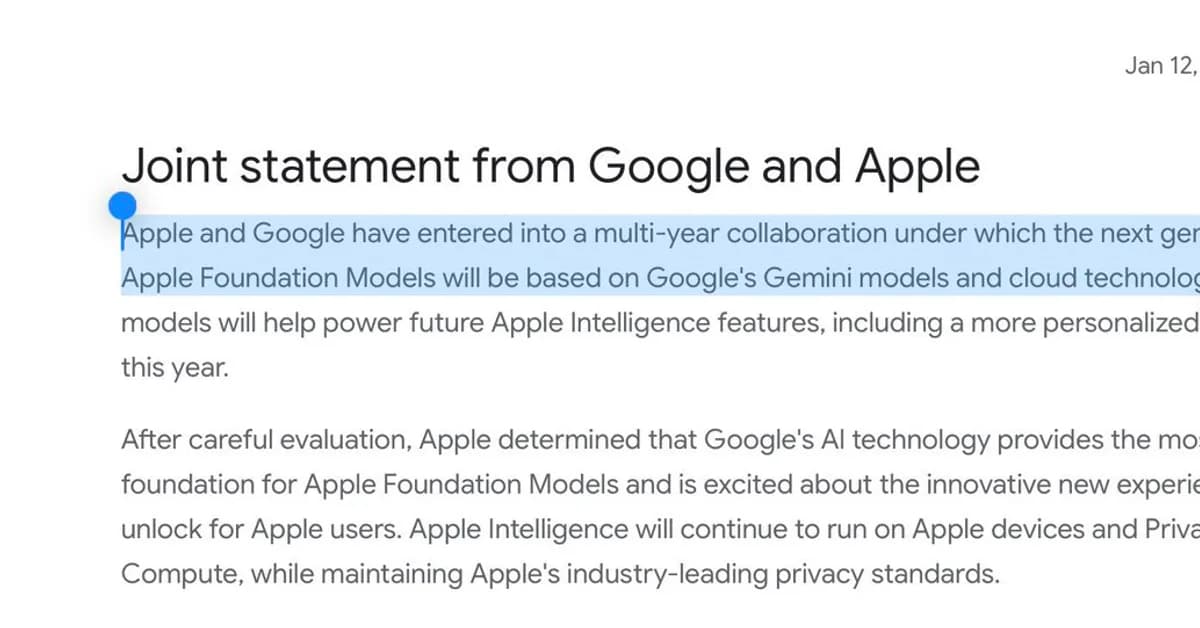
The hiring follows a long delay in Apple’s own assistant upgrade. Apple announced Apple Intelligence, including a more personal Siri, at WWDC on June 10, 2024, then delayed those features in March 2025, according to Bloomberg. On January 12, 2026, Apple and Google announced that the next generation of Apple Foundation Models would be based on Google’s Gemini models, while Apple Intelligence would keep running on devices and Private Cloud Compute. Apple began rolling out Siri AI in beta, in English, on September 14, 2026, and on October 26 added French, Japanese, Korean, Portuguese and Spanish. Apple has not announced Arabic support for Siri AI, and Arabic is not among the additional languages it said would follow by the end of 2026.
In an earlier report this month, Gurman wrote that Apple chief executive John Ternus has been pressing software chief Craig Federighi to move faster on AI, and that Siri could become “more like an agent” as early as 2027. Bloomberg also reported that Apple is tightening how third-party agents control a Mac. In the macOS 27.3 beta, enabling ChatGPT’s computer-use features now takes 14 steps, up from four, according to TechCrunch and The Next Web. Apple has presented the changes as protecting users, while Bloomberg said some AI companies see them as an attempt to slow competitors. Apple has not confirmed the project, and the listings do not say which devices would support the agent or how it would sit alongside Siri AI.