

Research shows cyberattacks in the Gulf concentrated heavily on the United Arab Emirates and Saudi Arabia during the first half of 2026. A report published by Positive Technologies revealed that these two nations accounted for half of all regional cyber incidents. Financially motivated threat actors, state-aligned groups, and hacktivists contributed to these operational disruptions across multiple sectors.
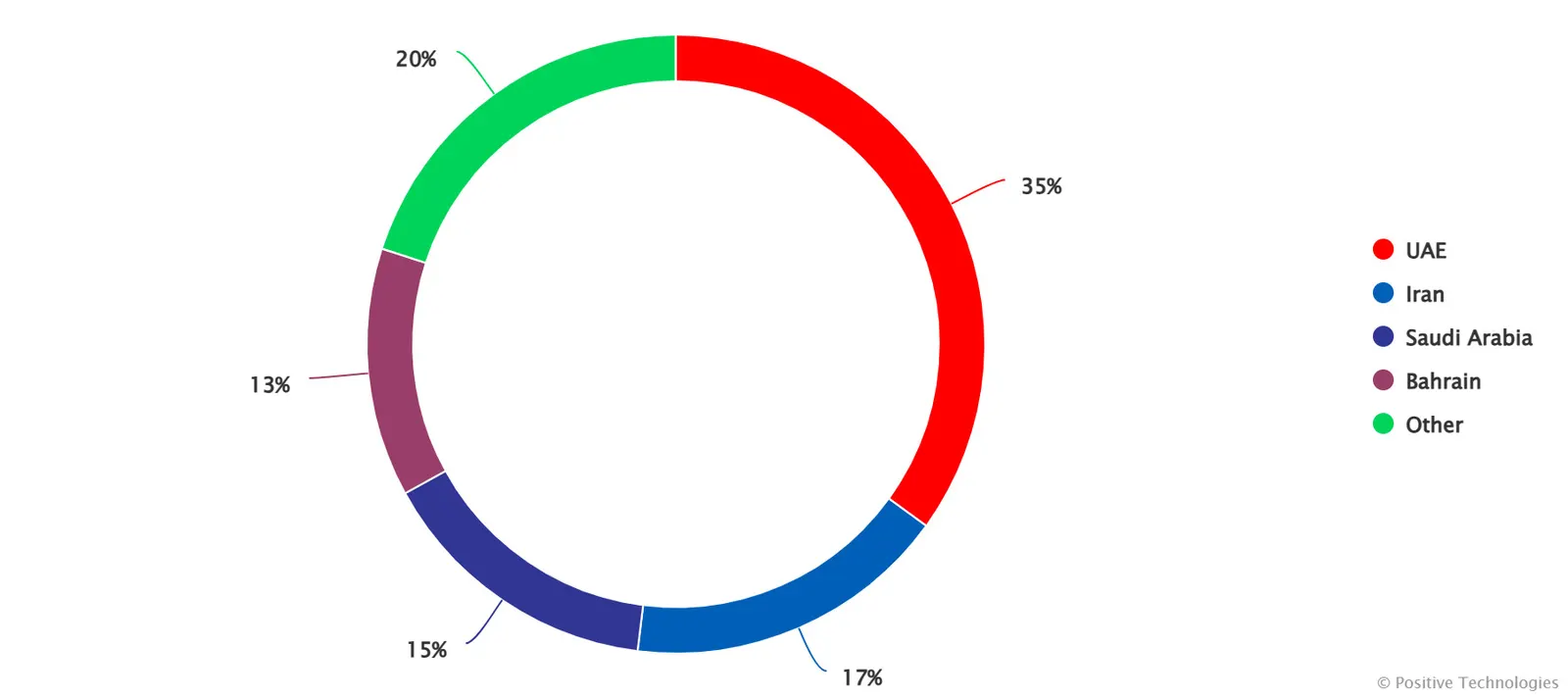
Distribution of Cyberattacks in the Gulf Region
The research indicated that the UAE experienced 35% of all regional incidents, followed by Iran at 17% and Saudi Arabia at 15%. Government entities faced 27% of all recorded cyber incidents. In addition, sector-agnostic attacks accounted for 23%, while the industrial sector represented 17% of total attacks, with half targeting Saudi Arabian organizations. Malicious activity rose dramatically during the first quarter, which represented 96% of all recorded cyber incidents in the first half of the year.
Vulnerability exploitation remained the primary vector in 38% of incidents, often linked to legacy SCADA infrastructure. Malware deployment followed at 31%, while social engineering tactics comprised 27%. In terms of consequences, operational disruption occurred in 58% of cases, while data breaches affected 46% of recorded incidents.

Analytical Perspective on Emerging Threats
Positive Technologies highlighted the increasing use of advanced technologies by threat actors targeting critical infrastructure. The integration of modern tools into attack strategies presents continuous risks to governmental operations and telecommunications networks across the Middle East.
“AI will increasingly be leveraged in cyberattacks across the region. The objective of cybercriminals here is not solely financial gain, but also includes tactics such as spreading disinformation among the public during conflicts.”
Darya Lavrova, Lead Analyst at Positive Technologies
Lavrova added that state-sponsored groups will seek persistence in critical infrastructure for espionage. A new phase of conflict could trigger large-scale distributed denial-of-service campaigns, utilizing powerful botnets composed of compromised IoT devices.
Recommended Defensive Priorities for Organizations
Positive Technologies recommended prioritizing defenses for critical information infrastructure and industrial facilities to counter cyberattacks in the Gulf. Organizations should focus on operational technology network traffic detection, perimeter security, and email inspection to stop malware delivery. Regular security audits, bug bounties, and simulated stress tests help remediate vulnerabilities before threat actors exploit them.
Strategic Outlook for Gulf Infrastructure Security
As digital transformation expands across the region, organizations continue updating legacy systems to protect critical assets. Strengthening collaborative defense mechanisms and expanding internal testing frameworks remain essential steps to mitigate future cyberattacks in the Gulf effectively.