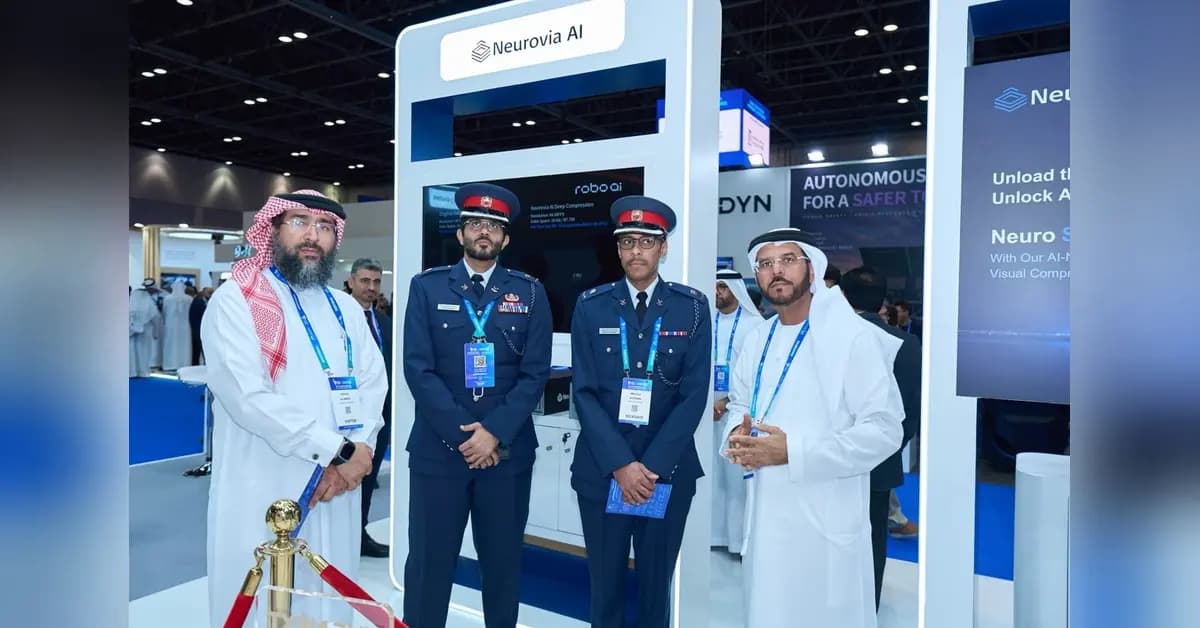

SAS presented its new solutions for intelligent policing at the World Police Summit 2026 in Dubai on November 19, 2026. The company displayed how artificial intelligence and data analytics help law enforcement organizations review criminal cases faster, detect complex relationships between suspects, and counter emergent security risks.
Government departments across the United Arab Emirates continue to expand their digital initiatives. In response, SAS displayed tools designed to help agencies process growing volumes of data while retaining full supervision over confidential files and legal choices. The exhibits at the company booth addressed digital assistant platforms, identity intelligence, forensic analysis, and surveillance operations.
Adopting intelligent policing in public safety
Modern police investigations often involve large collections of records stored across separate databases. SAS organized practical demonstrations showing how software connects scattered information into clear intelligence summaries. This automated approach limits the hours officers spend sorting through files manually.
“At World Police Summit 2026, SAS is showcasing how AI and analytics can help police forces investigate cases faster and make better decisions. Through solutions such as our Digital Assistant for Law Enforcement and 360 Identity Intelligence, we’re showing how officers can access information more easily, identify patterns and uncover connections that may otherwise be missed.”
Mohamed Mysara, Principal Business Solutions Manager at SAS
Core tools for evidence and investigation
The company demonstrated several dedicated technologies designed for public safety officers. A specialized Digital Assistant for Law Enforcement allows staff to interact with database records using regular conversational queries to view summaries rapidly.
In addition, the 360 Identity Intelligence module connects background facts about individuals, prior infractions, and associations to expose hidden networks. For technical evidence, digital forensics tools aggregate data extracted from phones and computers, using network tracking to link physical hardware to digital accounts.
Meanwhile, the Intelligence, Surveillance and Reconnaissance system unites sensor inputs, geospatial records, and video feeds. This framework assists teams in monitoring key zones, spotting incidents quickly, and supporting operational choices in near real time.
Sovereign AI and operational control
During the event, discussions on intelligent policing highlighted how autonomous software can assist officers. Representatives Mohamed Mysara and Caroline Barnett hosted a conference session on November 18 titled “Mission Possible: Sovereign AI Agents, The Next Frontier of Intelligent Policing.”
The presentation examined how sovereign AI systems allow police entities to shift from basic pattern observation toward direct action. The speakers stressed that public safety agencies must maintain complete custody of their sensitive intelligence, infrastructure, and priority decisions.
“With the UAE continuing to invest in AI and digital transformation, there is a real opportunity to bring these technologies into law enforcement. However, as AI becomes more widely used in policing, protecting sensitive data and keeping officers in control of critical decisions must remain a priority. This is why sovereign AI is such an important part of the conversation.”
Mohamed Mysara, Principal Business Solutions Manager at SAS
Focus on data protection and oversight
The session emphasized that human supervision remains necessary as police departments deploy advanced software. Officers must review outputs carefully whenever algorithms process private records or affect enforcement actions.
Strong cybersecurity practices and data governance ensure that automated systems remain accountable to human leaders. These capabilities assist intelligent policing projects across the region as departments expand digital services.