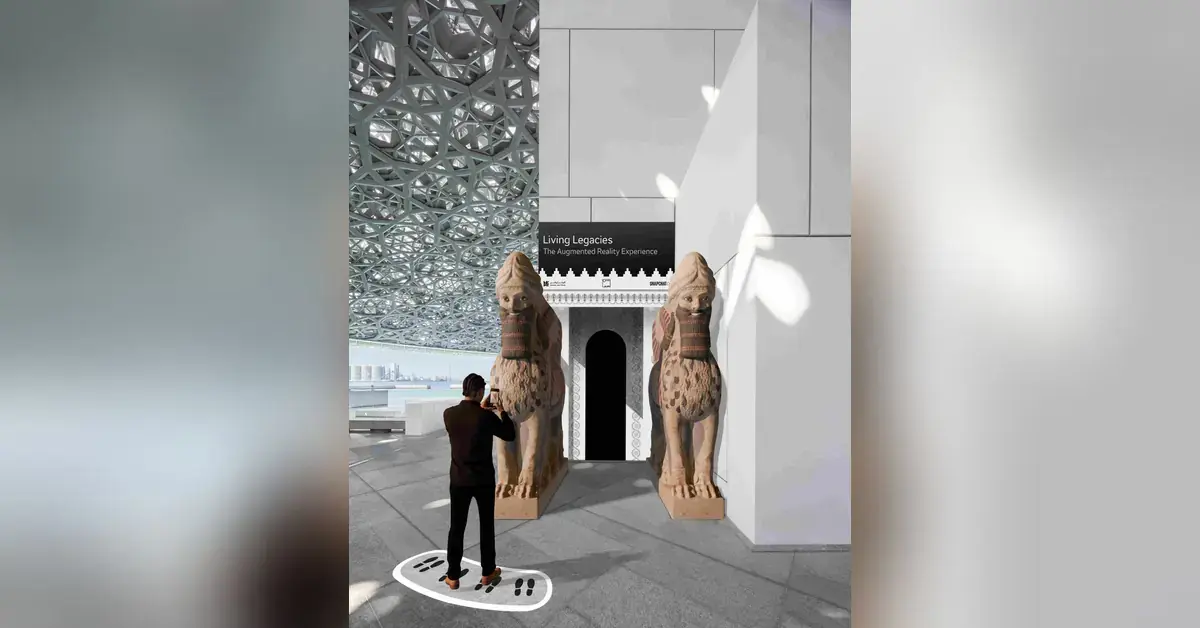
Snap AR Studio has partnered with Louvre Abu Dhabi and the International Alliance for the Protection of Heritage (ALIPH) to launch a project reviving ancient Assyrian antiquities. Titled Living Legacies: The Augmented Reality Experience, the initiative digitally reconstructs two lost Lamassu sculptures through smartphones. These monumental stone figures were ancient Assyrian relief carvings historically portrayed as winged bulls with human heads.
Visitors access the experience through a dedicated Snapchat Lens positioned outside the temporary exhibition galleries near the entrance. The camera detects physical markers, prompting scattered digital fragments to assemble into two full-size statues. In addition, the interface presents a proposed reconstruction of the original painted colors based on historical documentation and 3D scans of surviving artifacts.
Collaborative Heritage Work by Snap AR Studio
The project complements a wider exhibition titled Living Legacies: Protecting Heritage, Building Hope, which marks the tenth anniversary of ALIPH. Running from November 25, 2026, to April 25, 2027, the display brings together more than 50 historical objects from international museums and partner institutions. Furthermore, the overall showcase highlights international efforts to conserve cultural relics damaged by crises, natural disasters, and regional conflicts.
“Augmented reality opens up new ways of experiencing history, allowing us to rediscover cultural heritage that has been lost to time or destroyed by conflict.”
Antoine Gilbert, AR Studio Paris Director at Snap Inc.
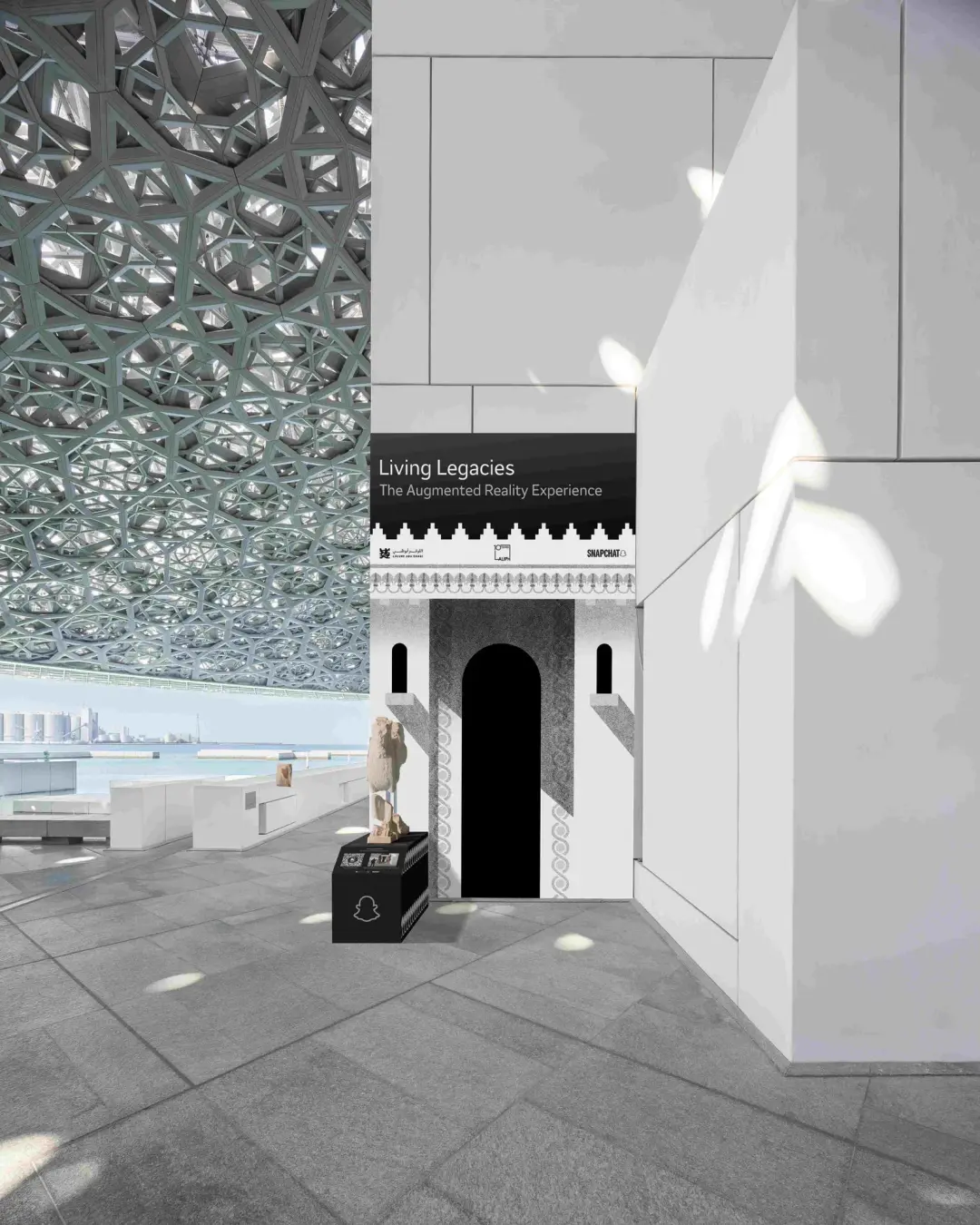
Integration with Mobile Devices and Cultural Spaces
The deployment at Louvre Abu Dhabi demonstrates how modern smartphones can serve as educational tools in cultural spaces. By placing the activation outside the main galleries, the organizers invite general museum visitors to interact with Mesopotamian history without entering ticketed exhibition zones. Specifically, the technical pipeline combines real-time computer vision with historical research supplied by archaeological specialists.
Earlier this year, the Paris division of Snap AR Studio collaborated with the Musée du Louvre on a project called The Incredible Unknowns of the Louvre. That free program allowed audiences to view interactive elements across six prominent museum masterpieces. Consequently, the team adapted those interactive methods for the new installation in the United Arab Emirates.
Protection Efforts and Archival Technologies
Founded in Geneva in 2017 by the UAE and France, ALIPH functions as an intervention fund for heritage threatened by hostilities. Over the past decade, the organization has supported approximately 650 projects across 65 nations. Today, the foundation receives support from ten member states including Saudi Arabia, Kuwait, Morocco, China, and France, alongside private donors.
Meanwhile, technical partnerships between digital software firms and cultural curators continue to expand across the Middle East. Louvre Abu Dhabi, designed by architect Jean Nouvel and opened on Saadiyat Island in 2017, displays works spanning thousands of years. The institution frequently uses interactive media to present loans from French national museums and regional collections.
Outlook for Digital Museum Displays
Museum leadership and technology developers view augmented reconstructions as a practical way to display objects that no longer exist physically. Because the Lamassu sculptures suffered irreparable damage in past conflicts, digital models remain the primary method for public viewing. Moving forward, the institutions plan to assess visitor engagement data before introducing similar spatial experiences for future exhibitions.