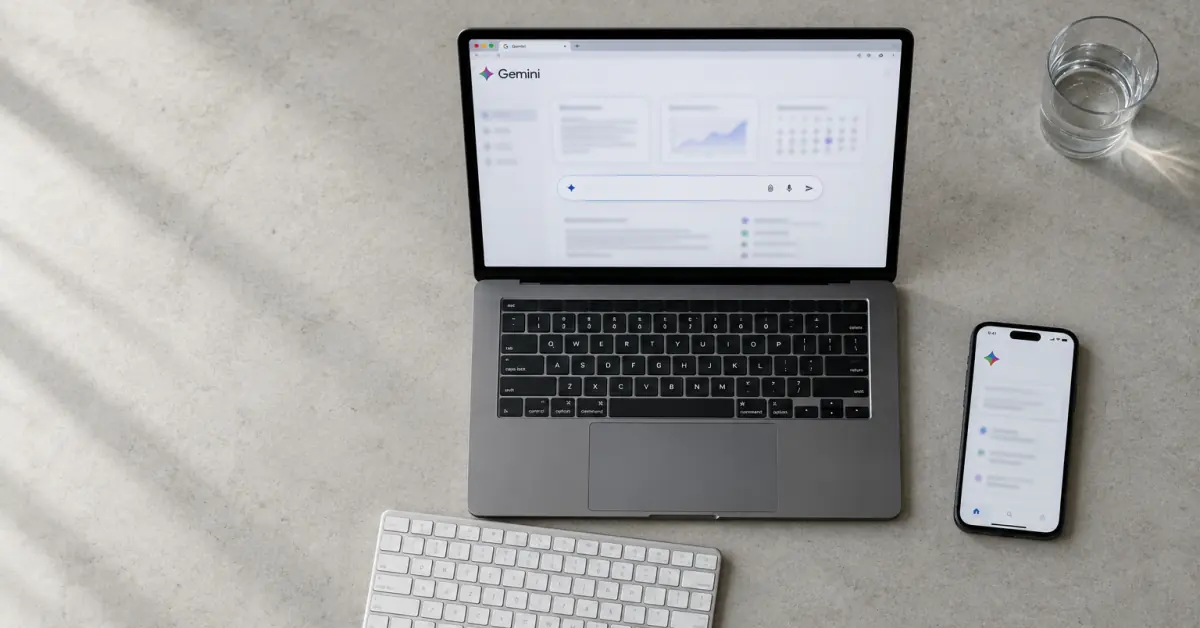
AI-generated illustration
Google Cloud introduced the autonomous Gemini agent during its Gemini at Work 2026 conference in Dubai to handle enterprise knowledge work, coding, and analytics from a single interface. The announcement arrived as nearly 500 enterprise customers each processed more than one trillion tokens over the past year. Furthermore, approximately 80 percent of all Google Cloud clients now use its artificial intelligence solutions.
During the event keynote, Google Cloud Chief Executive Officer Thomas Kurian outlined the operational scope of the new system.
“It is a universal agent that has all of your business context and can be used for everything from knowledge work to answering questions, and content creation to coding, all from a single prompt box. It plans the work, uses skills and tools, connects to your systems, and brings back something finished.”
Thomas Kurian, CEO of Google Cloud
Core Architecture of the Gemini Agent
The system operates under a unified design that allows teams to delegate outcomes rather than step-by-step instructions. Running directly across cloud systems, it maintains persistent memory across web, desktop, and mobile channels. Consequently, background tasks continue running even after a user disconnects, retaining state and historical context.
The platform coordinates tasks across specialized sub-agents. These sub-agents run alongside coworker agents that possess distinct email addresses, dedicated storage, and defined operational duties. In addition, the engine dynamically selects underlying models from the Gemini family, Claude, or third-party options to reduce compute expenditure while maintaining task accuracy.
Workspace and Data Analytics Integrations
The assistant functions inline within productivity applications such as Gmail, Google Drive, Docs, Sheets, and Calendar. It analyzes team chats and project history to schedule meetings, draft documents, and surface urgent inbox priorities without explicit parameter inputs.
For data teams, the platform introduces direct integration with BigQuery and the enterprise Knowledge Catalog. Engineers can generate PySpark scripts, train models, and debug data pipelines via conversational prompts. Meanwhile, non-technical personnel can query unstructured data and cross-cloud repositories across AWS and Microsoft Azure through a borderless lakehouse system.
Enterprise Governance and Security Controls
To maintain corporate compliance, Google Cloud implemented strict cybersecurity safeguards across all agent interactions. Every agent receives a cryptographically verified identity governed by least-privilege role policies and OAuth standards.
Task execution occurs within an isolated Agent Sandbox, while incoming and outbound network traffic passes through an Agent Gateway firewall. This architecture writes complete audit logs to Google Cloud observability systems. As a result, administrators can enforce centralized restrictions across an entire corporate fleet simultaneously.
Infrastructure Performance and Enterprise Deployments
The operational framework runs on Google’s custom AI Hypercomputer hardware. Specifically, the newly deployed TPU 8i processors provide 80 percent better price-performance compared to previous generation chips.
Multiple commercial organizations have already integrated the technology into daily operations. For instance, European carrier Ryanair deployed the software to 35,000 workers to coordinate flight schedules, while Nokia reduced network troubleshooting resolution times by up to 80 percent. Telecom group Ooredoo Qatar also adopted the system across customer support and field operations teams to automate case resolutions.