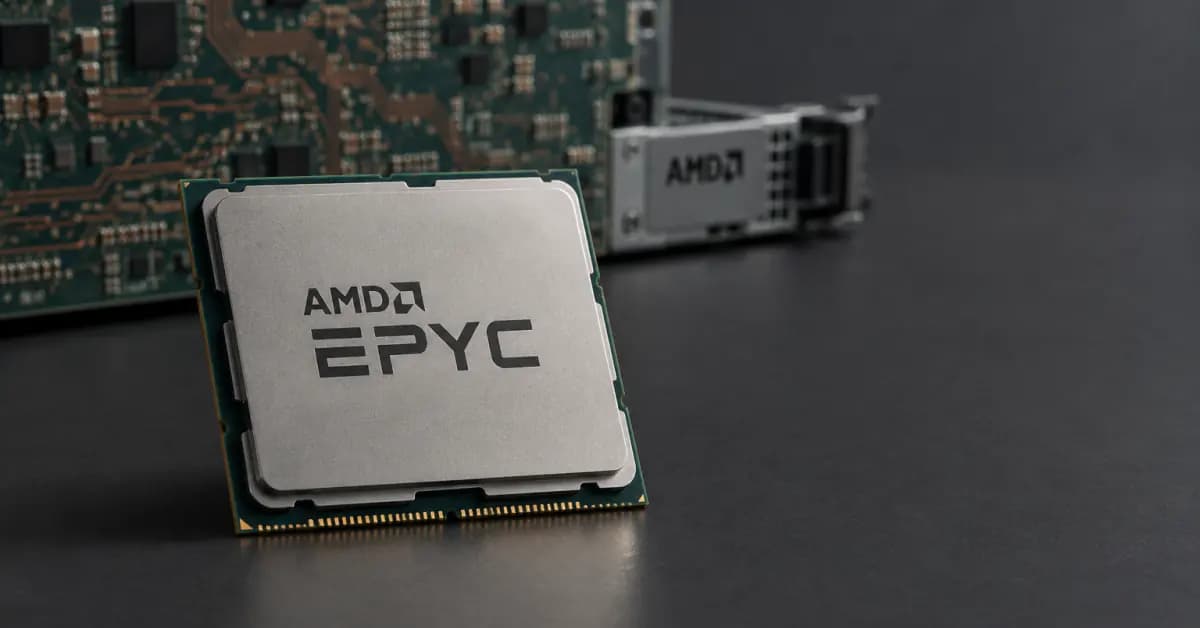
AMD EPYC processors now power the host infrastructure for Google Cloud TPU 8tx, marking the first cloud Tensor Processing Unit system with hardware-enforced confidential computing. The deployment combines host compute performance, AMD Infinity Guard security features, and x86 software compatibility with specialized cloud hardware. As a result, enterprises can execute inference, fine-tuning, and reinforcement learning workloads with silicon-level protection for sensitive artificial intelligence models.
Hardware-Rooted Security for AI Acceleration
In TPU 8tx clusters, the host CPUs direct workload orchestration, data preparation, and high-throughput communication with accelerator chips. The architecture applies AMD Secure Encrypted Virtualization features to extend system protection directly across connected hardware. Consequently, customer prompts, model weights, and intermediate data remain encrypted in system memory and in transit between hosts and accelerators.
“When teams move AI agents into production, they need confidence that their data and intellectual property stay private, even from the underlying infrastructure.”
Mark Lohmeyer, Vice President and General Manager for AI and Computing Infrastructure, Google Cloud
AMD EPYC Processors Across Hyperscaler Deployments
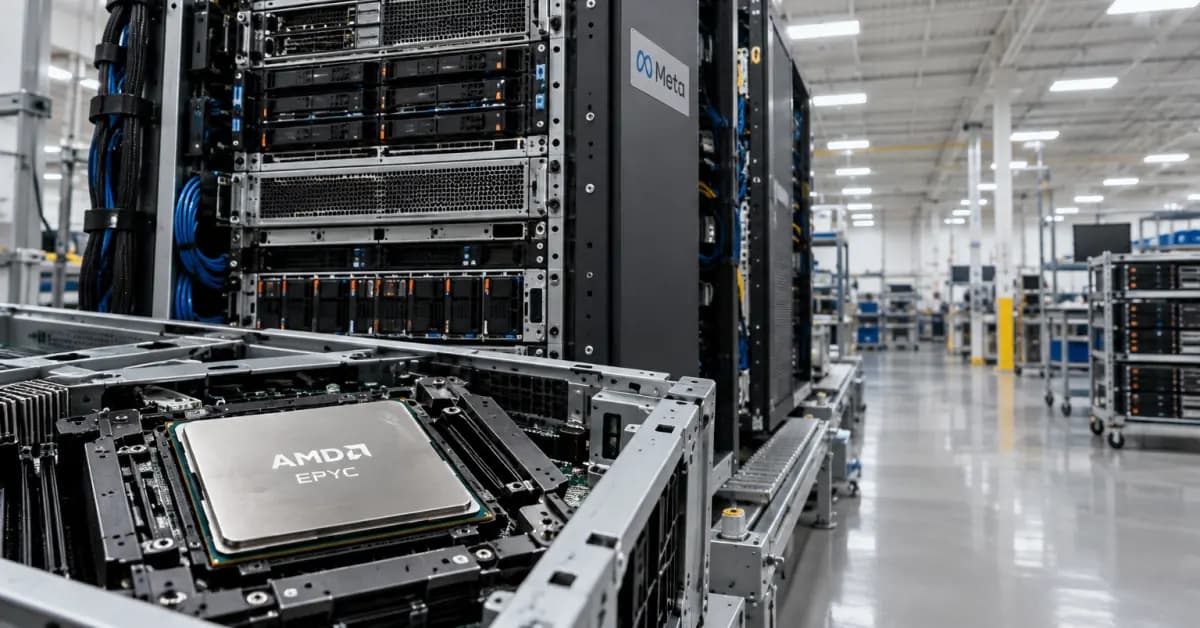
Accelerators depend on host processors to supply data streams, manage task scheduling, and connect workloads with adjacent services. Today, AMD EPYC processors serve as the host CPU across more than 10 hyperscalers and frontier artificial intelligence laboratories. These deployments span systems configured with AMD Instinct accelerators, NVIDIA graphics processors, and custom application-specific integrated circuits.
Meanwhile, the established x86 software ecosystem gives technical teams operational continuity across varied accelerator designs. In addition, the hardware design ensures that host memory maintains hardware isolation throughout intense accelerator execution cycles in secure computers.
Expanding Confidential Cloud Architecture
The integration represents a continuation of engineering work between both technology companies on enterprise infrastructure. Specifically, the underlying security technologies already protect several managed services within cybersecurity frameworks, including Confidential VMs, Confidential GKE, and Confidential Space. The arrival of TPU 8tx extends those protections directly into hardware-accelerated model training and automated reasoning environments.
“The most capable AI systems need a CPU foundation that can match the demands of the accelerators they host.”
Dan McNamara, Senior Vice President and General Manager, Compute and Enterprise AI, AMD
Enterprise Workload Outlook
Modern enterprise teams increasingly deploy autonomous agentic systems and reasoning frameworks on cloud infrastructure. Because these advanced models process sensitive proprietary records, hardware isolation has become a baseline operational requirement. AMD and Google Cloud plan to expand confidential computing options as organizations transition specialized generative workloads from development into production environments.