

The automotive manufacturer Chery is expanding deployment of the Chery Super Hybrid architecture across global markets while transitioning toward localized production. Operating across more than 120 countries and regions with 4.5 million users, the automaker is aligning vehicle engineering with regional driving requirements. In Saudi Arabia, the company manages operations through a dedicated national sales office to serve families navigating urban commutes in Riyadh and Jeddah.
Engineering Capabilities of the Chery Super Hybrid Platform
Adapting vehicles to diverse operational environments remains central to the engineering of the Chery Super Hybrid powertrain. The complete hybrid architecture integrates comprehensive energy management, allowing pure-electric driving during city commutes and automatically engaging parallel hybrid operation under steep climbs with full passenger loads. Furthermore, in regions where public charging infrastructure is developing, the onboard combustion engine ensures continuous operation without mandatory external charging.
The system supports household outlets, portable units, and direct-current fast charging, which restores 30% to 80% of battery capacity within 18 to 20 minutes under appropriate conditions. In addition, the IP68-rated battery pack operates across temperatures ranging from -35 degrees Celsius to 60 degrees Celsius, protected by an ultra-high-strength steel underbody shield against loose gravel.
Safety Standards and Comprehensive Testing
Vehicle safety validation follows an extensive assessment framework covering 83 conditions and over 200 individual tests. Multiple production models have obtained five-star safety ratings under Euro NCAP, ANCAP, and ASEAN NCAP protocols. Specifically, the TIGGO7 PHEV achieved an ASEAN NCAP score of 94.68 points in December 2025, recording the highest result in the history of the testing program.
Extreme Environmental Validations Worldwide
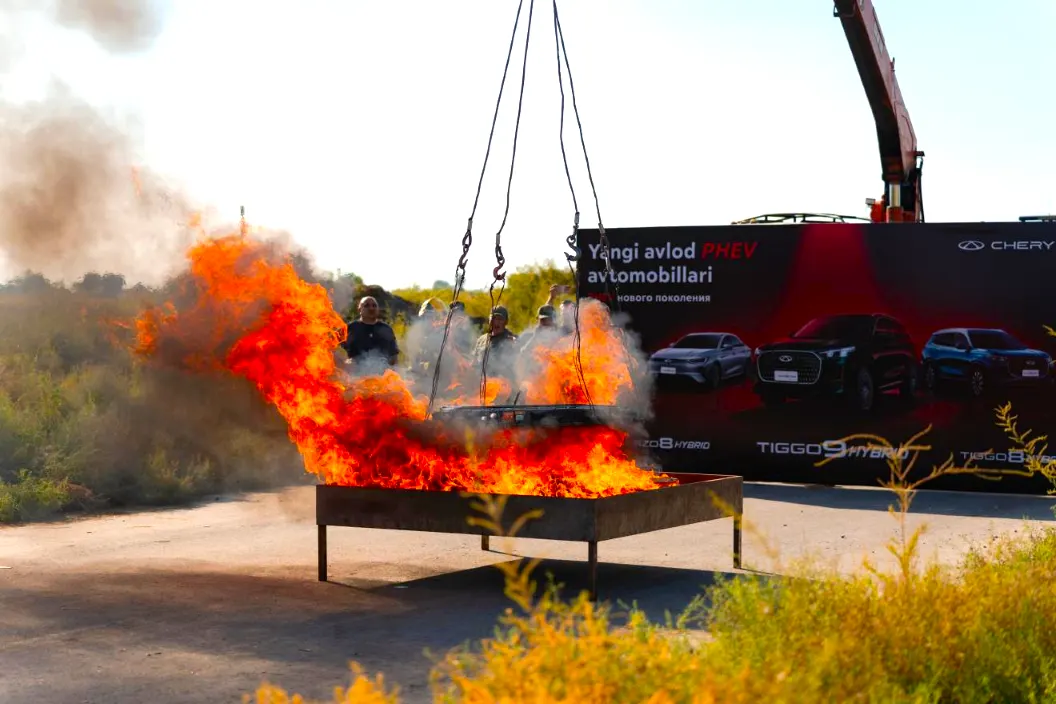
Beyond standard laboratory assessments, the manufacturer conducts durability testing under extreme regional conditions. In Malaysia, battery packs withstood 1,000 degrees Celsius heat for 80 seconds without thermal runaway, while Indonesian testing verified stability after 53 hours of seawater immersion. Meanwhile, high-temperature desert trials in the Middle East confirmed cabin climate stability, and a 12,000-kilometer cross-continental journey from Asia to Europe evaluated mechanical reliability.
Regional Manufacturing and Upcoming Summits
The brand is expanding regional manufacturing capacity to integrate more closely with local economy networks. In July 2026, the company commenced production at the upgraded Rosslyn facility in Pretoria, South Africa, turning the site into a regional hub for assembly, supply chains, and training. Looking ahead, the company will host the Chery International User Summit from 19 to 24 October 2026 in China, featuring public crash tests, automated parking demonstrations, and the world debut of the battery-electric CHERY Q.