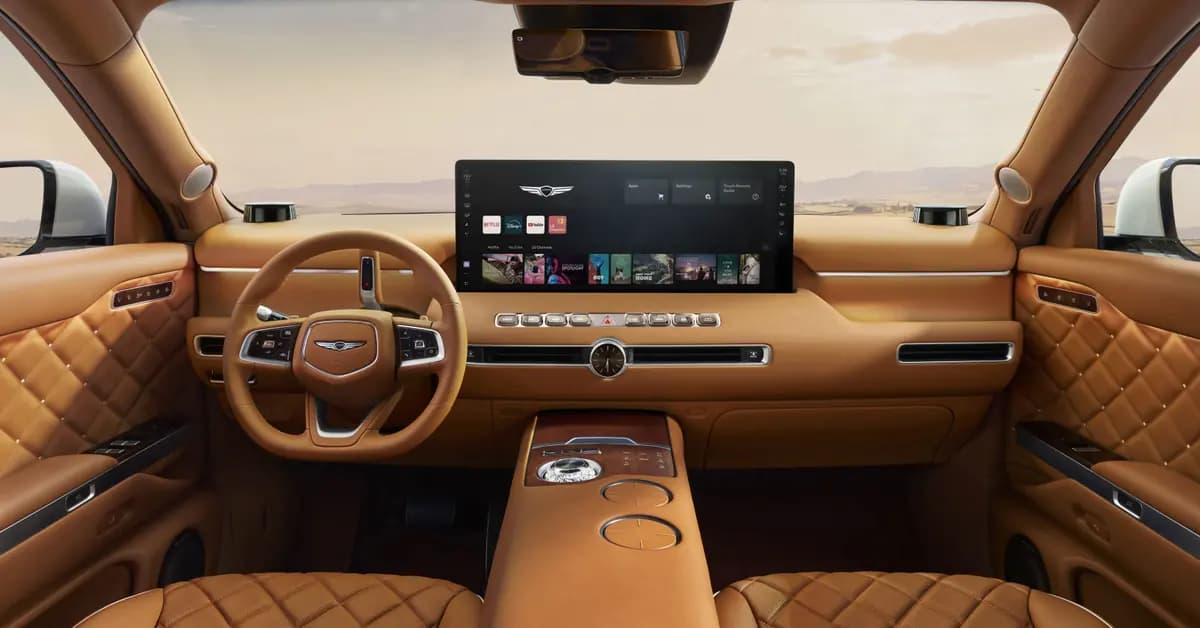
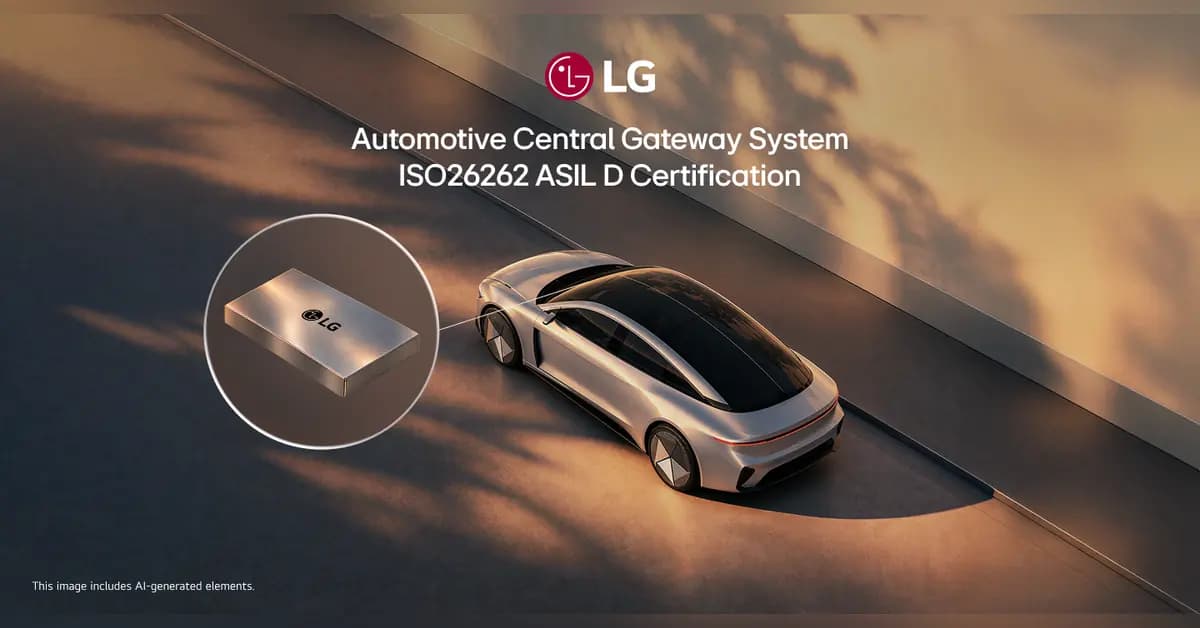
LG Electronics obtained its first ISO 26262 ASIL D product certification for its central gateway system, developed as the central communication unit 2.0 for the Genesis GV90. The evaluation was conducted by testing and certification organization TÜV Rheinland in automotive safety standards.
The achievement represents the first ASIL D product certificate issued by TÜV Rheinland in the vehicle central gateway category. Under the ISO 26262 standard, safety integrity levels range from A to D based on injury severity, exposure frequency, and vehicle controllability. ASIL D sits at the peak of this rating system, requiring strict technical measures to prevent and correct electronic faults.
Independent Testing and Verification Procedures
During the review process, auditors examined development workflows, system documentation, and functional verification results. TÜV Rheinland confirmed that the hardware and software satisfy all technical criteria designated under the automotive framework. This audit builds upon earlier steps taken by the manufacturer to establish formal functional safety protocols.
Previously, the company received an ISO 26262 process certification for its internal vehicle development procedures in 2017. Later in 2021, it secured an ASIL B product certificate for its advanced driver assistance system camera unit. The new validation verifies safety compliance directly across the design and testing phases of the vehicle component.
Safety Operations in the Central Gateway System
Serving as the data interchange hub within the vehicle, the central gateway system links separate electronic control units across controller area networks and Ethernet links. The unit monitors safety data traffic, detects transmission errors between subsystems, and forwards diagnostic records to relevant onboard computers without delay.
The platform also manages security protections for over-the-air programming. These technical safeguards prevent accidental software updates while preserving normal ignition controls during rollbacks. In addition, the device supports connected services and active diagnostics through integrated cybersecurity functions, such as unauthorized intrusion tracking and digital certificate verification.
Integration with Connected Car Architectures
Modern vehicles rely increasingly on centralized computing platforms to handle continuous data exchanges and autonomous assistance functions. Consequently, high safety integrity classifications have become essential requirements for external suppliers competing in commercial platform bids. By verifying compliance at the highest tier, hardware manufacturers show that their control modules can isolate operational risks.
“Earning our first ASIL D product certification is a significant milestone for LG. It reflects our progress from establishing certified functional safety processes to implementing and verifying the highest-level safety requirements in an automotive product.”
Lee Sang-yong, Head of VS R&D Laboratory at LG Vehicle Solution Company
The engineering practices applied during the Genesis GV90 project provide foundational methods for upcoming vehicle production programs. These technical workflows cover safety architecture designs, physical verification, and official testing audits across embedded components.
Future Expansion into Advanced Vehicle Platforms
The automotive industry continues to shift toward models powered by artificial intelligence, where centralized communication hubs supervise internal networks and external link services. LG plans to apply the verified engineering frameworks to develop next-generation communication controllers, network bridges, and domain control systems.
As specialized vehicle hardware becomes more complex, functional safety benchmarks will dictate how control modules interface with high-speed networks. The company stated that the latest accreditation will support its supply partnerships with global vehicle manufacturers developing software-defined transportation platforms.