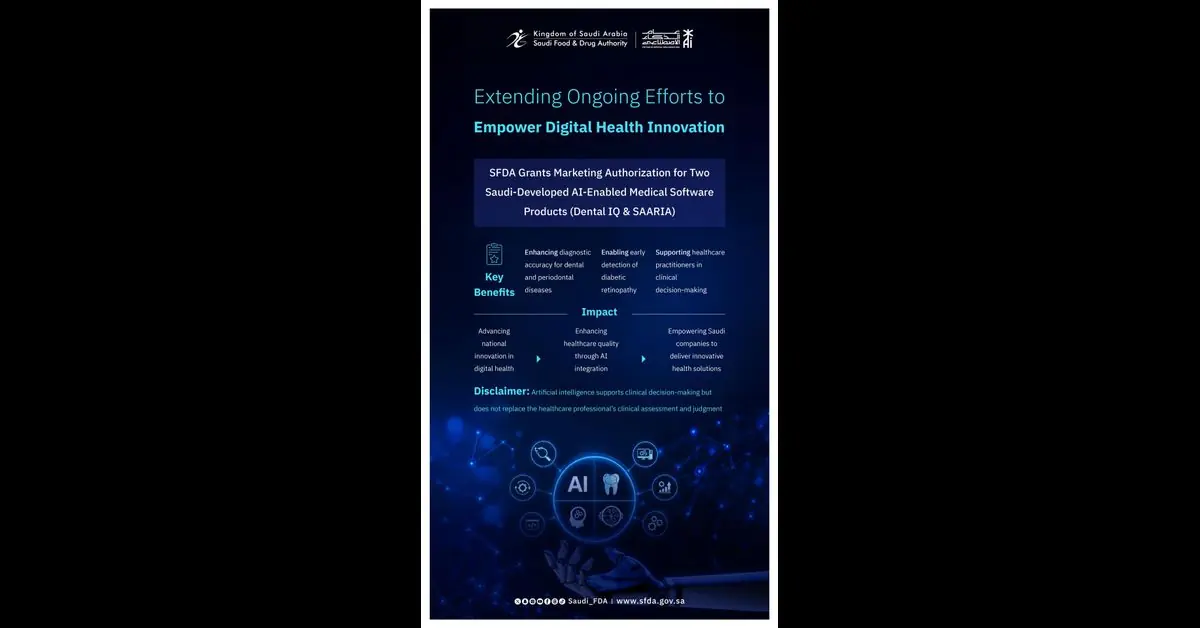
The Saudi Food and Drug Authority has officially authorized two locally developed AI medical software products named Dental IQ and SAARIA for diagnostic use in healthcare facilities across the Kingdom.
Regulators completed an extensive evaluation process that involved analyzing technical documents, algorithm validation records, and clinical trial data. This regulatory review verified the clinical performance, cybersecurity measures, and overall safety of both systems before granting marketing approval under the national regulatory framework for digital health systems.
Capabilities of Approved AI Medical Software
The Dental IQ platform relies on deep learning models to inspect dental X-ray scans. The program identifies pathological indicators such as dental cavities, gum diseases, and bone structure variations to help dentists create accurate treatment plans and improve diagnostic consistency.
Meanwhile, the SAARIA system processes retinal fundus photographs using artificial intelligence models. It detects early signs of diabetic retinopathy during routine checkups, allowing primary care clinics to refer at-risk patients to eye specialists before severe visual complications occur.
Local Development and Clinical Trials
Two domestic startups created the diagnostic applications through the Innovative Medical Devices Pathway managed by the authority. Both development teams received regulatory guidance throughout the process and conducted local clinical studies inside Saudi healthcare centers to evaluate algorithm precision in local patient populations.
Furthermore, each startup agreed to post-marketing clinical follow-up protocols to monitor real-world performance continuously, ensuring that the software models maintain high diagnostic standards over time while supporting the growth of the domestic startup ecosystem.
Regulatory Guidance for Healthcare Practitioners
The authority emphasized that automated outputs from AI medical software serve solely as diagnostic support tools rather than standalone clinical decisions. Licensed medical professionals remain fully responsible for reviewing all automated findings and making final medical choices tailored to each patient.
Consequently, healthcare facilities and clinics must treat these tools as assistive technology that works alongside professional medical judgment during patient examinations.
Alignment with Health Sector Objectives
This regulatory clearance marks the introduction of the first locally developed AI medical software solutions approved for dentistry and ophthalmology in Saudi Arabia. The initiative directly supports technology localization goals outlined in the Health Sector Transformation Program under Saudi Vision 2030, reinforcing the Kingdom’s commitment to modernizing healthcare delivery through homegrown digital innovations.