
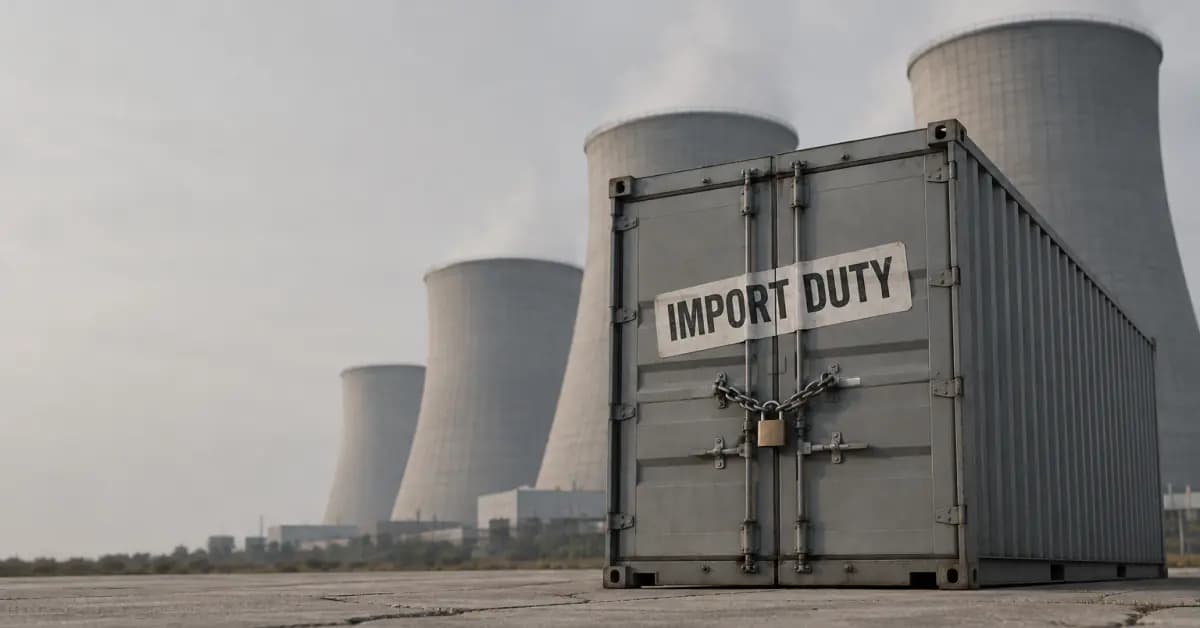
US President Donald Trump stated that companies planning foreign data centers will face major taxes if they build facilities outside the country. Speaking at a press conference on Friday, Trump explained that his administration aims to halt the migration of digital infrastructure abroad. The warning came immediately after international meetings with Chinese President Xi Jinping and Russian President Vladimir Putin.
“We are not going to allow our companies to build data centers outside of our country. They allowed that to happen with chips and everything else, and it was very destructive to our country.”
Donald Trump, US President
The Strategic Push Against Foreign Data Centers
The US administration linked the proposed measures directly to technological competition with Beijing in the field of AI. Trump stated that if American enterprises construct critical facilities overseas, foreign rivals could secure an operational advantage. Consequently, the White House seeks to keep data storage and model training assets firmly within domestic borders.
However, the president acknowledged that the tax proposal had not been discussed internally with his policy staff prior to the press conference, according to The Verge. Flanked by Vice President JD Vance and Secretary of State Marco Rubio, Trump indicated that details would follow as the administration formalized its approach.
Concerns Over Domestic Infrastructure and Grid Limits
The proposed restrictions arrive as American municipal authorities place limits on new facility applications. Local communities have raised objections regarding heavy water consumption, power grid strain, and persistent cooling noise. Pew Research data shows approximately 3,000 operational facilities across the United States, alongside roughly 1,500 projects currently navigating planning reviews.
Rather than canceling projects, Trump urged municipalities to negotiate economic contributions directly from developers. In addition, the president argued that local governments should secure municipal revenue from tech operators instead of shutting down facility development altogether.
Global Tech Commitments and Shifting Plans
Major technology corporations maintain active construction programs in foreign territories to expand their international reach. For example, Google committed 13 billion euros toward Finnish digital assets, while Meta started construction on its initial Canadian server campus. In addition, Anthropic arranged a long-term lease for server capacity in Nova Scotia to run high-performance computing hardware.
Enterprises often locate servers near target end-users to reduce network latency and satisfy regional data sovereignty requirements. Therefore, imposing financial penalties on foreign data centers could present significant operational questions for enterprise operators supporting the global economy.
Regulatory Pathways and Future Policy Outlook
Significant legislative obstacles remain before any punitive taxation system can take effect across the industry. Federal tax changes require congressional approval, presenting friction with an incoming legislative majority. Furthermore, Washington recently introduced licensing rules on export processors to ensure strong cybersecurity and prevent unauthorized access by foreign rivals.
Neither Google nor Meta issued public statements regarding the White House remarks. Until formal draft legislation emerges, technology firms continue evaluating how potential tariffs on foreign data centers might reshape planned international investments.