
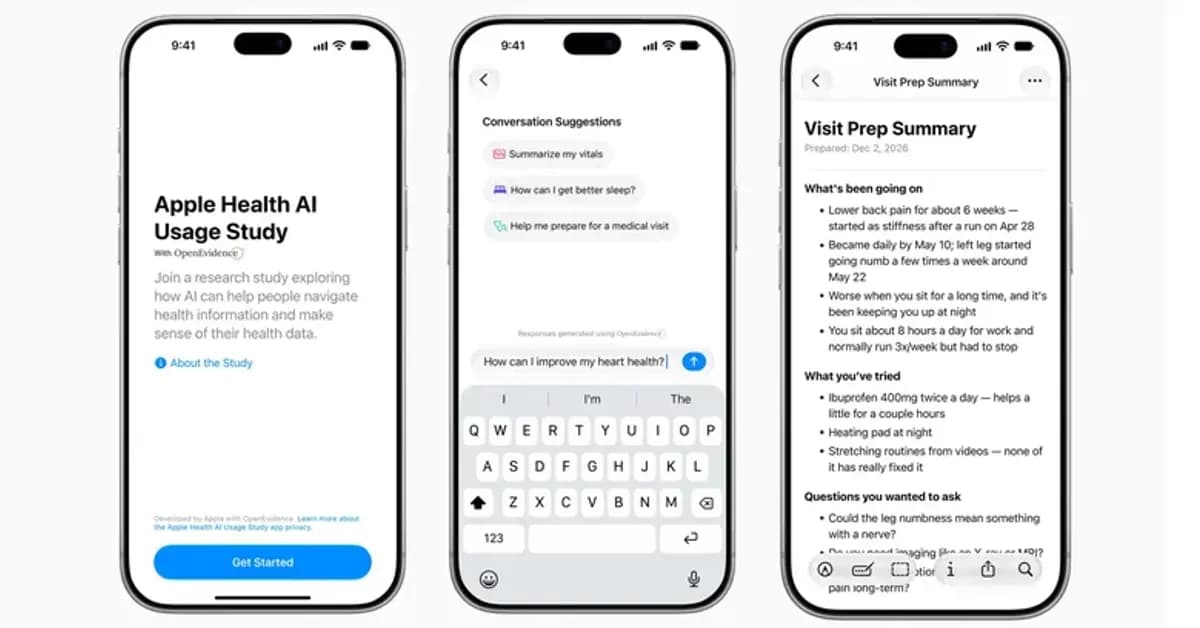
The Health AI Usage Study has officially opened as Apple introduces a dedicated research application focused on medical questions. Through this trial, the company examines how participants interact with conversational models when seeking clinical facts. The project aims to enroll up to 200,000 individuals across the United States to observe practical user habits.
Specifically, the system works directly with OpenEvidence to deliver factual medical responses. According to reporting by 9to5Mac, the underlying clinical engine references established journals including The New England Journal of Medicine, JAMA, and Nature. Consequently, each generated response includes direct links to peer-reviewed sources rather than unverified assertions.
Scope of the Health AI Usage Study
Participants must be at least 21 years old and based in the United States to participate in the trial. In addition, users need an iPhone 15 Pro or a newer handset running iOS 26 or later versions. During the tests, volunteers can enter prompts regarding wellness topics such as cardiovascular fitness or everyday care questions through the designated software application interface.
Moreover, participants maintain voluntary control over their personal metrics throughout the trial period. Users can choose whether to provide Apple HealthKit metrics, including laboratory outcomes, activity levels, or sleep records, to offer supplementary clinical context. Apple noted that the research platform remains completely isolated from Siri and Apple Intelligence.
Data Protections and User Privacy Safeguards
Medical queries often involve sensitive personal details that necessitate strict data security protocols. Consequently, user inquiries submitted during the trial are not retained permanently. The partner firm OpenEvidence deletes questions and associated answer data within 24 hours of generation.
Furthermore, participant communications are never used to train machine learning models. A small group of designated Apple scientists receives only coded survey submissions separated entirely from personal identities. These protections prevent confidential records from entering generalized datasets or commercial computational pipelines.
Scientific Validation in Modern Healthcare
Medical professionals emphasize that digital tools must adhere to proven clinical standards before deployment in consumer environments. Apple executives affirmed that dependable digital health solutions require grounding in verified scientific sources. The findings from this investigation will inform how algorithmic platforms assist everyday individuals during medical research.
“Insights from this study will help advance the broader scientific conversation and ensure that as technology evolves, we continue building trusted tools that genuinely support people wherever they are on their health journey.”
Sumbul Desai, MD, Vice President of Health, Apple
Future Direction for Algorithmic Medicine
Consumer demand for accessible health advice continues to accelerate across personal devices. Consequently, this Health AI Usage Study represents a structured effort to evaluate algorithmic advisory systems within strict clinical guardrails. The initiative will likely establish clear standards for future medical software across mobile ecosystems.