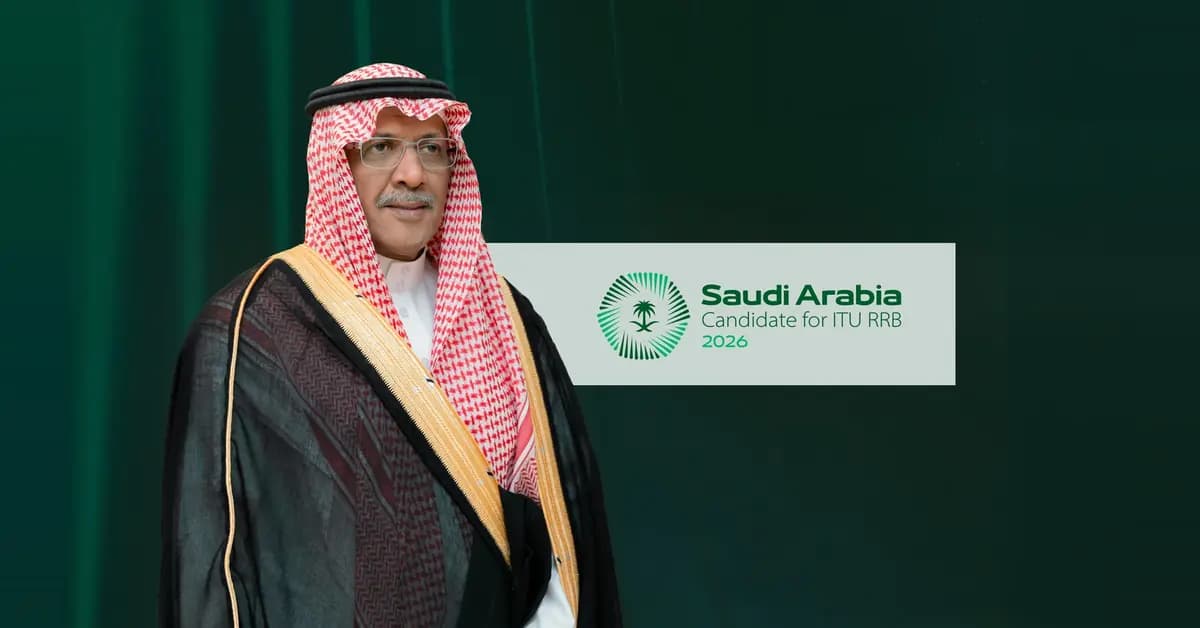
Saudi Arabia representative Eng. Majed Alkahtani has won election to the ITU Radio Regulations Board for a second consecutive term covering 2027 to 2030. The election occurred during the Plenipotentiary Conference held in Doha, Qatar, which runs from November 9 to November 27, 2026. Alkahtani secured one of only 12 seats on the international body, representing a union comprising 194 member states, according to CST (Arabic).
Role of the ITU Radio Regulations Board
The ITU Radio Regulations Board functions as an independent technical authority charged with approving the procedural rules that implement international radio treaties. In addition, board members assess unresolved technical interference reports between national systems, manage spectrum allocation appeals, and provide regulatory advice directly to major international radiocommunication conferences.
Independent experts on the board oversee the equitable distribution of orbital paths and radio spectrum allocations globally. Consequently, their regular assessments safeguard international wireless links against cross-border operational friction. These ongoing tasks remain vital as satellite constellations and next-generation networks place heavier demands on limited orbital slots and spectral bands.
Alkahtani Professional Experience and Background
First appointed to the board in 2022, Alkahtani maintains a track record across radiocommunication policy, frequency spectrum administration, and satellite regulation. Previously, he served as vice chairman of the Radiocommunication Advisory Group (RAG) and held administrative positions across the telecommunications and space sectors in Saudi Arabia.
His technical background supports the board’s responsibilities, which involve evaluating complex appeals filed against decisions made by the Radiocommunication Bureau. Board members perform their official duties as independent specialists rather than national delegates. This structure ensures that international decisions regarding orbital positions and radio spectrum rights remain technically sound and legally consistent.
Significance for International Spectrum Governance
Global wireless governance relies heavily on binding treaties to manage shared telecommunication resources. The international board resolves disputes that single jurisdictions cannot solve alone. As satellite broadband services and ground-based cellular networks expand simultaneously, managing transmission interference requires continuous technical oversight.
Moreover, the technical rulings approved by the board establish reliable operating rules across multiple wireless sectors. Through active participation in these global processes, experts maintain continuous alignment with modern frequency policies, benefiting the broader smart devices sector worldwide.
Future Outlook for Spectrum Allocations
During the upcoming 2027 to 2030 term, the newly elected board will address emerging issues tied to rapid satellite network deployment. With thousands of low-Earth orbit satellites entering operation, coordination regarding orbital slots and frequency bands will demand heightened scrutiny. Alkahtani and the 11 other global members will continue standardizing application processes for radio frequencies worldwide.