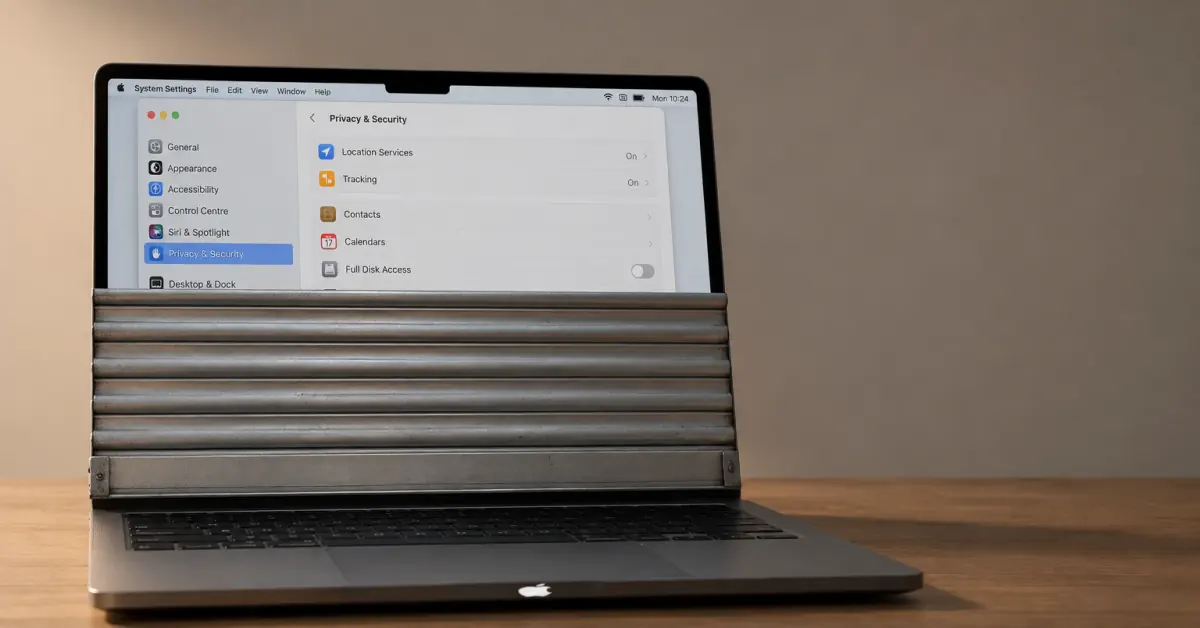
AI-generated illustration
Apple is updating Full Disk Access permissions in macOS to prevent third-party applications from misusing broad system privileges. The move comes as autonomous artificial intelligence agents present new security challenges for desktop operating systems. According to a report by Ars Technica, the operating system maker wants to ensure users understand the risks before granting software complete file visibility across local drives.
Risks Associated with AI Agent Capabilities
Modern AI agents can perform automated workflows across different computer programs. However, when software gains unrestricted entry to local storage, it can read sensitive communications, email records, and browsing histories. Apple stated that developers have used these system permissions in ways that put consumer privacy at risk, particularly when software quietly parses local databases containing personal records.
“As AI agents become increasingly capable and autonomous, the risks associated with this level of access will grow substantially.”
Apple
Updates to Full Disk Access Requirements
Under the upcoming system changes, enabling Full Disk Access will require explicit user action. The permission was originally created so backup utilities, antivirus tools, and system management software could function without repeatedly requesting individual folder permissions. Because this permission largely bypasses standard sandboxing protections, tighter guardrails are now necessary to maintain digital safety across computers running macOS.
In standard macOS security architecture, app sandboxing isolates programs in dedicated environments to prevent them from reading or modifying files created by other applications. Full Disk Access overrides these isolation barriers, granting complete read and write access to protected directories. Apple aims to make these permission grants far more transparent so users realize what data third-party tools can view.
Industry Scrutiny Over Background Access
The policy adjustment follows scrutiny surrounding META and its Muse AI assistant. Tech columnist Jason Aten reported receiving notifications referencing his personal Apple Messages conversations. META executives stated that reading messages requires enabling both system permissions and a separate connector toggle within the application. However, security researchers pointed out that Full Disk Access technically allows any non-root file to be inspected by authorized software without relying on proprietary application interfaces.
Protecting Privacy in Modern Operating Systems
Concerns around autonomous assistants have led platforms to reconsider integration policies. For example, Amazon recently restricted Muse from its services, stating that all digital tools must respect platform boundaries. As desktop software increasingly integrates autonomous models, operating system developers are establishing stricter boundaries to maintain user control and prevent unauthorized data harvesting across local environments.