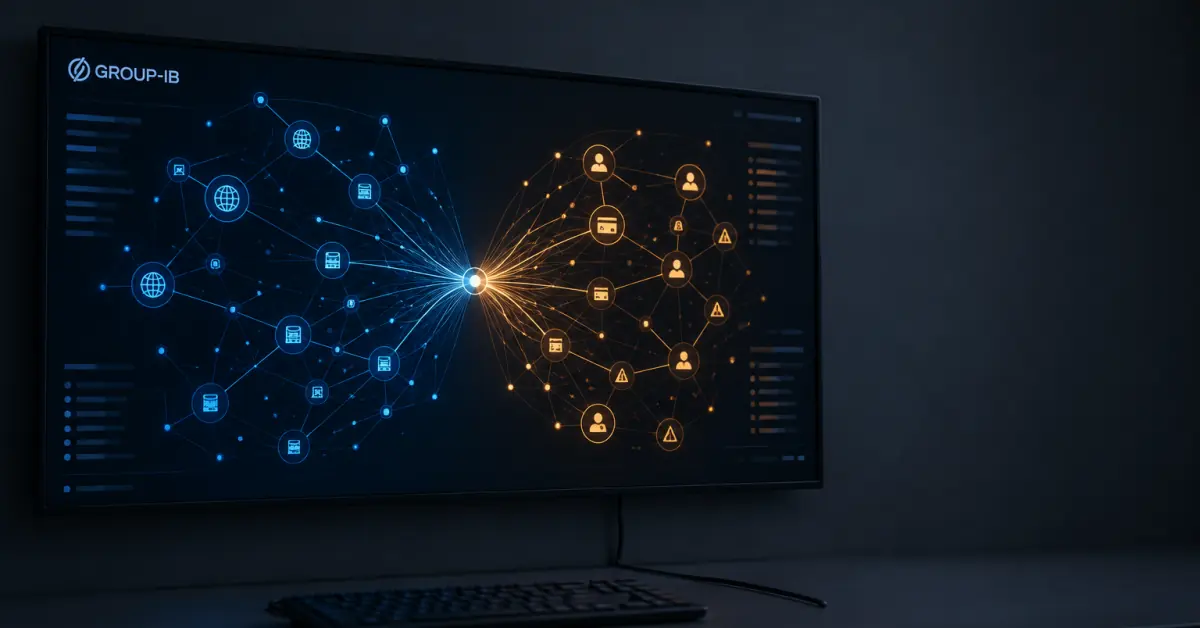
AI-generated illustration
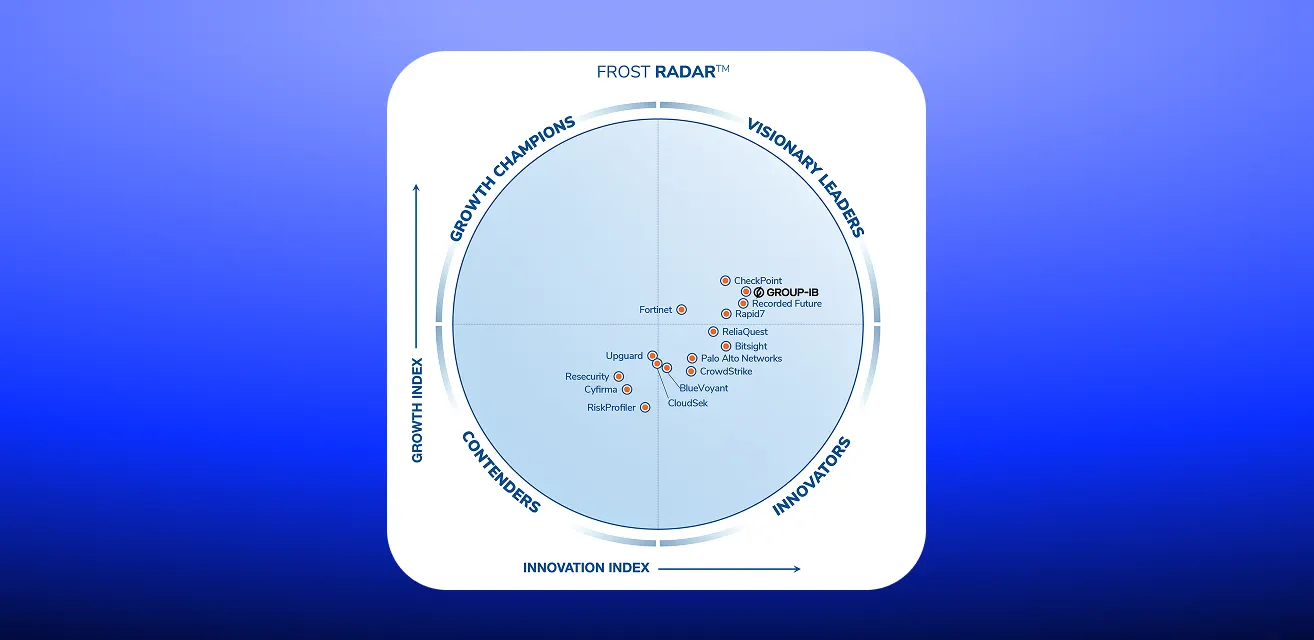
Group-IB earned recognition for its enterprise risk mitigation platform after Frost & Sullivan evaluated over 30 vendors in its latest market report. The analytical firm selected 15 cybersecurity providers that met strict technical parameters, placing Group-IB as a Visionary Leader on the benchmark grid. The evaluation tracks a broader transition across the industry as organizations leave isolated point tools behind.
Stricter Criteria for Enterprise Risk Mitigation
To qualify for inclusion, vendors had to deliver attack surface management, cyber threat intelligence, and digital risk protection natively within one system. The assessment also required both outside-in and inside-out visibility alongside native remediation tools. Frost & Sullivan noted that the market has transitioned since 2022 from niche specialists toward consolidated security platforms.
Group-IB secured second place on the Growth Index among evaluated suppliers and recorded the highest position on the Innovation Index. This ranking followed assessment of the firm’s unified architecture across multiple operational layers, expanding beyond external threats into complete enterprise risk mitigation coverage.
Unifying Cyber Intelligence and Fraud Prevention
The evaluation emphasized the provider’s Cyber Fraud Fusion methodology as a distinctive innovation in the sector. Specifically, the framework correlates network indicators such as malicious internet domains, suspicious IP addresses, and malware with fraud data like mule bank accounts and payment system abuses. Consequently, security teams can view threats that usually stay separated between fraud analysts and technical defenders.
Such cross-discipline integration addresses persistent blind spots within corporate defenses. The company previously highlighted this structural need in research aligned with the MITRE Fight Fraud Framework to protect commercial networks and digital transactions.
“Security teams have spent years adding individual tools to solve individual problems, but every additional silo creates another place where context can be lost. Our approach is to make the same proprietary intelligence work across those different areas, so organizations can identify risk earlier and move from reacting to incidents toward anticipating them.”
Raymon van der Velde, Chief Product Officer, Group-IB
Proprietary Data Collection and Direct Research
Frost & Sullivan pointed to the vendor’s data origination practices as another primary operational factor. Group-IB generates roughly 99.99% of its threat intelligence internally through technical investigations and undercover access rather than commercial feeds. In addition, the firm operates 11 Digital Crime Resistance Centers globally where local analysts inspect regional threat patterns.
The provider’s historical record includes over 1,600 cybercrime investigations conducted since 2003. These field investigations feed direct adversary intelligence into automated defensive tools used by enterprise clients.
Future Outlook for Predictive Defense
The vendor is directing product development toward short-term attack predictions and automated kill chains. By linking external threat indicators with internal network telemetry, the unified architecture aims to notify security teams before attacks fully execute. This shift toward predictive enterprise risk mitigation allows organizations to close vulnerabilities before malicious actors exploit them.